Serrated Lower Molar Extracting Forcep Overview
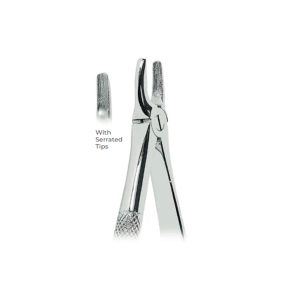
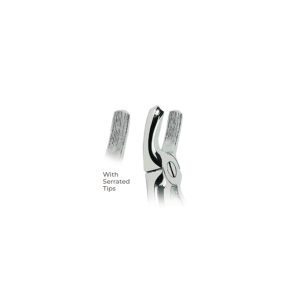
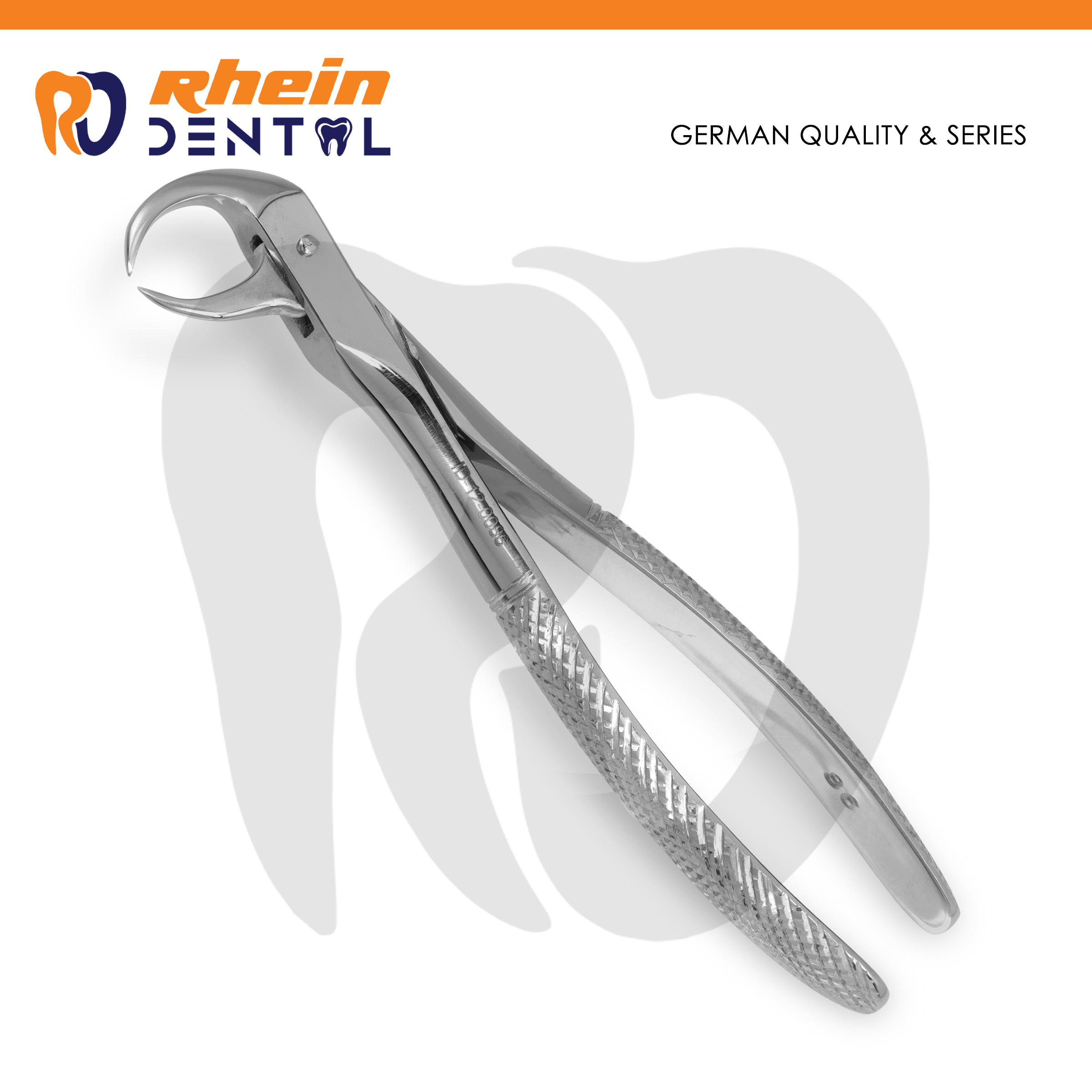
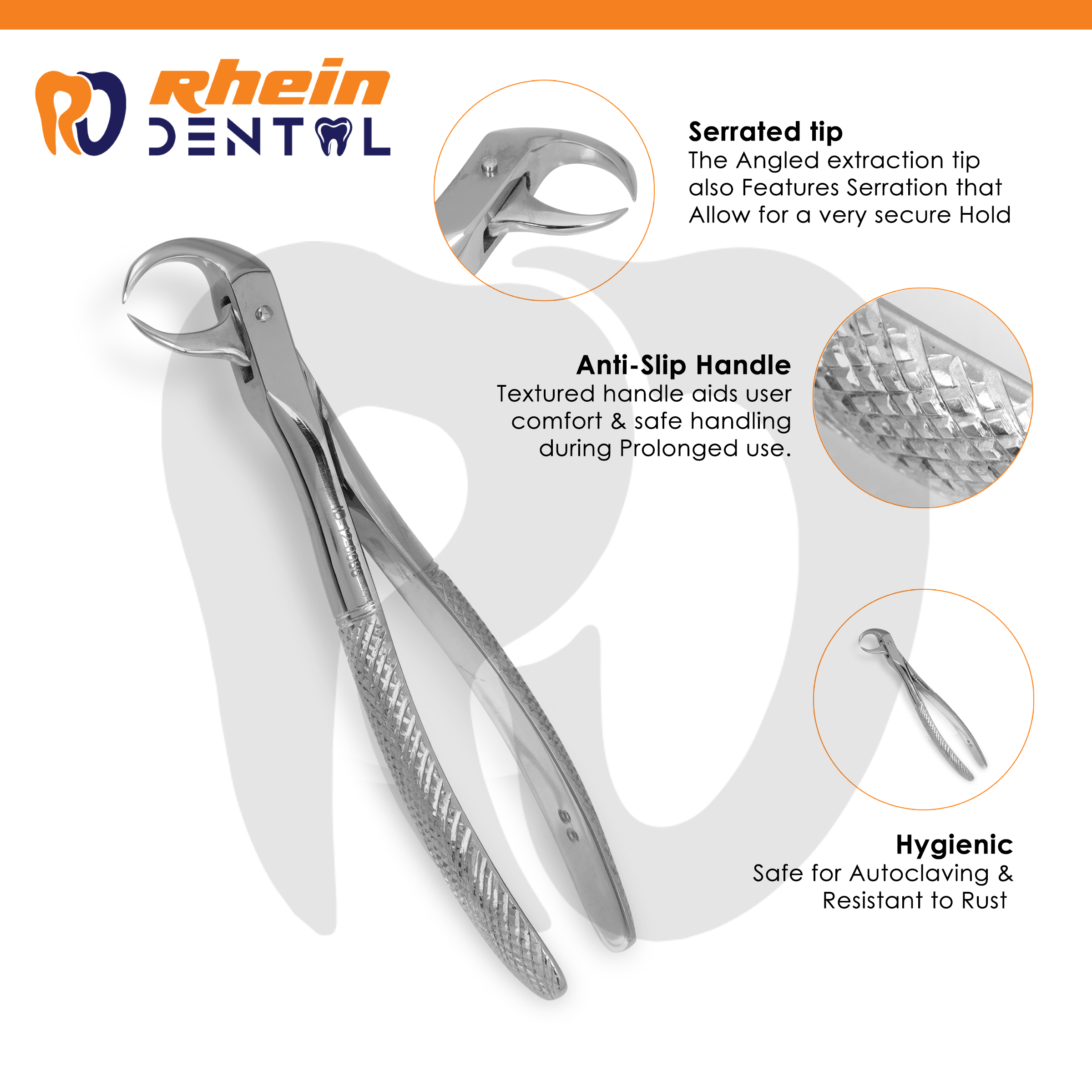
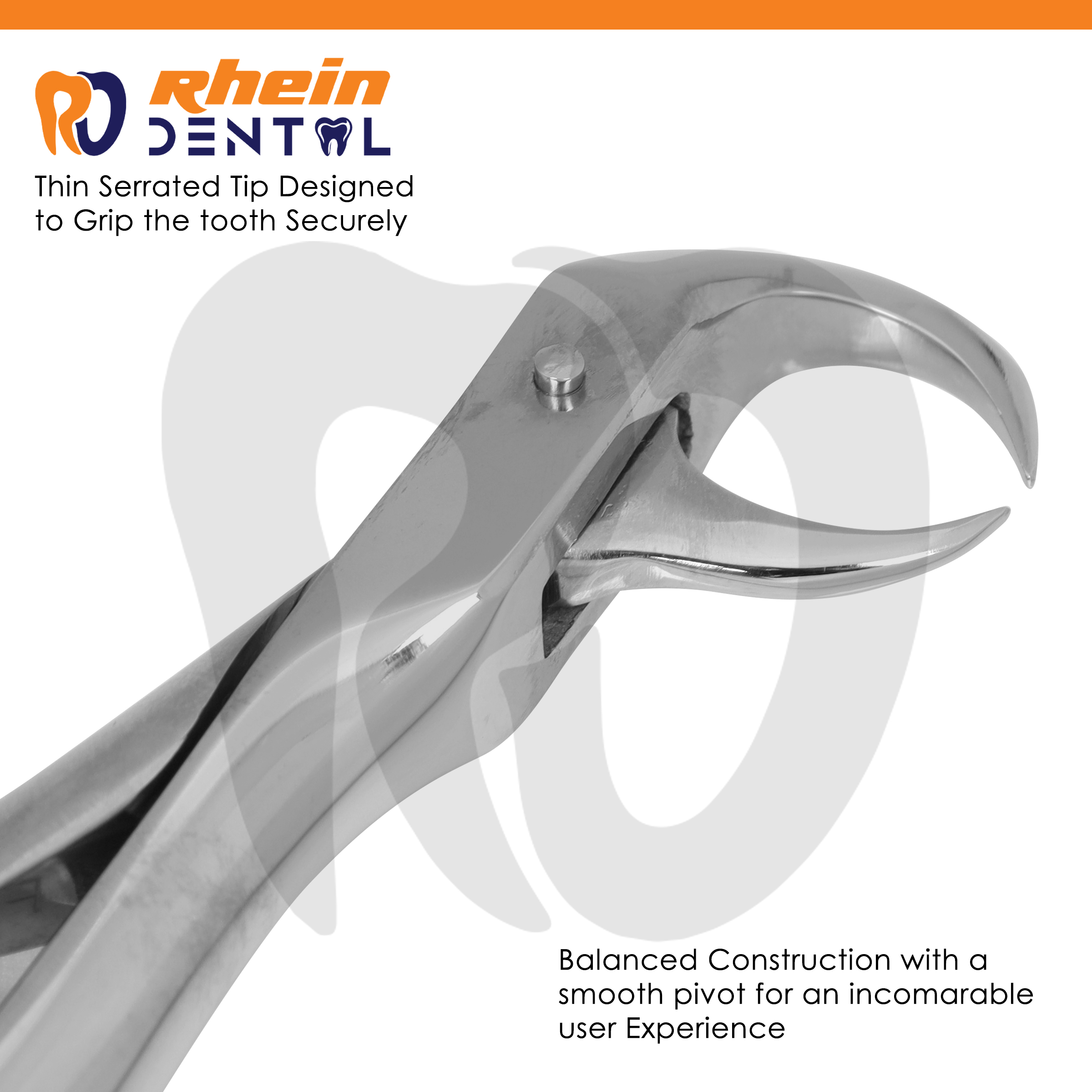
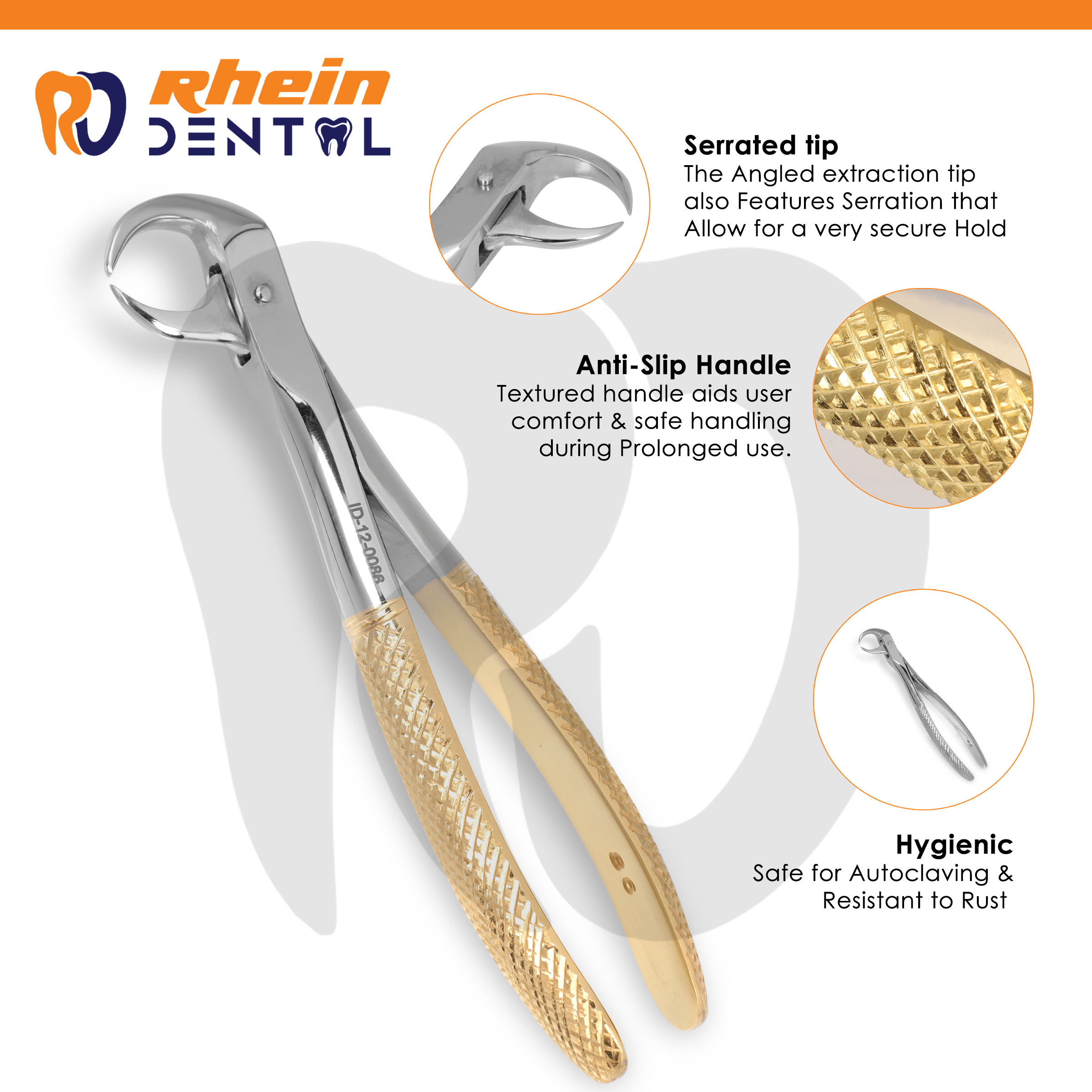
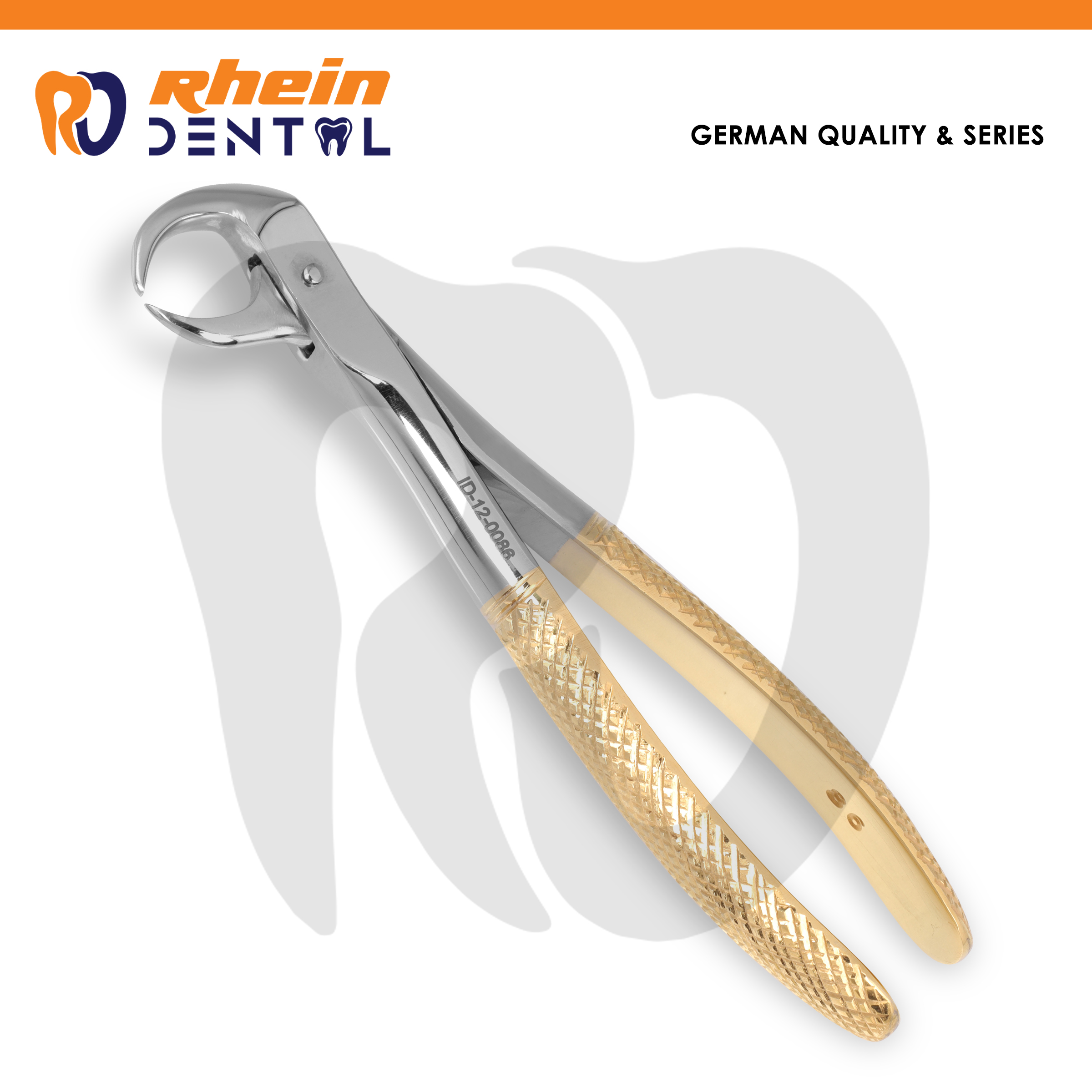
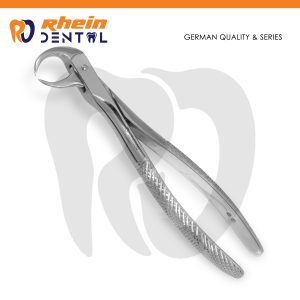
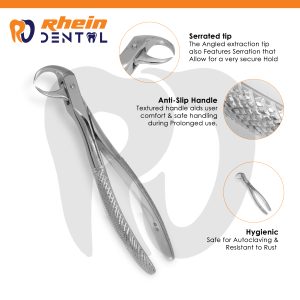
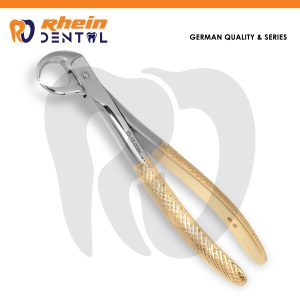
Serrated Lower Molar Extracting Forcep give you a firm, controlled grip when you remove a lower molar. Because the beak sits at an angle to the handle, you reach the tooth without pressing the handle against the lip. Moreover, the serrated tips bite into the tooth surface, so the instrument resists slipping under rotational force.
Surgeons rely on this pattern since the cross-hatched handle stays secure in a gloved hand during long procedures. In fact, Rhein Dental builds it from rust-resistant stainless steel, so it survives repeated autoclaving. Therefore, you add it to your extraction tray once and reuse it across many cycles.
Specifications
| Attribute | Detail |
|---|---|
| Model Code | RD-ID-12-0086 |
| Fig. No. | 86 |
| Material | Stainless steel |
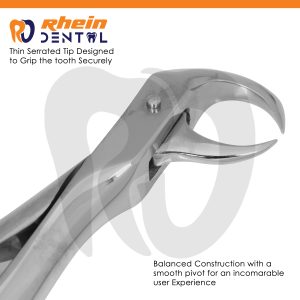
| Tip Design | Angled extraction beak with serrated gripping surface |
| Joint | Pin hinge (visible at the pivot) |
| Handle | Cross-hatched, anti-slip textured grip |
| Finish | Polished |
| Sterilization Method | Autoclave-safe |
| Corrosion Resistance | Rust-resistant |
Clinical Applications
- Simple extraction of mobile lower molars
- Removal of heavily restored or broken-down molars after luxation
- Extraction of periodontally compromised teeth
- Sectioned-root retrieval during surgical extractions
Key Benefits / Real Differentiators
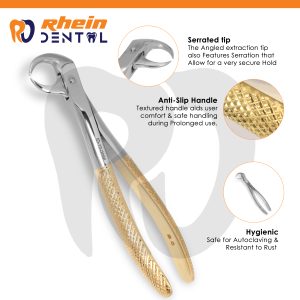
- Serrated angled tip: The serrations grip the tooth surface, so the forceps resist slipping during rotational movements.
- Cross-hatched handle: The texture covers the full grip length, so a gloved hand keeps control in long procedures.
- Autoclave-safe construction: You sterilize it in a standard autoclave cycle between patients.
- Rust-resistant stainless steel: The instrument keeps its polish and function across repeated sterilization cycles.
Ideal For
- Oral and maxillofacial surgeons
- General dentists running extraction-heavy practices
- Dental college and university teaching clinics
- Hospital dental departments and dental outreach camps
frequently asked questions
Smooth beaks grip less firmly. In contrast, this serrated tip prioritizes a secure hold, so choose it when slippage is your main concern.
Yes. We built them for standard autoclave sterilization. Clean them first, then follow your steriliser’s validated cycle.
Yes. The rust-resistant stainless steel withstands repeated sterilization, so you reuse them across many procedures.
The serrations increase friction between beak and tooth. As a result, you hold the tooth securely and avoid slipping during luxation.