
Avoiding Instrument Fracture in Narrow Canals – Endodontic File Fracture Prevention
In endodontic therapy, the success of root canal treatment depends heavily on the precision and reliability of the instruments used. Among the most common and frustrating complications faced by clinicians is endodontic instrument fracture, particularly in narrow or curved canals. A broken file not only complicates treatment but can also compromise the long-term prognosis of the tooth (Endodontic File Fracture Prevention). Understanding the causes of file separation and adopting effective prevention strategies is essential for safe, predictable outcomes (Endodontic File Fracture Prevention)
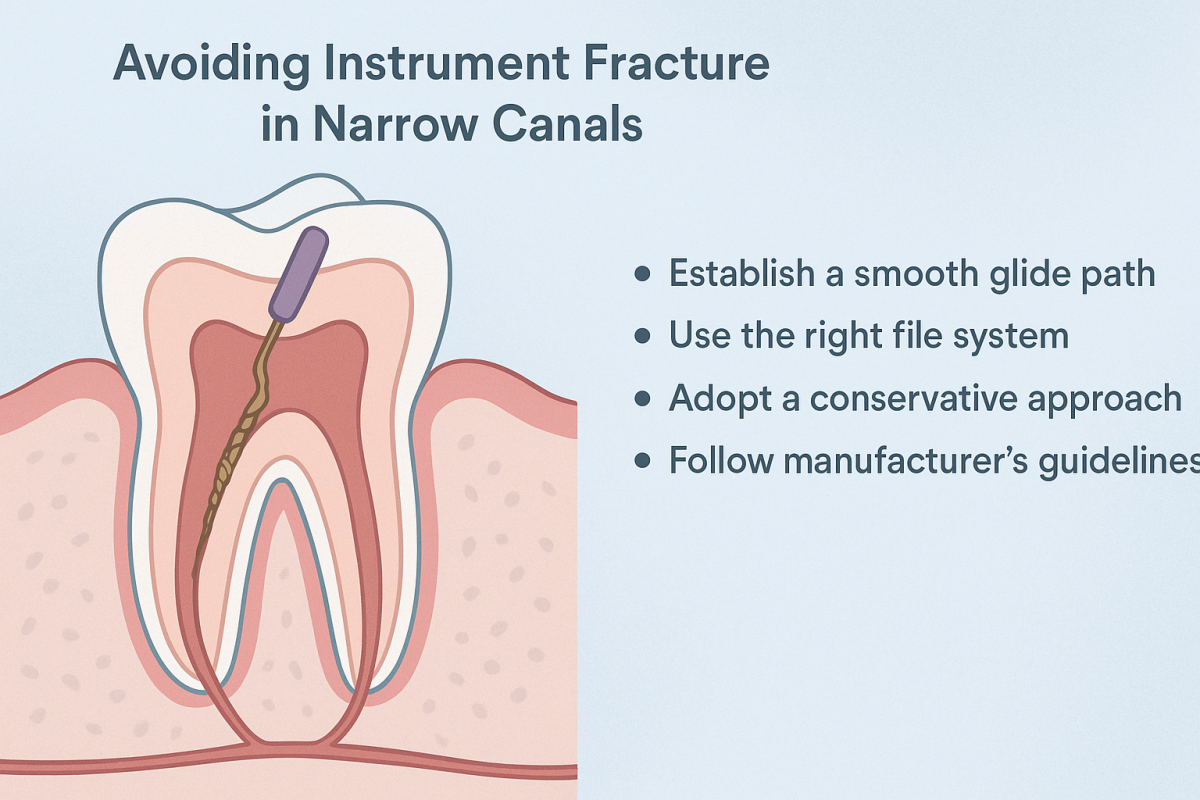
🔹 Why Instrument Fracture Happens in Narrow Canals
Narrow and curved root canals present unique challenges. The combination of limited space, increased torsional stress, and cyclic fatigue significantly raises the risk of file fracture. The main causes include:
- Torsional Stress
When the tip of the file binds within the canal while the shaft continues to rotate, excessive torque can cause the file to twist off. - Cyclic Fatigue
Continuous rotation within curved canals subjects the file to repeated tension and compression cycles, leading to metal fatigue and fracture. - Improper Canal Preparation
Inadequate glide path or poor coronal flaring can force the file to work in constricted spaces, increasing stress. - Overuse of Files
Reusing NiTi rotary files beyond their recommended lifespan increases the likelihood of metal fatigue and breakage. - Excessive Force or Speed
High torque settings or aggressive instrumentation can overload the file, especially in calcified or narrow canals.
🔹 Best Practices to Prevent Endodontic File Fracture
Preventing file separation starts with proper technique, instrument selection, and clinical awareness. Below are key preventive strategies every clinician should follow:
1. Establish a Smooth Glide Path
Before using rotary or reciprocating instruments, always create a glide path with small stainless-steel hand files (sizes 8–15). This ensures a clear, reproducible route and reduces torsional stress on rotary files.
2. Use the Right File System
Choose heat-treated NiTi files with enhanced flexibility and fatigue resistance. Modern file systems with controlled memory or blue/gold thermal treatment adapt better to canal curvature and resist cyclic fatigue.
3. Adopt a Conservative Approach
Avoid forcing files deeper into the canal. Instead, use gentle, controlled pecking motions and remove the file frequently to clean debris.
4. Follow Manufacturer’s Guidelines
Each file system has specific recommendations for speed, torque, and use cycles. Adhering to these parameters minimizes stress and ensures safety.
5. Ensure Proper Irrigation and Lubrication
Continuous irrigation with sodium hypochlorite and the use of lubricants (like EDTA gels) reduce friction and improve file performance within narrow canals.
6. Inspect Files Regularly
Before and during use, inspect instruments under magnification. Look for signs of unwinding, distortion, or micro-cracks—these indicate metal fatigue and imminent failure.
7. Use Torque-Controlled Endo Motors
Smart endodontic motors with torque control and auto-reverse functions prevent overloading and reduce the risk of fracture during instrumentation.
🔹 The Role of File Design and Metallurgy
Modern endodontic files are designed with innovative cross-sections, variable tapers, and advanced NiTi metallurgy to improve strength and flexibility. Heat-treated NiTi files, for instance, have shown superior resistance to cyclic fatigue, making them ideal for narrow or curved canals.
Selecting a reliable file system that matches your technique and case difficulty is crucial. Files engineered for controlled memory and enhanced flexibility perform better in challenging canal anatomy, minimizing fracture risk.
🔹 What to Do If a File Fractures
Despite best efforts, instrument separation can still occur. In such cases:
- Assess the location (apical, middle, or coronal third)
- Attempt retrieval only if safe and feasible
- Bypass or seal the fragment if removal risks further damage
- Inform the patient transparently and document the event
Proper case management ensures ethical practice and helps maintain patient trust.
✅ Conclusion
Avoiding instrument fracture in narrow canals requires a combination of careful planning, appropriate instrument selection, and adherence to sound endodontic principles. By respecting canal anatomy, using advanced NiTi file systems, and maintaining good clinical habits, dentists can significantly reduce the risk of endodontic file separation and ensure long-term treatment success.