Mastering Reciprocating Motion in Endodontics – The Reciprocating Endo Technique
In the evolving world of endodontics, efficiency and precision are key to successful root canal treatments. One of the most significant advancements in recent years is the reciprocating motion technique — a modern approach that enhances both safety and simplicity during canal preparation. If you’re looking to refine your endodontic skills and achieve predictable results, mastering reciprocating motion in endodontics is essential.
What Is Reciprocating Motion in Endodontics?
Reciprocating motion refers to a back-and-forth rotational movement of endodontic files, rather than a continuous 360° rotation. In this technique, the file rotates in a larger counterclockwise cutting direction followed by a smaller clockwise release movement.
This alternating motion minimizes torsional stress and reduces the risk of instrument separation, a common concern in traditional rotary systems.
The Science Behind the Reciprocating Endo Technique
The concept is simple yet ingenious. When the file moves counterclockwise, it engages and cuts dentin. The subsequent clockwise motion disengages the file, allowing it to safely advance into the canal.
This movement mimics the natural path of least resistance within the canal system, enhancing canal negotiation, debris removal, and instrument longevity.
Modern reciprocating systems like WaveOne Gold, Reciproc Blue, and X1 Blue File System have further refined the motion with advanced metallurgy and adaptive design.
Advantages of the Reciprocating Technique
- Reduced Instrument Fracture The alternating motion relieves continuous torsional stress, dramatically decreasing the chances of file breakage.
- Simplified File Sequence Many reciprocating systems are single-file systems, reducing the need for multiple instruments and simplifying the entire shaping process.
- Enhanced Safety The movement minimizes the risk of canal transportation, ledge formation, and zipping, making it ideal for both beginners and experienced clinicians.
- Time Efficiency With fewer files and smoother canal negotiation, treatment time is significantly reduced without compromising cleaning efficacy.
- Improved Flexibility Nickel-Titanium (NiTi) files used in reciprocating systems have enhanced flexibility, adapting easily to curved canals.
Mastering the Technique: Step-by-Step Guide
- Access and Glide Path Creation
Ensure a straight-line access to the canal orifice. Establish a glide path using a small hand file (typically #10 or #15 K-file). - Irrigation and Lubrication
Use adequate irrigation (e.g., sodium hypochlorite) and lubricants to enhance debris removal and reduce friction. - Reciprocating File Insertion
Introduce the reciprocating file gently with a pecking motion. Apply light apical pressure and allow the file to advance passively. - Cleaning and Irrigation
After each pecking cycle, withdraw the file, clean the flutes, and irrigate thoroughly. - Apical Finishing and Shaping
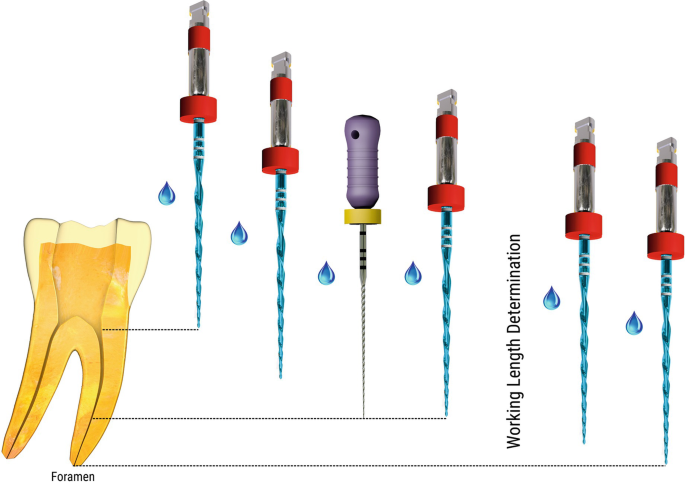
Repeat until working length is achieved. Always confirm with an electronic apex locator or radiograph. - Final Irrigation Protocol
Use EDTA and NaOCl to remove the smear layer and ensure optimal canal cleanliness.
Tips for Clinical Success
- Do not force the file. Let the reciprocating motion do the work.
- Maintain patency using small hand files between cycles.
- Irrigate generously to prevent debris accumulation and reduce post-operative pain.
- Follow manufacturer’s recommended torque and speed settings for your motor and file system.
Reciprocating vs. Rotary Endodontics
| Feature | Reciprocating Technique | Rotary Technique |
|---|---|---|
| Motion | Back-and-forth (reciprocating) | Continuous rotation |
| File Usage | Often single-file systems | Multiple file sequence |
| Instrument Stress | Lower torsional stress | Higher torsional stress |
| Fracture Risk | Minimal | Moderate |
| Ease of Learning | Easier for beginners | Requires more experience |
Conclusion
The reciprocating endo technique represents a major leap in endodontic efficiency, safety, and simplicity. By mastering this motion, clinicians can perform root canal treatments with greater confidence, reduced chair time, and improved outcomes.
As technology continues to advance, reciprocating systems will likely become the standard of care in modern endodontics — merging innovation with clinical excellence.