
Choosing the Right Implant Screwdrivers for Prosthetic Tightening
Selecting the correct implant screwdriver is crucial for the long-term success of prosthetic restorations. Using the wrong tool can lead to complications such as screw loosening, thread damage, or implant failure (Implant screwdrivers).
Understanding Implant Screwdrivers
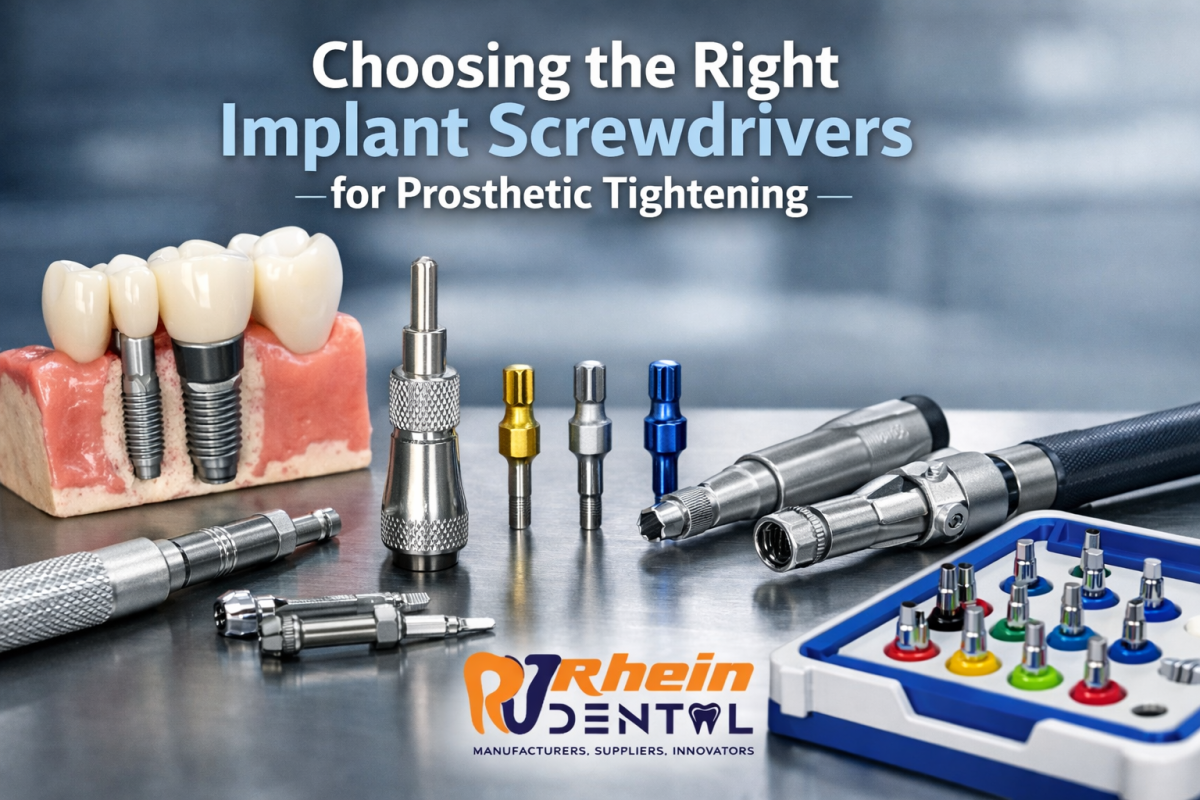
Implant screwdrivers are designed to fit specific implant systems. They come in various sizes, shapes, and drive types, including hex, torx, and tri-lobe. Choosing a compatible screwdriver ensures proper engagement with the implant screw and prevents stripping or slippage.
Factors to Consider
1. Compatibility: Always verify that the screwdriver matches the implant system and screw type. Even minor mismatches can compromise torque accuracy.
2. Ergonomics: Comfortable handles reduce hand fatigue and improve control, especially during long procedures.
3. Torque Accuracy: High-quality screwdrivers maintain consistent torque values. This is essential because under- or over-tightening can lead to mechanical complications.
4. Material and Durability: Stainless steel screwdrivers resist corrosion and maintain precision over repeated use. Therefore, they are a reliable choice for long-term practice.
Best Practices for Prosthetic Tightening
- Always clean the screwdriver and screw interface before use.
- Apply controlled torque according to the manufacturer’s recommendation.
- Inspect the screw and implant interface for damage before final tightening.
- Replace worn or damaged screwdrivers promptly to avoid procedural errors.
Conclusion
Choosing the right implant screwdriver is not optional; it directly impacts prosthetic stability and patient satisfaction. By considering compatibility, ergonomics, torque accuracy, and material quality, clinicians can ensure safer, more precise prosthetic tightening.