
Introduction
Tissue forceps are among the most frequently used instruments in surgical, dental, and veterinary procedures. They provide the precision needed to grasp, stabilize, and manipulate soft tissues while minimizing damage. However, selecting the right type of forceps can significantly impact surgical efficiency, tissue handling, and patient outcomes.
Two of the most commonly used options are Adson Tissue Forceps and Standard Tissue Forceps. While they may appear similar at first glance, differences in grip design, tooth configuration, and tissue interaction make each instrument better suited for specific clinical applications.
This guide explores the key differences between Adson and standard tissue forceps, helping clinicians choose the most appropriate instrument for their procedures.
Understanding Tissue Forceps
Tissue forceps are handheld surgical instruments designed to hold and manipulate tissues during operative procedures. Their primary purpose is to provide controlled tissue handling while maintaining visibility and precision within the surgical field.
The effectiveness of tissue forceps depends largely on three factors:
- Grip and handling characteristics
- Tooth pattern and tissue retention
- Potential for tissue trauma
Choosing the correct forceps can improve surgical accuracy while reducing unnecessary tissue injury.
What Are Adson Tissue Forceps?
Adson Tissue Forceps are precision instruments characterized by their short length, broad thumb grip area, and fine tapered tips. They are commonly used in delicate surgical procedures where precise tissue control is essential.
Key Features
- Typically 12 cm (4.75 inches) in length
- Broad thumb grip for enhanced control
- Fine tips for precision handling
- Available with or without teeth
- Common tooth configuration: 1×2 teeth
Common Applications
Adson forceps are frequently used in:
- Dental surgery
- Plastic surgery
- Dermatology procedures
- Periodontal treatments
- Minor soft-tissue surgeries
- Wound closure and suturing
Their compact design allows clinicians to work comfortably in confined surgical spaces while maintaining excellent tactile sensitivity.
What Are Standard Tissue Forceps?
Standard tissue forceps refer to a broader category of forceps designed for general tissue handling. These instruments are typically longer and available in numerous tip and tooth configurations.
Key Features
- Longer instrument length
- Narrower grip area
- Available in multiple sizes
- Various tooth patterns
- Suitable for general surgical applications
Common Applications
Standard tissue forceps are often used in:
- General surgery
- Orthopedic procedures
- Veterinary surgery
- Oral surgery
- Hospital operating rooms
Their versatility makes them a staple instrument across many surgical specialties.
Grip Comparison: Precision vs. Versatility
Adson Tissue Forceps
One of the most significant advantages of Adson forceps is their ergonomic grip design.
The wider thumb platform provides:
- Improved instrument stability
- Better tactile feedback
- Enhanced precision during delicate procedures
- Reduced hand fatigue during fine tissue manipulation
This design is particularly beneficial when placing sutures or handling fragile tissues.
Standard Tissue Forceps
Standard forceps generally feature a slimmer body and longer profile.
Benefits include:
- Greater reach into deeper surgical sites
- Versatility across different procedures
- Effective handling of larger tissue structures
However, they may not provide the same level of fingertip control as Adson forceps during highly detailed work.
Winner for Precision
For delicate surgical procedures requiring maximum control, Adson tissue forceps are typically the preferred choice.
Tooth Pattern Comparison
The tooth pattern directly influences tissue retention and the amount of force required to maintain a secure grip.
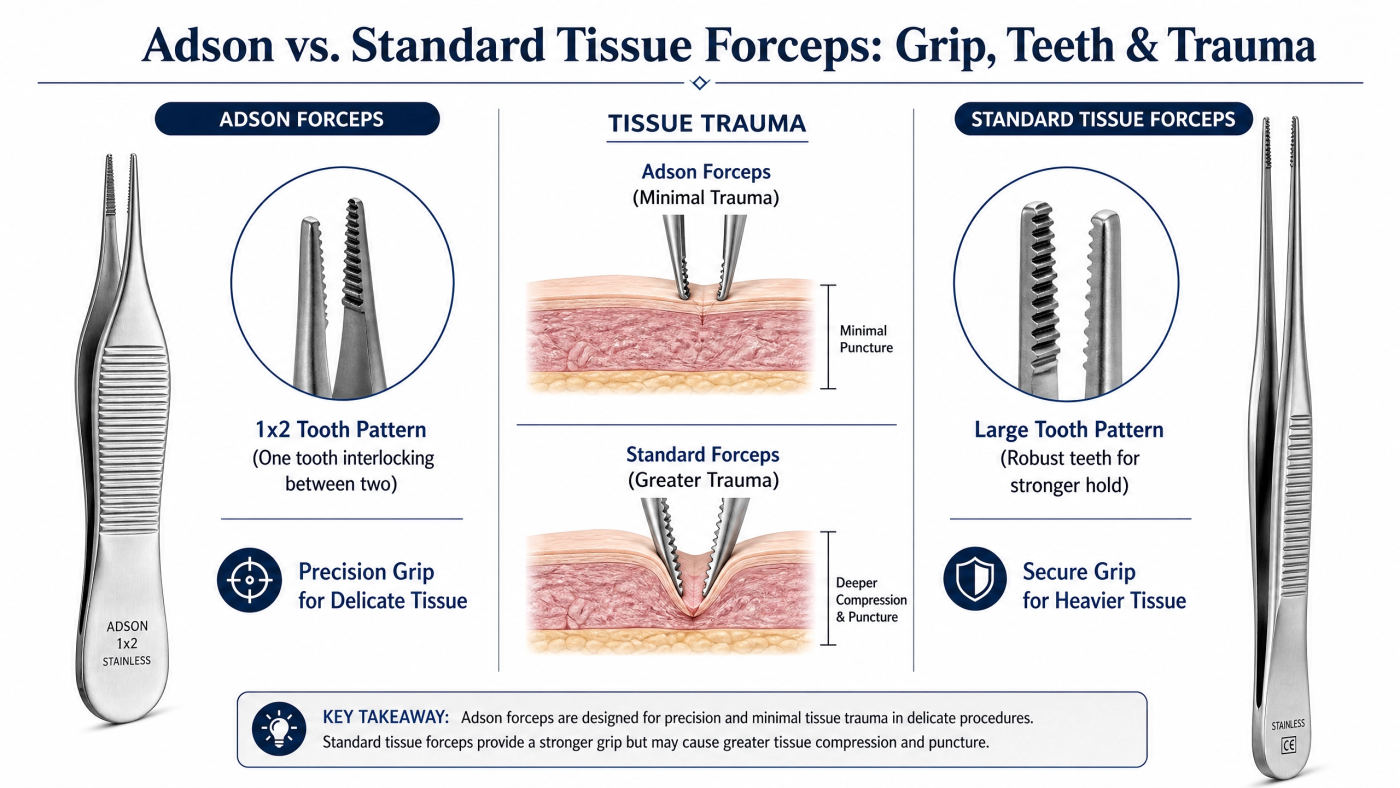
Adson 1×2 Tooth Configuration
Most Adson tissue forceps feature a 1×2 tooth pattern.
This means:
- One tooth on one side
- Two opposing teeth on the other side
Advantages include:
- Secure tissue engagement
- Minimal crushing force required
- Reduced slipping
- Better tissue preservation
Because the teeth interlock, surgeons can maintain tissue control without excessive pressure.
Standard Tissue Forceps Configurations
Standard forceps may include:
- 1×2 teeth
- 2×3 teeth
- 3×4 teeth
- Serrated tips
- Smooth tips
The larger tooth patterns provide stronger tissue retention, making them useful when handling thicker or tougher tissues.
However, stronger engagement may increase the likelihood of tissue puncture if excessive force is applied.
Winner for Delicate Tissue Handling
Adson forceps generally provide superior control when working with fine, fragile, or highly vascular tissues.
Tissue Trauma: Which Forceps Cause Less Damage?
Minimizing tissue trauma is a fundamental principle of modern surgery.
Excessive tissue damage can lead to:
- Delayed healing
- Increased inflammation
- Higher infection risk
- Poor cosmetic outcomes
- Additional patient discomfort
Adson Tissue Forceps and Tissue Preservation
Adson forceps are specifically designed for atraumatic tissue handling.
Their advantages include:
- Fine tips
- Precise tooth engagement
- Reduced crushing pressure
- Improved tissue preservation
Because less gripping force is required, the risk of tissue necrosis and unnecessary trauma is minimized.
Standard Tissue Forceps and Tissue Impact
Standard forceps remain effective for general surgical use but may exert greater pressure on tissues, particularly when used on delicate structures.
In procedures involving thicker tissues, this is often acceptable. However, for fine tissue approximation and cosmetic closure, excessive pressure can compromise healing.
Winner for Reduced Tissue Trauma
Adson tissue forceps generally cause less tissue trauma during delicate surgical procedures.
When to Choose Adson Tissue Forceps
Adson forceps are ideal when:
- Precision is critical
- Soft tissues are delicate
- Cosmetic outcomes matter
- Suturing requires exact tissue alignment
- Working in confined surgical spaces
They are particularly valuable in:
- Periodontal surgery
- Plastic surgery
- Dermatologic procedures
- Microsurgical applications
When to Choose Standard Tissue Forceps
Standard tissue forceps are often preferable when:
- Greater reach is required
- Handling thicker tissue structures
- Performing general surgical procedures
- Working in deeper operative fields
Their versatility makes them suitable for a broad range of surgical disciplines.
Conclusion
Both Adson and standard tissue forceps serve important roles in modern surgical practice, but their designs address different clinical needs.
Adson tissue forceps excel in precision, delicate tissue handling, and minimizing tissue trauma. Their ergonomic grip and refined 1×2 tooth pattern make them particularly effective for suturing, periodontal procedures, and cosmetic surgeries.
Standard tissue forceps, on the other hand, offer greater versatility and reach, making them valuable instruments for general surgical applications and handling larger tissue structures.
Ultimately, the best choice depends on the procedure, tissue type, and level of precision required. By understanding the differences in grip, tooth pattern, and tissue impact, clinicians can select the most effective instrument for optimal surgical outcomes.