
Every orthodontic practice depends on precision instruments to deliver safe, efficient, and predictable patient care. Orthodontic instrument storage plays a crucial role in protecting those instruments after they have been cleaned, disinfected, inspected, and sterilized. Although many clinics focus heavily on sterilization, storage is equally important because improperly stored instruments can quickly lose their sterility, develop corrosion, or suffer unnecessary damage.
Moreover, orthodontic instruments represent a significant financial investment. High-quality bird beak pliers, Weingart pliers, distal end cutters, ligature cutters, bracket holders, and utility pliers are designed to provide years of reliable performance. However, their longevity depends largely on how they are stored between procedures.
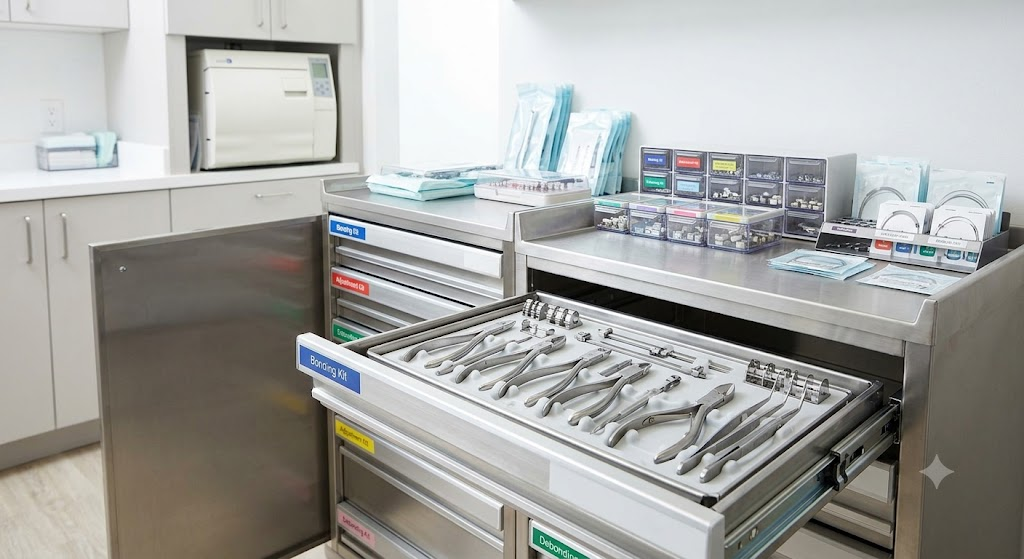
A well-organized storage system does more than protect valuable equipment. In addition, it improves workflow, reduces chairside preparation time, supports infection control, and helps dental teams maintain compliance with professional standards. Consequently, investing in proper storage solutions benefits both clinicians and patients.
This comprehensive guide explains the best storage solutions for orthodontic kits, highlights common storage mistakes, and shares practical strategies for maintaining orthodontic instruments in excellent condition.
Why Proper Orthodontic Instrument Storage Matters
Every stage of instrument reprocessing contributes to patient safety. Nevertheless, many dental professionals underestimate the importance of the final stage—storage.
Once instruments have been sterilized, they must remain protected until they are needed. Otherwise, contamination may occur before the next patient appointment. As a result, the entire sterilization process can become ineffective.
Proper orthodontic instrument storage provides several important benefits.
- Protects sterile instruments from contamination
- Reduces accidental instrument damage
- Prevents rust and corrosion
- Extends instrument lifespan
- Improves organization
- Simplifies inventory management
- Supports infection prevention
- Enhances treatment efficiency
- Reduces replacement costs
- Helps clinics maintain regulatory compliance
Furthermore, organized storage allows dental professionals to locate instruments quickly, reducing delays during patient treatment.
The Orthodontic Instrument Reprocessing Cycle
Safe instrument management follows a continuous workflow. Each stage supports the next, creating a reliable system that protects patients and preserves valuable equipment.
The complete cycle includes:
Cleaning → Inspection → Sterilization → Drying → Storage → Clinical Use
Importantly, storage is not simply the final step. Instead, it preserves the success of every previous stage.
For example, perfectly sterilized instruments may become contaminated if they are placed inside dusty drawers or exposed to excessive moisture. Therefore, proper storage should always be included in every infection control protocol.
Risks of Improper Orthodontic Instrument Storage
Poor storage practices affect more than instrument appearance. In fact, they can reduce clinical efficiency and increase operating costs.
Common problems include:
- Rust formation
- Corrosion
- Damaged cutting edges
- Bent instrument tips
- Cross-contamination
- Lost instruments
- Reduced instrument performance
- Increased maintenance expenses
- Shortened instrument lifespan
Likewise, overcrowded storage drawers often make instruments difficult to locate. Consequently, staff members spend more time searching for equipment instead of preparing patients for treatment.
Essential Characteristics of an Effective Storage System
Choosing the right storage solution requires more than purchasing additional cabinets. Instead, practices should select systems that protect instruments while improving workflow.
Below are the most important features.
Sterility Protection
Sterility should remain intact until an instrument is opened for patient use. Therefore, storage systems must shield sterilized instruments from dust, moisture, and unnecessary handling.
An effective storage solution should:
- Keep sterile packages protected
- Minimize handling
- Reduce contamination risks
- Support clean organization
- Preserve packaging integrity
As a result, clinicians can confidently use instruments without compromising infection control.
Moisture Control
Moisture remains one of the leading causes of corrosion. Even stainless steel orthodontic instruments may develop staining or rust if stored while damp.
Consequently, every instrument should be completely dry before storage.
Best practices include:
- Drying instruments thoroughly after sterilization
- Using low-humidity storage areas
- Avoiding moisture buildup
- Keeping cabinets clean and ventilated
Similarly, storage rooms should remain free from excessive temperature fluctuations.
Physical Protection
Orthodontic instruments contain highly precise working ends. Consequently, accidental contact between instruments may damage delicate tips or dull cutting edges.
Protective storage solutions help prevent:
- Tip deformation
- Surface scratches
- Cutting edge wear
- Joint damage
- Accidental drops
Additionally, silicone rails and dedicated instrument holders minimize movement during transportation and storage.
Easy Accessibility
Organization directly influences productivity. Therefore, instruments should always be stored according to clinical procedures rather than random categories.
For example, many practices create dedicated kits for:
- Bracket bonding
- Wire adjustments
- Debonding
- Emergency repairs
- Finishing procedures
This approach reduces setup time while improving treatment consistency.
Best Storage Solutions for Orthodontic Kits
Numerous storage systems are available today. However, selecting the right solution depends on practice size, workflow, and instrument volume.
Stainless Steel Instrument Cassettes
Instrument cassettes remain one of the most effective options for orthodontic instrument storage.
Unlike loose storage trays, cassettes securely hold instruments in designated positions throughout cleaning, sterilization, transportation, and storage.
Benefits include:
- Better organization
- Reduced handling
- Improved sterilization efficiency
- Excellent instrument protection
- Faster chairside preparation
Furthermore, complete orthodontic kits can remain assembled between procedures, saving valuable clinical time.
Sterilization Trays
Sterilization trays provide another practical storage solution.
These trays allow steam to circulate effectively while protecting instruments during sterilization.
Advantages include:
- Improved drying
- Better organization
- Reduced instrument movement
- Easier transportation
- Enhanced workflow
In addition, perforated trays encourage better airflow, reducing residual moisture after sterilization.
Modular Drawer Organizers
Many orthodontic practices use modular drawer systems because they maximize available storage space.
Instead of placing instruments loosely inside drawers, organizers create dedicated compartments for each instrument type.
Typical sections include:
- Bird beak pliers
- Weingart pliers
- Distal end cutters
- Ligature cutters
- Bracket tweezers
- Mirrors
- Explorers
Likewise, foam inserts protect delicate instruments from accidental impact.
Color-Coded Storage Systems
Color coding makes instrument identification much easier.
For instance:
Blue — Bonding kits
Green — Adjustment appointments
Yellow — Debonding kits
Red — Emergency repair kits
As a result, assistants can prepare treatment rooms more efficiently while reducing the possibility of selecting the wrong instruments.
Dedicated Instrument Cabinets
Purpose-built instrument cabinets offer excellent protection from dust, humidity, and accidental contamination.
Ideally, cabinets should include:
- Adjustable shelves
- Enclosed compartments
- Easy-to-clean surfaces
- Good ventilation
- Secure storage
However, cabinets should never be installed directly beside sinks or areas where moisture levels remain consistently high.
Sterile Storage Containers
Sterile storage containers provide an additional layer of protection for orthodontic instruments after sterilization. Unlike open shelves or uncovered trays, these containers help preserve sterility until the instruments are required for patient treatment. As a result, clinics can reduce contamination risks while maintaining a more organized storage environment.
Many modern practices rely on sterile containers because they simplify instrument handling and improve workflow. Furthermore, they help staff transport complete orthodontic kits safely between the sterilization area and treatment rooms.
The main advantages include:
- Maintaining sterile barriers
- Reducing environmental contamination
- Protecting sterilized instrument packs
- Improving organization
- Supporting infection control protocols
- Simplifying instrument transportation
Nevertheless, containers should always be inspected before use. If a container becomes damaged or contaminated, it should be cleaned or replaced immediately.
Organizing Orthodontic Kits by Clinical Procedure
Organizing instruments according to clinical procedures improves efficiency and consistency. Instead of collecting individual instruments before every appointment, dental teams can prepare complete procedure-specific kits in advance.
Consequently, clinicians spend less time searching for equipment and more time treating patients.
Bonding Kit
A typical bonding kit may contain:
- Bracket holding tweezers
- Bracket positioning gauge
- Bite stick
- Ligature director
- Dental mirror
- Explorer
Because every required instrument is stored together, bonding appointments become faster and more predictable.
Wire Adjustment Kit
Wire adjustment procedures require different instruments.
A complete adjustment kit commonly includes:
- Bird beak pliers
- Weingart pliers
- Distal end cutter
- Ligature cutter
- Mathieu pliers
Similarly, storing these instruments together minimizes interruptions during orthodontic adjustments.
Debonding Kit
Debonding appointments also benefit from dedicated storage.
An organized debonding kit often includes:
- Bracket removing pliers
- Adhesive removal instruments
- Finishing burs
- Scalers
- Polishing accessories
Therefore, clinicians can complete debonding procedures more efficiently while maintaining a clean and organized workspace.
Emergency Repair Kit
Unexpected orthodontic emergencies require immediate access to essential instruments.
For this reason, many clinics prepare dedicated emergency kits containing:
- Distal end cutters
- Utility pliers
- Ligature cutters
- Bracket tweezers
- Orthodontic wax
- Basic diagnostic instruments
As a result, emergency appointments can be managed quickly without disrupting the clinic schedule.
Choosing the Best Storage Materials
The storage material you select directly affects instrument protection, durability, and hygiene. Therefore, practices should choose materials that withstand repeated cleaning while protecting valuable orthodontic instruments.
Stainless Steel
Stainless steel remains the preferred choice for professional orthodontic storage.
Its advantages include:
- Excellent durability
- High corrosion resistance
- Easy cleaning
- Long service life
- Professional appearance
Moreover, stainless steel withstands repeated sterilization without significant deterioration.
Medical-Grade Plastic
Medical-grade plastic organizers offer another practical solution.
These storage systems provide:
- Lightweight construction
- Chemical resistance
- Cost-effective organization
- Easy maintenance
Although plastic organizers are economical, they should be inspected regularly for cracks or damage.
Silicone Instrument Holders
Silicone inserts help secure delicate orthodontic instruments during storage and transportation.
Their benefits include:
- Preventing scratches
- Reducing instrument movement
- Protecting working tips
- Supporting better organization
Likewise, silicone rails help maintain instrument positioning throughout the sterilization process.
Infection Control Best Practices for Orthodontic Instrument Storage
Proper storage is an essential component of infection prevention. Even perfectly sterilized instruments can become contaminated if they are stored incorrectly.
Accordingly, every clinic should establish standardized storage procedures that all team members consistently follow.
Recommended best practices include:
- Store only sterilized instruments.
- Separate sterile and contaminated items.
- Keep storage cabinets clean and dry.
- Inspect sterilization pouches before use.
- Replace damaged packaging immediately.
- Minimize unnecessary handling.
- Label sterilized kits clearly.
- Follow local infection control guidelines.
Furthermore, regular staff training helps ensure storage procedures remain consistent across the entire practice.
Inventory Management for Orthodontic Instruments
An organized inventory system supports both efficiency and cost control. Without proper inventory management, practices may experience instrument shortages, unnecessary purchases, or misplaced equipment.
Fortunately, a structured inventory system simplifies daily operations.
Effective inventory management includes:
- Labeling every instrument kit
- Assigning permanent storage locations
- Performing routine inventory checks
- Rotating stock using the First-In, First-Out (FIFO) method
- Recording damaged instruments immediately
- Monitoring replacement schedules
Additionally, many larger clinics use barcode or digital tracking systems to improve inventory accuracy.
Preventing Rust During Storage
Although stainless steel instruments resist corrosion, improper storage conditions can still cause rust over time.
Fortunately, corrosion is largely preventable with proper maintenance.
To reduce the risk of rust:
- Dry every instrument thoroughly after sterilization.
- Store instruments in low-humidity environments.
- Lubricate hinged instruments when recommended.
- Avoid prolonged moisture exposure.
- Inspect instruments routinely.
- Remove damaged instruments promptly.
Likewise, storage cabinets should remain well ventilated to minimize moisture accumulation.
Daily Orthodontic Instrument Storage Checklist
A consistent daily routine helps maintain instrument quality while supporting efficient clinical operations.
Before closing the clinic each day, staff should complete the following checklist:
✔ Clean all instruments thoroughly.
✔ Inspect instruments for wear or damage.
✔ Dry instruments completely.
✔ Lubricate hinged instruments when appropriate.
✔ Package instruments correctly.
✔ Sterilize according to established protocols.
✔ Store instruments in their designated locations.
✔ Clean storage cabinets and drawers.
✔ Verify inventory levels.
✔ Record damaged or missing instruments.
Overall, following a standardized checklist reduces errors while extending instrument lifespan.
Common Orthodontic Instrument Storage Mistakes
Even well-equipped clinics occasionally develop poor storage habits. Fortunately, recognizing these mistakes makes them easier to prevent.
Avoid the following practices:
- Storing wet instruments
- Overloading storage trays
- Mixing sterile and contaminated instruments
- Leaving instruments exposed to dust
- Ignoring damaged sterilization pouches
- Throwing instruments loosely into drawers
- Failing to label instrument kits
- Skipping routine inspections
- Using damaged storage containers
Instead, implement standardized storage protocols and review them regularly with your clinical team.
How to Choose the Right Orthodontic Instrument Storage Solution
Every orthodontic practice has different storage requirements. Therefore, selecting the right system requires careful planning rather than simply purchasing additional cabinets.
Before making a decision, consider the following factors:
- Practice size
- Daily patient volume
- Number of treatment rooms
- Instrument inventory
- Sterilization workflow
- Available storage space
- Budget
- Regulatory requirements
- Future practice expansion
Ultimately, investing in high-quality storage systems reduces long-term maintenance costs while improving clinical efficiency.
Conclusion
Proper orthodontic instrument storage is far more than a simple organizational task—it is a critical part of patient safety, infection control, and efficient clinical practice. By selecting appropriate storage solutions, maintaining organized procedure-specific kits, and following standardized storage protocols, orthodontic professionals can protect their valuable instruments while improving everyday workflows.
Moreover, investing in high-quality storage systems helps reduce replacement costs, preserve instrument performance, and support long-term regulatory compliance. Whether your practice uses sterilization cassettes, modular organizers, sterile storage containers, or dedicated instrument cabinets, a well-planned storage strategy delivers measurable benefits for both clinicians and patients.
Finally, consistent maintenance, routine inspections, and proper organization ensure that every orthodontic instrument remains clean, protected, and ready for safe clinical use. By implementing the recommendations outlined in this guide, your practice can create a more efficient, compliant, and productive treatment environment.
Frequently Asked Questions
What is the best way to store orthodontic instruments?
The best approach is to clean, inspect, sterilize, dry, and store orthodontic instruments in sterilization cassettes or sterile storage containers within clean, dry cabinets. This method protects instrument integrity while maintaining sterility until clinical use.
Can orthodontic instruments rust during storage?
Yes. Although most orthodontic instruments are manufactured from stainless steel, they can still develop corrosion if stored while damp or exposed to excessive humidity. Therefore, complete drying and proper environmental control are essential.
How should orthodontic kits be organized?
Ideally, orthodontic kits should be organized according to specific clinical procedures such as bonding, wire adjustments, debonding, finishing, and emergency repairs. Consequently, clinicians can work more efficiently while reducing treatment preparation time.
Should sterilized instruments remain sealed?
Absolutely. Sterilized instruments should remain sealed in approved sterilization pouches or sterile containers until immediately before patient use. As a result, sterility is preserved throughout storage.
How often should storage cabinets be cleaned?
Storage cabinets should be inspected regularly and cleaned according to your practice’s infection control protocols. In addition, cabinets should remain dry, dust-free, and well organized at all times.