
Orthodontic treatment demands exceptional precision. Every wire adjustment, bracket placement, and finishing bend depends on the quality of the orthodontic pliers in a clinician’s hand. In 2026, advancements in manufacturing, ergonomic design, and premium stainless steel construction have made modern orthodontic pliers more reliable than ever (Best orthodontic pliers 2026).
Whether you’re setting up a new orthodontic practice or replacing worn instruments, selecting the right pliers improves efficiency, treatment accuracy, and patient comfort.
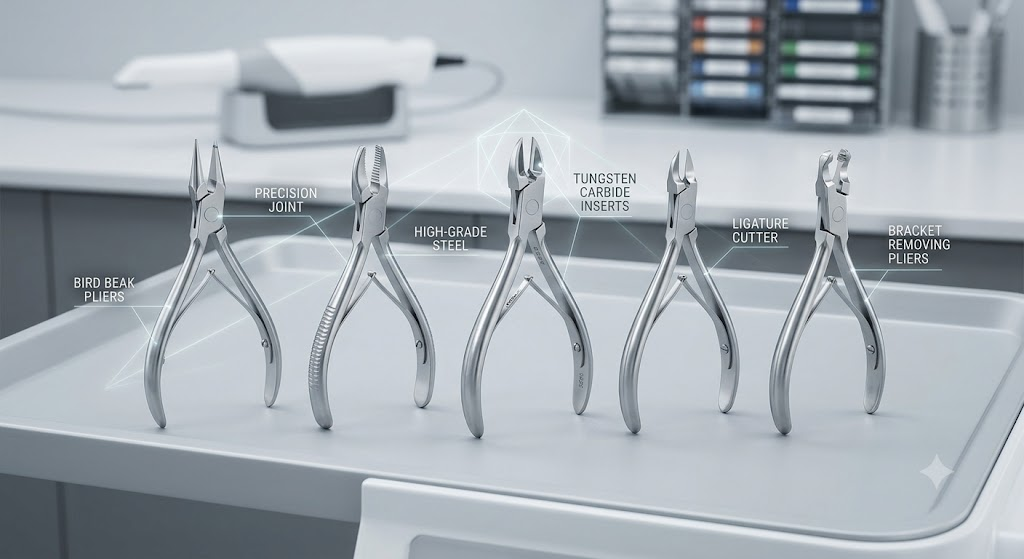
This comprehensive guide explores the top five orthodontic pliers every orthodontist should own, the features that define premium-quality instruments, and the best instrument storage practices to maximize their lifespan.
The growing demand for orthodontic instruments continues to drive innovation, with manufacturers focusing on durability, ergonomics, and precision engineering(Best orthodontic pliers 2026).
Why High-Quality Orthodontic Pliers Matter
Orthodontic pliers are among the most frequently used instruments in fixed appliance treatment. Poor-quality instruments may lead to (Best orthodontic pliers 2026):
- Wire slippage
- Inaccurate bends
- Damaged archwires
- Hand fatigue
- Longer chairside time
- Higher replacement costs
Premium orthodontic pliers provide:
- Precise wire manipulation
- Smooth jaw alignment
- Excellent grip
- Corrosion resistance
- Long-lasting cutting edges
- Comfortable ergonomics
Top 5 Orthodontic Pliers Every Orthodontist Needs
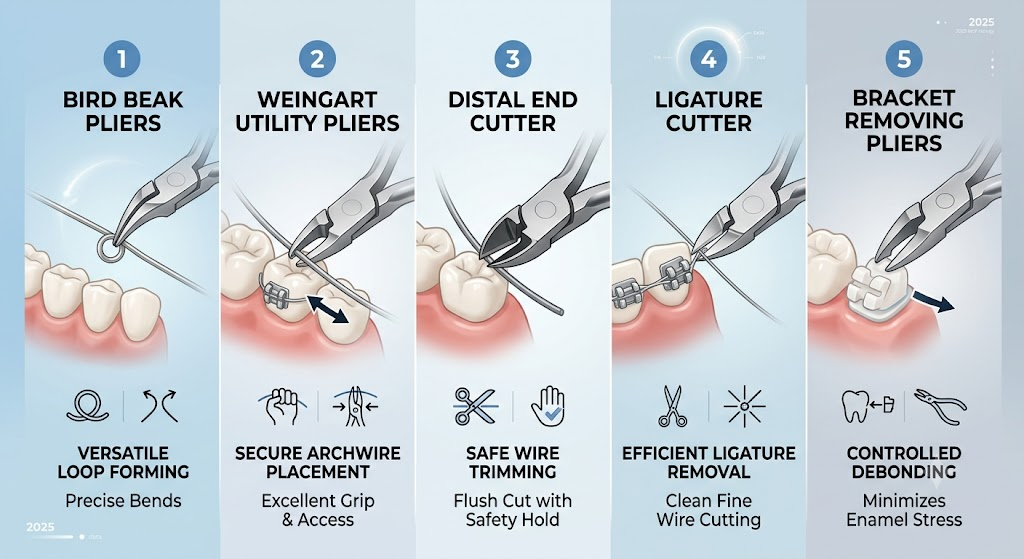
1. Bird Beak Pliers
Best For
- Wire bending
- Loop formation
- Custom archwire adjustments
Bird Beak Pliers remain one of the most versatile orthodontic instruments. Their tapered conical and pyramid-shaped beaks allow clinicians to create accurate bends without damaging the wire.
Key Features
- Fine tapered tips
- Excellent grip
- Smooth jaw alignment
- Surgical stainless steel
- Precision machining
Clinical Applications
- Closing loops
- Opening loops
- Helix formation
- Spring fabrication
- Retainer wire adjustments
2. Weingart Utility Pliers
Best For
- Holding archwires
- Inserting wires
- Removing wires
Weingart Pliers are indispensable during routine orthodontic procedures. Their serrated beaks provide excellent control while minimizing wire slippage.
Advantages
- Strong grip
- Long narrow beaks
- Easy posterior access
- Excellent visibility
- Reduced operator fatigue
Ideal for:
- Initial wire placement
- Elastic chain positioning
- Appliance adjustments
3. Distal End Cutter
Best For
- Cutting excess archwire
One of the most valuable orthodontic cutting instruments, distal end cutters trim the excess wire extending behind molar tubes while safely retaining the cut piece.
Important Features
- Tungsten carbide inserts
- Flush cutting capability
- Safety hold mechanism
- Long-lasting sharpness
- Precise cutting action
Benefits
- Improved patient safety
- Faster appointments
- Reduced soft tissue injuries
4. Ligature Cutter
Best For
- Cutting ligature wires
Ligature cutters are specially engineered for fine orthodontic wires. Their ultra-sharp cutting edges allow clean cuts with minimal force.
Why Orthodontists Prefer Them
- Smooth cutting
- Excellent durability
- Lightweight design
- Comfortable handles
- Reduced hand strain
Applications include:
- Stainless steel ligatures
- Soft wire removal
- Routine appliance adjustments
5. Bracket Removing Pliers
Best For
- Debonding orthodontic brackets
Bracket removal requires controlled force to avoid enamel damage. Modern bracket removing pliers feature specially designed jaws that safely disengage brackets.
Features
- Ergonomic handles
- Controlled pressure
- Non-slip grip
- Smooth jaw movement
- High precision
These pliers improve patient comfort while protecting tooth structure during debonding procedures.
Features to Look for in Orthodontic Pliers
1. Surgical-Grade Stainless Steel
High-quality stainless steel offers:
- Corrosion resistance
- Superior durability
- Easy sterilization
- Long service life
2. Tungsten Carbide Inserts
For cutting instruments, tungsten carbide provides:
- Longer edge retention
- Cleaner cuts
- Greater wear resistance
- Reduced maintenance
3. Ergonomic Design
Comfortable handles reduce:
- Wrist strain
- Finger fatigue
- Hand stress
- Operator discomfort during long procedures
4. Precision Tips
High-quality tips ensure:
- Accurate wire bending
- Better control
- Reduced slippage
- Consistent performance
5. Smooth Joint Mechanism
A properly aligned box joint provides:
- Smooth opening
- Stable grip
- Better longevity
- Less maintenance
Orthodontic Instrument Storage Best Practices
Even premium orthodontic pliers can lose precision if stored improperly. Proper orthodontic instrument storage protects delicate jaws, cutting edges, and alignment.
Store Instruments Completely Dry
Moisture is the leading cause of corrosion.
Always:
- Dry instruments thoroughly after sterilization.
- Allow complete cooling before storage.
- Avoid sealed containers with trapped moisture.
Use Dedicated Instrument Trays
Separate pliers by type.
Benefits include:
- Reduced scratching
- Better organization
- Faster instrument selection
- Improved infection control
Protect Cutting Instruments
Distal end cutters and ligature cutters should never contact other instruments directly.
Use:
- Silicone holders
- Protective caps
- Individual slots
This prevents premature dulling of cutting edges.
Avoid Overcrowded Storage
Stacking instruments may cause:
- Misaligned jaws
- Bent tips
- Surface scratches
- Cutting edge damage
Store instruments in organized cassettes with adequate spacing.
Inspect Instruments Regularly
Check for:
- Loose joints
- Tip alignment
- Cutting efficiency
- Corrosion
- Surface wear
Routine inspections reduce unexpected instrument failures.
Maintenance Tips for Long-Term Performance
To maximize the lifespan of orthodontic pliers:
- Clean immediately after use.
- Remove debris from hinges.
- Lubricate moving joints periodically.
- Follow validated sterilization protocols.
- Avoid using instruments beyond their intended purpose.
- Replace worn cutting edges promptly.
Proper storage, cleaning, and maintenance help preserve jaw alignment and cutting performance over repeated sterilization cycles.
Common Mistakes to Avoid
Many clinics unintentionally shorten instrument life by:
- Using cutters on hard wires beyond their rated capacity
- Mixing cutting and non-cutting instruments together
- Leaving moisture inside sterilization cassettes
- Skipping routine maintenance
- Using damaged pliers instead of replacing them
Conclusion
The right orthodontic pliers are essential for delivering accurate, efficient, and comfortable orthodontic treatment. Bird Beak Pliers, Weingart Pliers, Distal End Cutters, Ligature Cutters, and Bracket Removing Pliers form the foundation of a well-equipped orthodontic practice (Best orthodontic pliers 2026).
Equally important is proper orthodontic instrument storage. Storing instruments in dry, organized, and protective environments preserves their precision, minimizes wear, and extends their service life. Combined with regular maintenance and quality materials, these best practices help clinicians achieve consistent clinical performance and long-term value from their orthodontic instruments.
Frequently Asked Questions
Which orthodontic pliers are used most frequently?
Bird Beak Pliers, Weingart Pliers, Distal End Cutters, Ligature Cutters, and Bracket Removing Pliers are among the most commonly used instruments in orthodontic practice.
What material is best for orthodontic pliers?
Surgical-grade stainless steel offers excellent corrosion resistance, while tungsten carbide inserts provide superior cutting performance and durability.
How should orthodontic pliers be stored?
Store them clean, dry, and organized in dedicated instrument trays or sterilization cassettes. Protect cutting edges with caps or individual holders, and avoid stacking instruments.
How often should orthodontic pliers be inspected?
Inspect them regularly for jaw alignment, hinge movement, corrosion, and cutting efficiency. Routine checks help maintain precision and prevent unexpected failures.
Can all orthodontic pliers be sterilized in an autoclave?
Yes, most premium orthodontic pliers are designed for repeated autoclave sterilization. Always follow the manufacturer’s cleaning, lubrication, and sterilization recommended.