
Orthodontic treatment relies on precision, consistency, and patient comfort. While the skill of the orthodontist is essential, the quality of the instruments used plays an equally important role in achieving successful treatment outcomes. Whether placing brackets, bending archwires, removing adhesives, or adjusting appliances, every procedure depends on reliable orthodontic instruments that perform accurately every time (High Quality Orthodontic Tools).
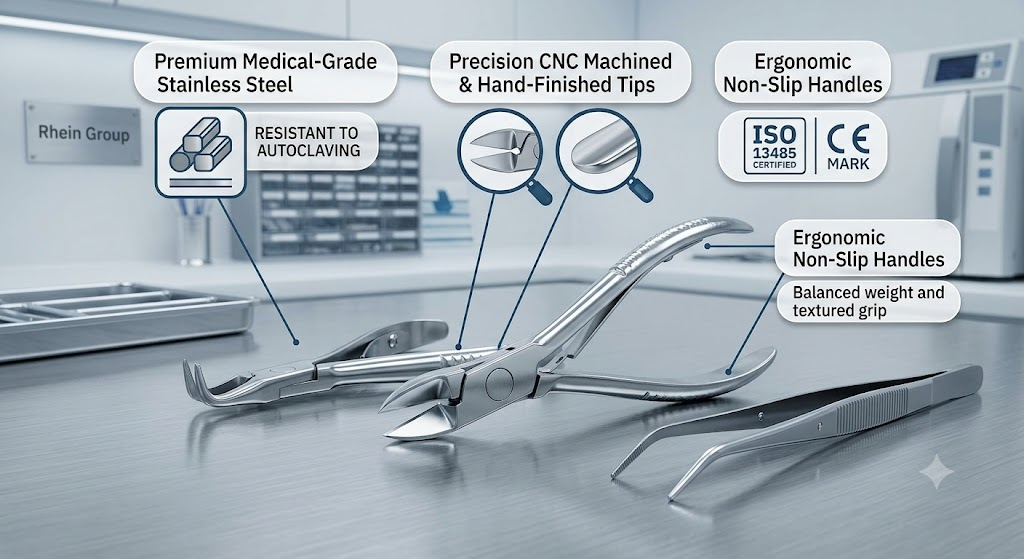
High-quality orthodontic tools are designed to provide exceptional precision, durability, corrosion resistance, and ergonomic handling. Inferior instruments may lose alignment, become dull quickly, or fail under repeated sterilization, leading to inefficient procedures and increased replacement costs.
In this comprehensive guide, we’ll explore what defines high-quality orthodontic instruments, why material selection matters, the manufacturing process, certifications to look for, and how choosing premium tools benefits both dental professionals and patients (High Quality Orthodontic Tools).
Why Instrument Quality Matters in Orthodontics
Orthodontic procedures involve extremely fine adjustments measured in fractions of a millimeter. Even minor inaccuracies can affect treatment efficiency.
Using premium orthodontic instruments helps clinicians:
- Improve procedural precision
- Reduce treatment time
- Enhance patient comfort
- Maintain consistent clinical results
- Lower long-term instrument replacement costs
- Improve workflow efficiency
- Ensure safe sterilization after every procedure
A high-quality orthodontic instrument is not simply more expensive—it is engineered to maintain performance throughout thousands of clinical procedures.
Characteristics of High-Quality Orthodontic Tools
1. Premium Medical-Grade Stainless Steel
One of the first indicators of quality is the material.
Most professional orthodontic instruments are manufactured using:
- German stainless steel
- Japanese stainless steel
- High-grade surgical stainless steel
- Medical-grade martensitic stainless steel
These materials offer:
- Superior hardness
- Excellent corrosion resistance
- Long-lasting sharpness
- Resistance to repeated autoclaving
- High tensile strength
Medical-grade stainless steel prevents rust formation even after hundreds of sterilization cycles.
2. Exceptional Precision Manufacturing
Precision manufacturing ensures every orthodontic instrument performs exactly as intended.
High-quality orthodontic tools are manufactured using:
- CNC machining
- Precision grinding
- Computer-controlled milling
- Laser inspection
- Fine polishing
These manufacturing methods produce:
- Perfect jaw alignment
- Smooth working surfaces
- Accurate tip geometry
- Consistent instrument dimensions
Precision becomes especially important for:
- Bird Beak Pliers
- Distal End Cutters
- Ligature Cutters
- Bracket Holding Tweezers
- Weingart Pliers
3. Excellent Ergonomic Design
Orthodontists perform repetitive hand movements throughout the day.
Poorly designed instruments may contribute to:
- Hand fatigue
- Wrist strain
- Reduced precision
- Operator discomfort
Premium orthodontic tools feature:
- Balanced weight distribution
- Comfortable finger grips
- Non-slip handles
- Rounded edges
- Proper spring tension
Ergonomic instruments improve both clinician comfort and treatment accuracy.
4. Superior Cutting Performance
Cutting instruments should provide clean, effortless cuts without deforming orthodontic wires.
Quality cutting instruments maintain:
- Sharp cutting edges
- Proper blade alignment
- High hardness
- Smooth cutting action
Examples include:
- Distal End Cutters
- Hard Wire Cutters
- Ligature Cutters
- Pin and Ligature Cutters
Superior cutting performance minimizes wire distortion while reducing hand force.
5. Perfect Tip Alignment
Misaligned tips reduce precision and may damage orthodontic appliances.
High-quality orthodontic pliers maintain:
- Accurate jaw closure
- Even pressure distribution
- Proper gripping force
- Consistent contact points
Perfect tip alignment is critical for:
- Bracket placement
- Wire bending
- Ligature placement
- Elastic positioning
6. Corrosion Resistance
Orthodontic instruments undergo continuous exposure to:
- Moisture
- Blood
- Saliva
- Cleaning chemicals
- Steam sterilization
High-quality orthodontic instruments resist:
- Rust
- Pitting
- Surface staining
- Chemical damage
Proper passivation during manufacturing significantly improves corrosion resistance.
7. Durable Box Joints and Hinges
The hinge mechanism determines instrument longevity.
Premium orthodontic instruments feature:
- Precision box joints
- Smooth movement
- Minimal lateral play
- Long-lasting alignment
Well-manufactured joints ensure years of reliable performance.
8. Consistent Spring Tension
Many orthodontic pliers rely on internal spring mechanisms.
High-quality springs provide:
- Smooth opening
- Consistent resistance
- Reduced operator fatigue
- Better procedural control
Poor-quality springs often weaken after repeated use.
Manufacturing Standards That Define Premium Orthodontic Instruments
Reliable orthodontic instrument manufacturers follow strict quality control throughout production.
Typical manufacturing process includes:
Raw Material Inspection
Every stainless steel batch undergoes:
- Chemical composition testing
- Hardness testing
- Surface inspection
Precision Forging
Forging improves:
- Strength
- Grain structure
- Durability
Forged instruments generally outperform cast instruments.
Heat Treatment
Heat treatment optimizes:
- Hardness
- Flexibility
- Wear resistance
Without proper heat treatment, instruments become brittle or too soft.
CNC Finishing
Computer-controlled machining ensures:
- Exact dimensions
- Smooth edges
- Perfect symmetry
Hand Finishing
Experienced technicians inspect:
- Tip alignment
- Joint movement
- Surface finish
- Functional testing
Hand finishing remains one of the most important steps in premium instrument manufacturing.
Final Quality Inspection
Every instrument should undergo:
- Functional testing
- Visual inspection
- Corrosion testing
- Dimensional verification
Important Certifications to Look For
Purchasing orthodontic tools from certified manufacturers provides greater confidence.
Look for manufacturers complying with:
- ISO 13485
- CE (Medical Device Regulation)
- FDA Registration (where applicable)
- Good Manufacturing Practices (GMP)
These certifications demonstrate compliance with internationally recognized quality standards.
Surface Finish Matters
The surface finish affects:
- Cleaning efficiency
- Sterilization
- Corrosion resistance
- Appearance
High-quality orthodontic instruments feature:
Mirror Finish
Advantages:
- Smooth surface
- Easier cleaning
- Premium appearance
- Reduced contamination
Satin Finish
Advantages:
- Reduced glare
- Improved grip
- Professional appearance
Types of High-Quality Orthodontic Tools
Common premium orthodontic instruments include:
Bird Beak Pliers
Used for:
- Wire bending
- Loop formation
- Appliance adjustments
Distal End Cutters
Designed for:
- Cutting archwires
- Holding distal wire segments
- Safe wire removal
Weingart Pliers
Ideal for:
- Wire insertion
- Appliance adjustments
- Ligature placement
Mathieu Needle Holders
Used during:
- Elastic ligature placement
- Fine orthodontic procedures
Bracket Positioning Tweezers
Allow:
- Accurate bracket handling
- Precise placement
- Improved efficiency
Benefits of Investing in High-Quality Orthodontic Instruments
Improved Clinical Precision
Better instruments produce more accurate orthodontic adjustments.
Longer Service Life
Premium tools often remain functional for many years with proper maintenance.
Lower Maintenance Costs
Although initial investment may be higher, premium orthodontic instruments require fewer repairs and replacements.
Better Patient Experience
Patients benefit from:
- Faster appointments
- More comfortable procedures
- Greater treatment accuracy
Increased Practice Efficiency
Reliable tools reduce interruptions caused by:
- Instrument failure
- Frequent sharpening
- Repairs
- Replacements
How to Identify Poor-Quality Orthodontic Instruments
Warning signs include:
- Rough surface finish
- Loose joints
- Poor jaw alignment
- Weak spring tension
- Visible rust
- Uneven cutting edges
- Excessive handle flex
- Poor polishing
These issues often lead to shorter instrument lifespan and inconsistent clinical performance.
Maintenance Tips for Premium Orthodontic Instruments
Proper care extends instrument life considerably.
Best practices include:
- Clean instruments immediately after use.
- Use approved enzymatic cleaners.
- Rinse thoroughly before sterilization.
- Dry instruments completely.
- Lubricate hinged instruments regularly.
- Inspect cutting edges frequently.
- Store instruments in sterilization cassettes.
- Follow manufacturer sterilization guidelines.
Routine maintenance preserves precision and prevents premature wear.
Choosing the Right Orthodontic Instrument Manufacturer
Selecting the right manufacturer is just as important as choosing the instrument itself.
Consider:
- Years of manufacturing experience
- Medical device certifications
- Quality control processes
- Stainless steel grade
- Manufacturing technology
- Product consistency
- International exports
- Customer support
- Warranty policies
A reputable orthodontic instrument manufacturer will provide documentation demonstrating compliance with recognized quality standards.
Conclusion
High-quality orthodontic tools are essential for delivering precise, efficient, and reliable orthodontic care. From premium medical-grade stainless steel and precision manufacturing to ergonomic design and rigorous quality control, every feature contributes to superior clinical performance and long-term durability (High Quality Orthodontic Tools).
Investing in premium orthodontic instruments not only enhances treatment accuracy but also improves workflow efficiency, reduces maintenance costs, and supports better patient experiences. By choosing instruments from trusted manufacturers that meet recognized quality standards and maintaining them properly, orthodontic professionals can ensure consistent performance for years to come. just a featureit’s the foundation of successful treatment.
Frequently Asked Questions
Medical-grade stainless steel is widely regarded as the best material because it offers excellent corrosion resistance, durability, strength, and compatibility with repeated steam sterilization.
With proper maintenance and regular inspection, high-quality orthodontic instruments can remain in excellent working condition for many years, even in busy clinical environments.
Higher-quality instruments use superior materials, precision manufacturing, heat treatment, and rigorous quality control, resulting in better performance, durability, and long-term value.
Quality instruments are designed to withstand repeated sterilization. However, improper cleaning, harsh chemicals, or inadequate drying can reduce their lifespan over time.
Look for manufacturers that comply with internationally recognized standards such as ISO 13485, CE (Medical Device Regulation), and other applicable regulatory requirements for medical devices.