
Orthodontics has undergone remarkable technological advancements over the past decade. From digital treatment planning to AI-assisted aligner therapy, every innovation aims to improve precision, efficiency, and patient outcomes. One area experiencing significant transformation is coated orthodontic instruments, particularly non-stick orthodontic pliers.
Traditional orthodontic pliers often suffer from adhesive buildup during bracket bonding and composite handling. This not only slows procedures but also compromises precision and increases maintenance requirements. Modern coated orthodontic tools solve these challenges through advanced surface engineering, offering smoother performance, easier cleaning, and longer instrument life.
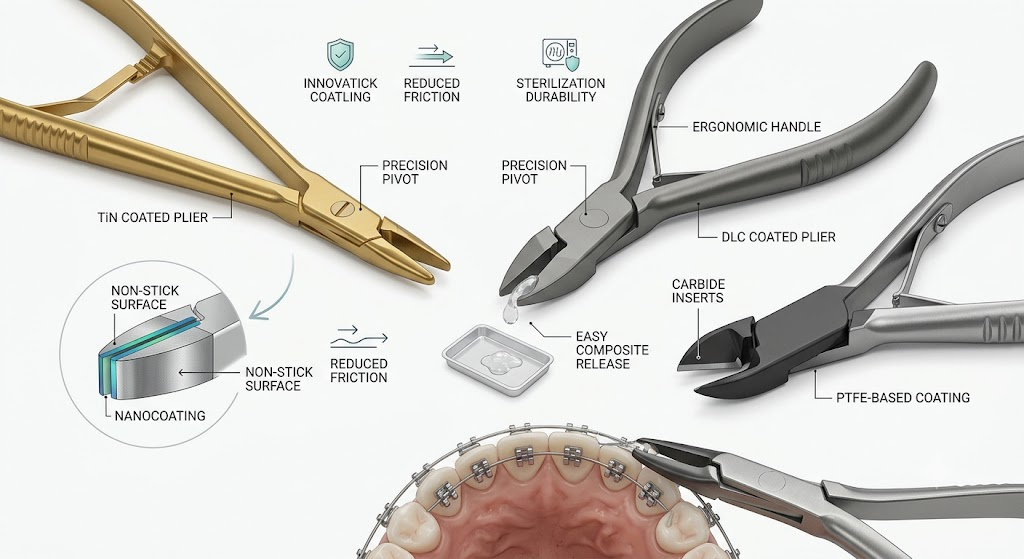
Whether you’re an orthodontist, dental clinic owner, dental supplier, or procurement manager, understanding the future of non-stick orthodontic pliers can help you invest in instruments that improve workflow and treatment quality.
What Are Coated Orthodontic Tools?
Coated orthodontic tools are dental instruments enhanced with specialized surface coatings designed to improve durability, reduce friction, and prevent material adhesion.
Unlike conventional stainless steel instruments, coated tools feature advanced surface technologies that resist:
- Composite resin buildup
- Bonding adhesive accumulation
- Corrosion
- Surface scratching
- Chemical wear
- Sterilization damage
These improvements make coated orthodontic instruments ideal for modern orthodontic practices where efficiency and precision are essential.
Understanding Non-Stick Orthodontic Pliers
Non-stick orthodontic pliers are engineered with special coatings that prevent orthodontic adhesives and composites from sticking to the instrument surface during procedures.
These pliers are commonly used for:
- Bracket placement
- Bracket removal
- Archwire bending
- Ligature adjustment
- Wire forming
- Elastic placement
- Precision orthodontic adjustments
The non-stick surface allows clinicians to manipulate materials smoothly without constant cleaning during treatment.
Why Traditional Orthodontic Pliers Create Problems
Although stainless steel has long been the standard material, untreated surfaces present several limitations.
Adhesive Build-Up
Composite bonding agents adhere easily to polished steel surfaces.
As procedures continue, clinicians frequently stop to remove accumulated adhesive.
This results in:
- Longer chair time
- Reduced efficiency
- Interrupted workflow
Reduced Precision
Adhesive buildup changes the gripping surface of orthodontic pliers.
Eventually this affects:
- Grip accuracy
- Bracket positioning
- Wire control
- Clinical precision
Increased Cleaning Requirements
Orthodontic staff spend considerable time removing hardened resin before sterilization.
This increases:
- Labor costs
- Instrument downtime
- Sterilization complexity
Faster Instrument Wear
Repeated scraping and aggressive cleaning gradually damage polished stainless steel surfaces.
Over time this shortens the lifespan of orthodontic instruments.
The Science Behind Non-Stick Coatings
Modern coated orthodontic tools use advanced material engineering to create ultra-smooth, low-friction surfaces.
These coatings significantly reduce the surface energy that normally causes adhesives to bond with metal.
Instead of sticking firmly, composite materials release easily.
This principle improves clinical efficiency while protecting the instrument.
Types of Coatings Used in Orthodontic Instruments
Several coating technologies are currently used in premium orthodontic pliers.
Titanium Nitride (TiN)
Titanium Nitride is one of the most recognized medical-grade coatings.
Benefits include:
- High hardness
- Excellent wear resistance
- Corrosion protection
- Smooth working surface
- Gold-colored finish
Diamond-Like Carbon (DLC)
Diamond-Like Carbon coatings provide extremely low friction with exceptional hardness.
Advantages include:
- Superior non-stick performance
- Scratch resistance
- Longer service life
- Reduced maintenance
- Enhanced precision
PTFE-Based Coatings
PTFE coatings provide excellent release properties.
Benefits include:
- Outstanding anti-stick performance
- Smooth composite handling
- Reduced cleaning
- Better clinician comfort
Ceramic Coatings
Advanced ceramic coatings combine hardness with chemical resistance.
They offer:
- High-temperature stability
- Excellent sterilization resistance
- Surface durability
- Corrosion protection
Benefits of Non-Stick Orthodontic Pliers
1. Faster Clinical Procedures
The most immediate benefit is increased efficiency.
Since adhesives do not accumulate rapidly, orthodontists spend more time treating patients and less time cleaning instruments.
Busy practices can significantly improve workflow.
2. Greater Clinical Precision
A clean gripping surface provides better control during:
- Bracket placement
- Composite handling
- Wire adjustment
- Fine orthodontic movements
This leads to more predictable treatment outcomes.
3. Improved Patient Comfort
Faster procedures reduce chair time.
Patients experience:
- Less discomfort
- Shorter appointments
- Better overall treatment experience
4. Reduced Instrument Maintenance
Because composite releases easily, staff spend less time removing hardened adhesive.
Benefits include:
- Faster sterilization preparation
- Less manual scraping
- Reduced instrument damage
5. Longer Instrument Lifespan
Protective coatings shield the underlying stainless steel from:
- Surface abrasion
- Corrosion
- Sterilization chemicals
- Mechanical wear
This extends the useful life of orthodontic pliers.
6. Better Infection Control
Smooth coated surfaces are easier to clean before sterilization.
This supports effective infection prevention protocols and helps maintain instrument hygiene.
Clinical Applications of Non-Stick Orthodontic Pliers
These instruments are increasingly used throughout orthodontic treatment.
Applications include:
- Bracket positioning
- Ceramic bracket handling
- Composite placement
- Archwire adjustments
- Elastic chain placement
- Ligature wire bending
- Finishing procedures
- Debonding
How Surface Coatings Improve Orthodontic Workflow
Modern orthodontic practices focus on maximizing efficiency.
Coated instruments contribute by:
- Reducing interruptions
- Maintaining instrument performance
- Minimizing cleaning frequency
- Supporting consistent treatment quality
Small improvements during every procedure create significant productivity gains over hundreds of patients.
Sterilization Performance of Coated Orthodontic Instruments
One concern clinicians often have is whether coatings withstand repeated autoclaving.
High-quality medical coatings are specifically designed to tolerate repeated sterilization cycles without losing their performance.
Premium coatings resist:
- Steam sterilization
- High temperatures
- Moisture exposure
- Cleaning chemicals
However, proper instrument care remains essential.
Best practices include:
- Rinsing immediately after use
- Avoiding abrasive cleaning tools
- Following manufacturer sterilization instructions
- Inspecting coatings regularly
Are Coated Orthodontic Pliers Worth the Investment?
Although coated instruments may cost more initially, many practices recover the investment through:
- Longer instrument life
- Reduced replacement frequency
- Improved efficiency
- Less maintenance
- Faster appointments
- Better clinical precision
For high-volume orthodontic practices, these savings can outweigh the higher purchase price over time.
Future Innovations in Coated Orthodontic Tools
Surface engineering continues to evolve rapidly.
Future developments may include:
Smart Nano-Coatings
Nano-engineered coatings could further reduce friction while improving durability.
Antimicrobial Coatings
Researchers are developing coatings that may inhibit bacterial growth on instrument surfaces between cleaning and sterilization.
Self-Healing Surfaces
Emerging materials may repair microscopic scratches, extending instrument longevity.
AI-Optimized Instrument Design
Future orthodontic instruments may combine ergonomic improvements with advanced coatings for maximum clinical performance.
Ultra-Hard Hybrid Coatings
Next-generation hybrid materials may provide even greater resistance to wear while maintaining excellent non-stick properties.
Choosing High-Quality Non-Stick Orthodontic Pliers
When purchasing coated orthodontic instruments, consider:
- Medical-grade stainless steel construction
- Certified coating technology
- Autoclave compatibility
- Ergonomic handle design
- Precision manufacturing
- Corrosion resistance
- Manufacturer quality standards
- Warranty and after-sales support
Selecting reliable instruments ensures consistent clinical performance and long-term value.
Conclusion
The future of orthodontics extends beyond digital technologies—it also includes advancements in the instruments clinicians rely on every day. Coated orthodontic tools, especially non-stick orthodontic pliers, represent a meaningful improvement in precision, efficiency, durability, and ease of maintenance.
As surface coating technologies continue to evolve, orthodontists can expect instruments that are more durable, easier to sterilize, and better suited to modern clinical demands. Investing in high-quality coated orthodontic pliers is a practical step toward improving workflow, reducing maintenance, and delivering consistent, high-quality patient care.
Non-stick orthodontic pliers are coated dental instruments designed to resist composite resin and adhesive buildup during orthodontic procedures, improving precision and efficiency.
Common coatings include Titanium Nitride (TiN), Diamond-Like Carbon (DLC), ceramic coatings, and PTFE-based non-stick coatings, each offering enhanced durability and reduced friction.
Yes. High-quality coated orthodontic pliers generally resist wear, corrosion, and surface damage better than uncoated instruments, extending their service life with proper maintenance.
Yes. Most premium coated orthodontic pliers are designed to withstand repeated steam sterilization cycles without compromising their protective coatings when used according to manufacturer guidelines.
For many orthodontic practices, they can improve efficiency by reducing adhesive buildup, minimizing cleaning interruptions, and supporting more accurate bracket placement, making them a worthwhile long-term investment.