
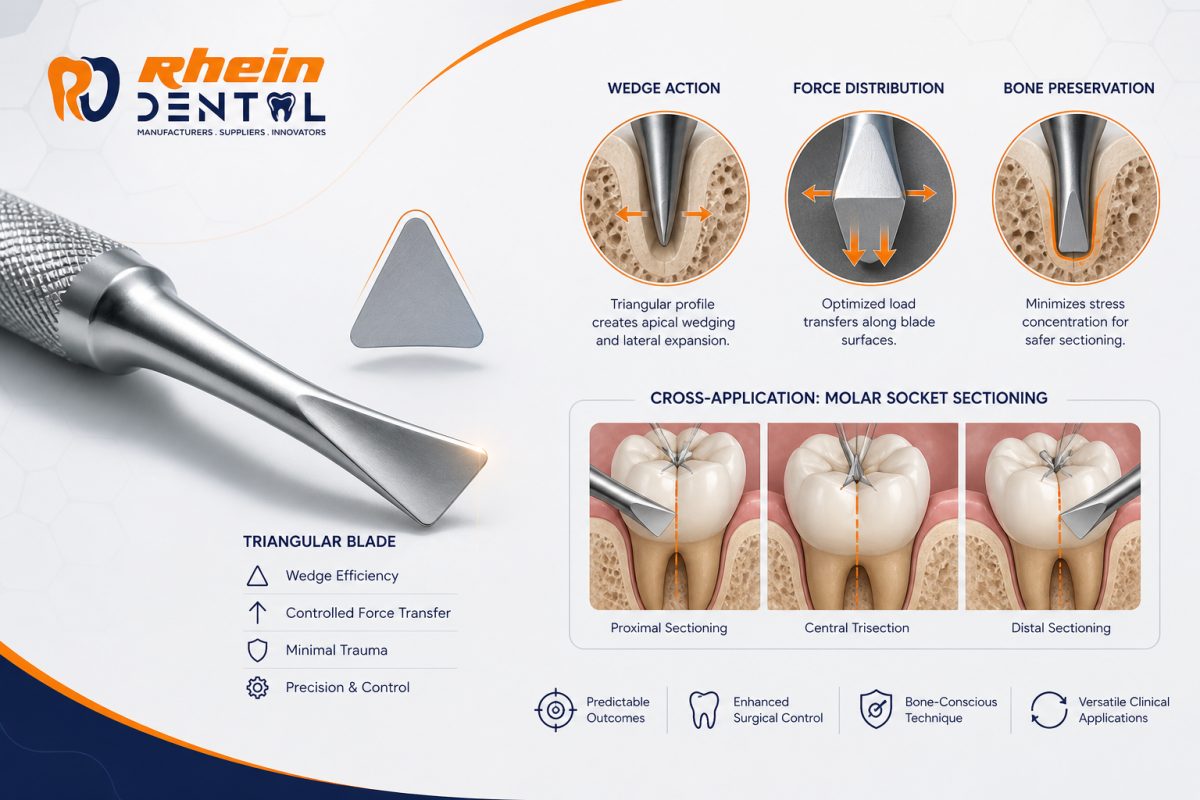
In oral surgery, precision isn’t just a preference it’s a necessity. Among the instruments designed for controlled tooth elevation, the Cryer elevator holds a special place. Its unique geometry, especially the triangular blade design, transforms rotational force into effective leverage, making it indispensable in challenging molar extractions and root retrieval cases (Cryer elevator working principle). […]
Author Archives: Abdul Mateen
Surgical Instruments Blog
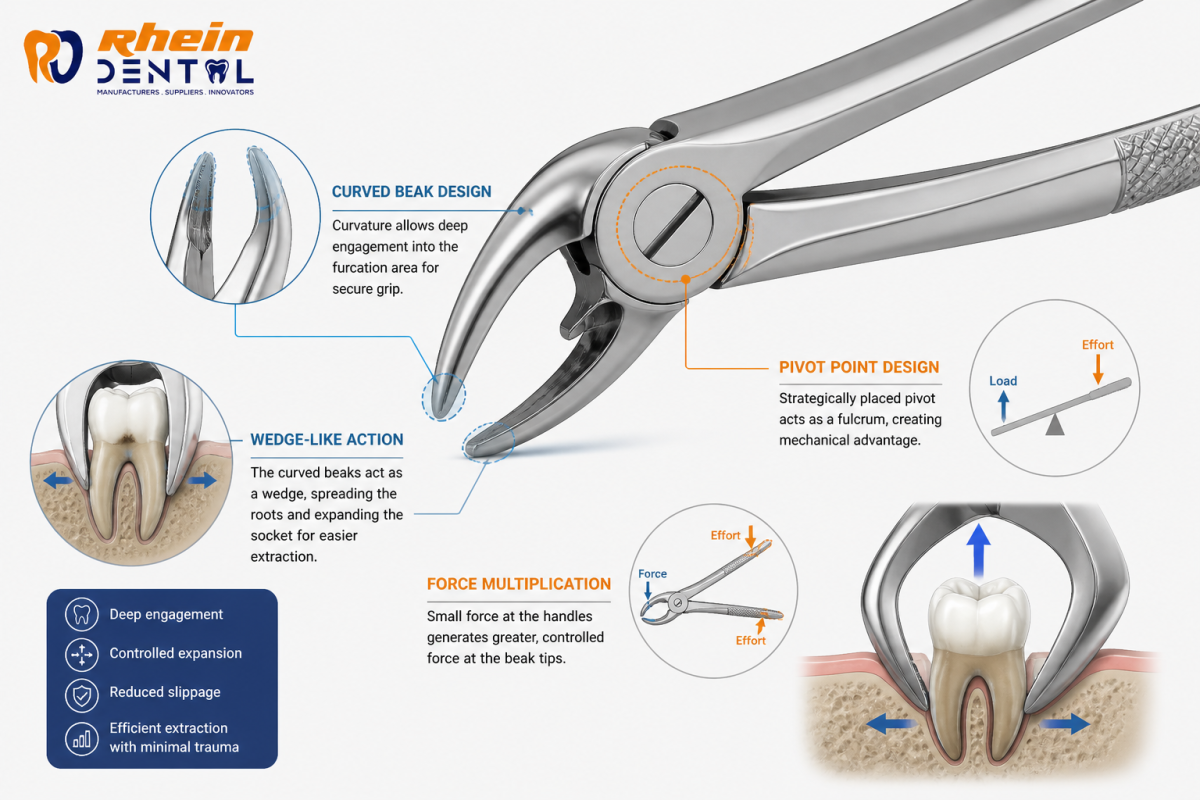
Cowhorn Forceps Mechanics: How Beak Curvature and Pivot Point Design Generate Controlled Extraction Force
05
May
May
Dental extraction is not just about force. Instead, it depends on controlled biomechanics, precision, and proper instrument design. Among extraction instruments, Cowhorn forceps stand out because they combine mechanical efficiency with anatomical adaptability. Moreover, their design helps clinicians manage difficult molar extractions with greater control and reduced trauma (Cowhorn Forceps Mechanics). What Are Cowhorn Forceps? […]
Surgical Instruments Blog
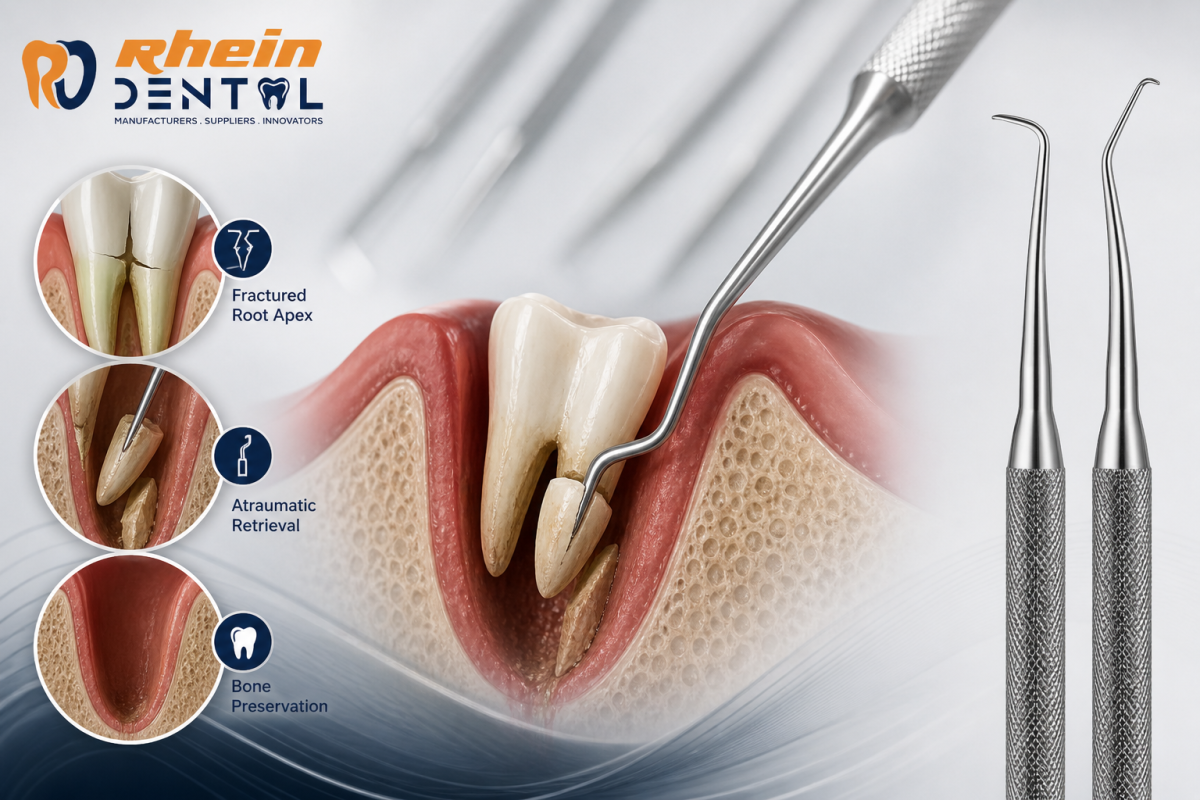
Root Tip Picks and Apical Elevators: Techniques for Retrieving Fractured Root Apices Without Bone Loss
05
May
May
Fractured root apices are a common intraoperative challenge in exodontia especially in endodontically treated teeth, brittle roots, or anatomically complex molars. The goal isn’t just retrieval; it’s doing so atraumatically, preserving surrounding bone and soft tissue for optimal healing and future prosthetic or implant considerations (Root pick tips and apical elevators techniques). This guide breaks […]
Surgical Instruments Blog
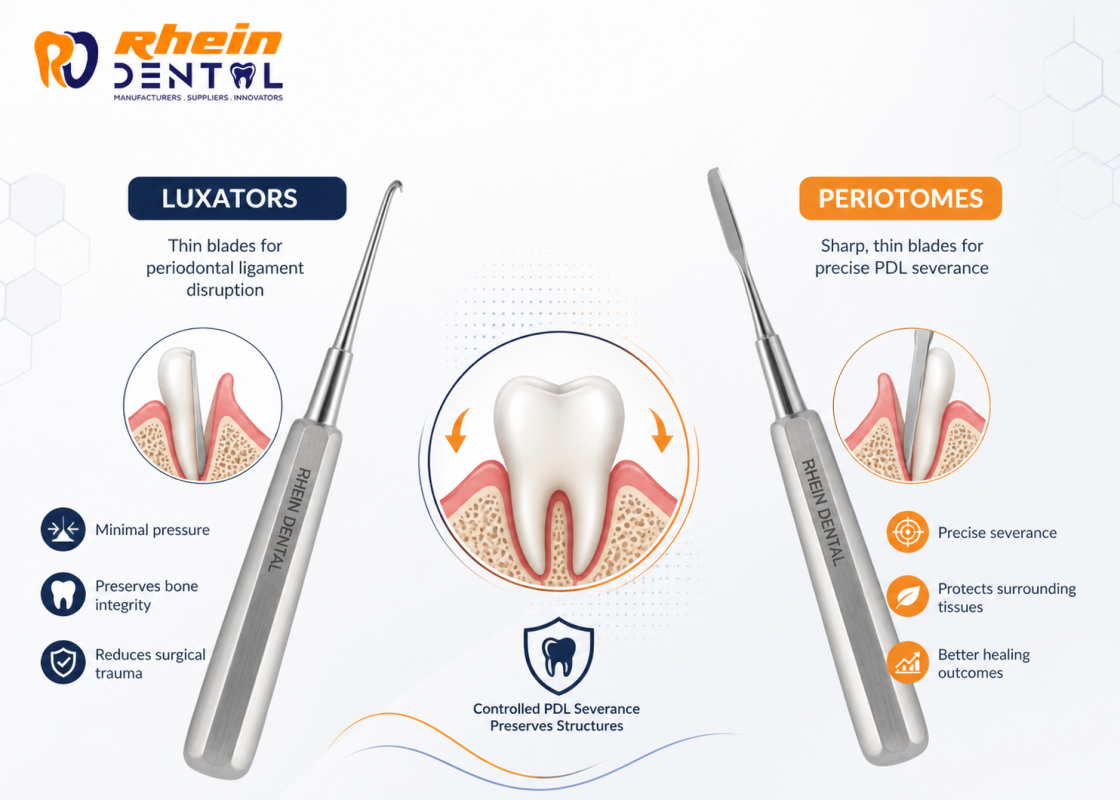
Luxators vs. Periotomes: How Thin Blades and Controlled PDL Severance Reduce Surgical Trauma
04
May
May
Modern dental extraction is no longer about force it is about precision, tissue preservation, and biomechanical control. As minimally invasive dentistry continues to evolve, instruments like luxators and periotomes have become essential for reducing surgical trauma during tooth removal (Luxators vs periotomes). Although both tools are designed to sever the periodontal ligament (PDL), their structure, […]
Surgical Instruments Blog
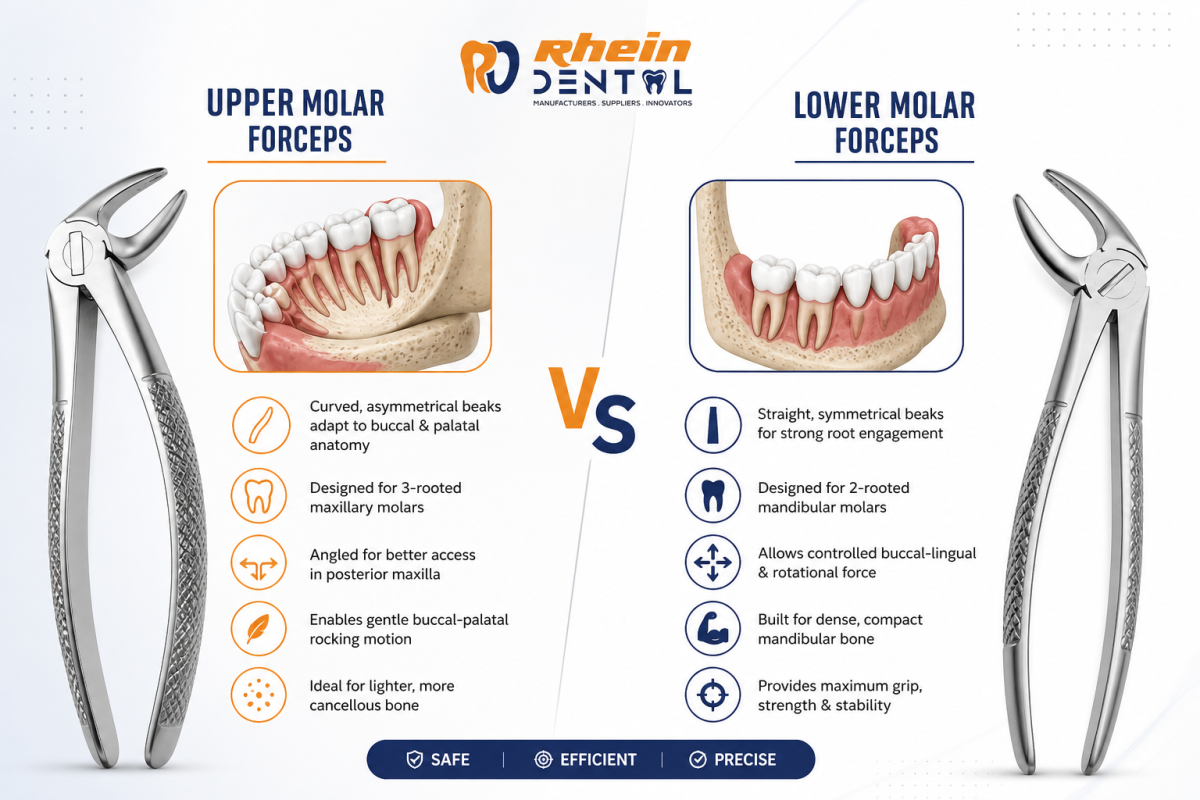
Upper vs. Lower Molar Forceps: Anatomical Design Differences That Determine Safe and Efficient Tooth Removal
04
May
May
Tooth extraction is never just about force; it is about precision, control, and anatomy-driven design. Because upper and lower molars differ significantly in structure and access, dentists rely on specifically engineered forceps to ensure safe and efficient removal. As a result, understanding these differences becomes essential for both clinical success and patient safety (Upper vs […]
Dental Instruments Blog
Instrument Handle Ergonomics: How Hex, Round, and Flat Shanks Affect Fatigue and Torque Control in Long Surgeries

04
May
May
In long surgical procedures, precision isn’t just about skill it’s about endurance. And endurance depends heavily on something many clinicians overlook: instrument handle ergonomics (Instrument Handle Ergonomics). The shape of an instrument shank whether hex, round, or flat directly affects how force is applied, how fatigue builds up, and how much control you maintain over […]
Surgical Instruments Blog
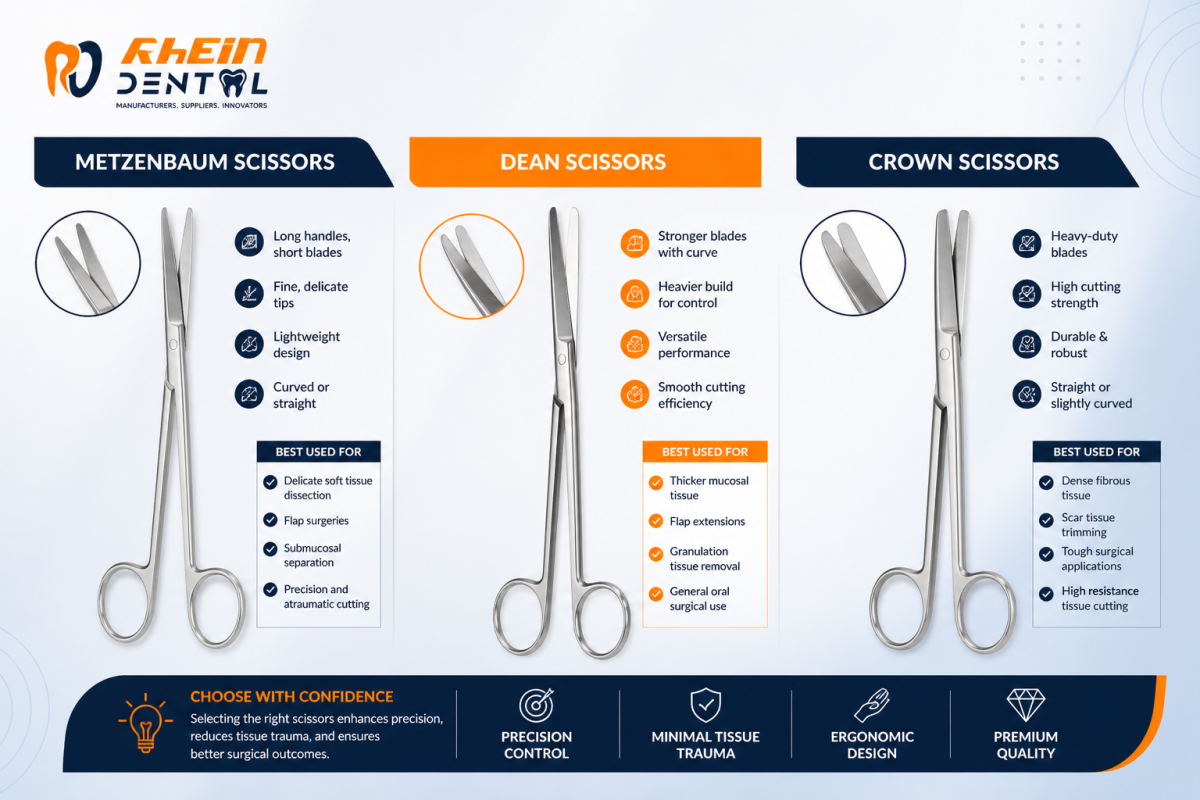
Metzenbaum, Dean, and Crown-and-Collar Scissors: How Blade Geometry Decides Which One Belongs in Your Tray
01
May
May
Every surgical scissor in a dental tray looks similar at first glance. Two blades, a pivot, a pair of rings. But compare a Metzenbaum against a Dean or a crown-and-collar scissor, and the differences stop being cosmetic. Blade length, tip shape, curvature, and shank design each solve a different problem. As a result, choosing the […]
Surgical Instruments Blog
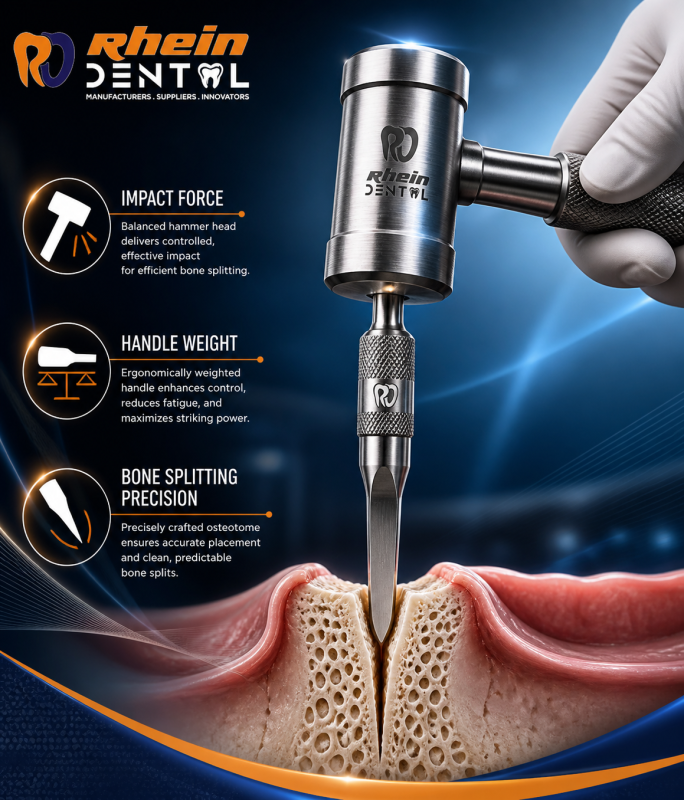
Surgical Hammer and Osteotome Pairing: Impact Force, Handle Weight, and Bone Splitting Precision
01
May
May
A surgical hammer and an osteotome never work alone. Together, they form a single mechanical system. Get the pairing wrong too heavy a hammer, too light an osteotome, or a mismatched strike angle and you risk uncontrolled bone fracture instead of a clean, predictable split. Get it right, and the two instruments transfer force exactly […]
Surgical Instruments Blog
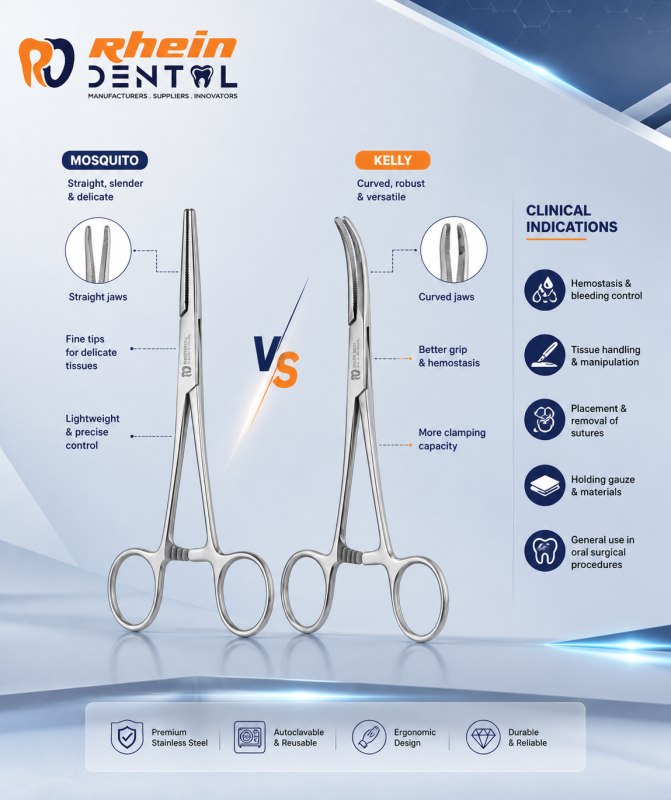
Hemostatic Forceps in Oral Surgery: Mosquito vs. Kelly Clamps and Their Clinical Indications
01
May
May
Mosquito forceps and Kelly forceps are both ratcheted hemostatic instruments used to clamp vessels, control bleeding, and handle tissue during surgical procedures. The main differences are size, jaw profile, serration pattern, and the type of vessel or tissue they are designed to control. Mosquito forceps are finer and more delicate, while Kelly forceps provide broader, […]
Effective soft tissue management is at the heart of successful surgical outcomes. Whether performing routine extractions or complex oral procedures, choosing the right retractor ensures clear visibility, protects delicate tissues, and improves efficiency. Among the most commonly used options are Minnesota, Austin, and Channel retractors—each designed with specific clinical applications in mind (Surgical retractor selection […]