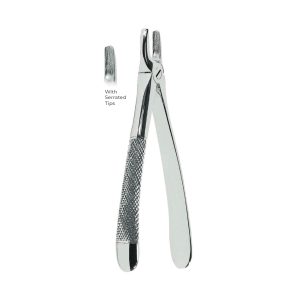
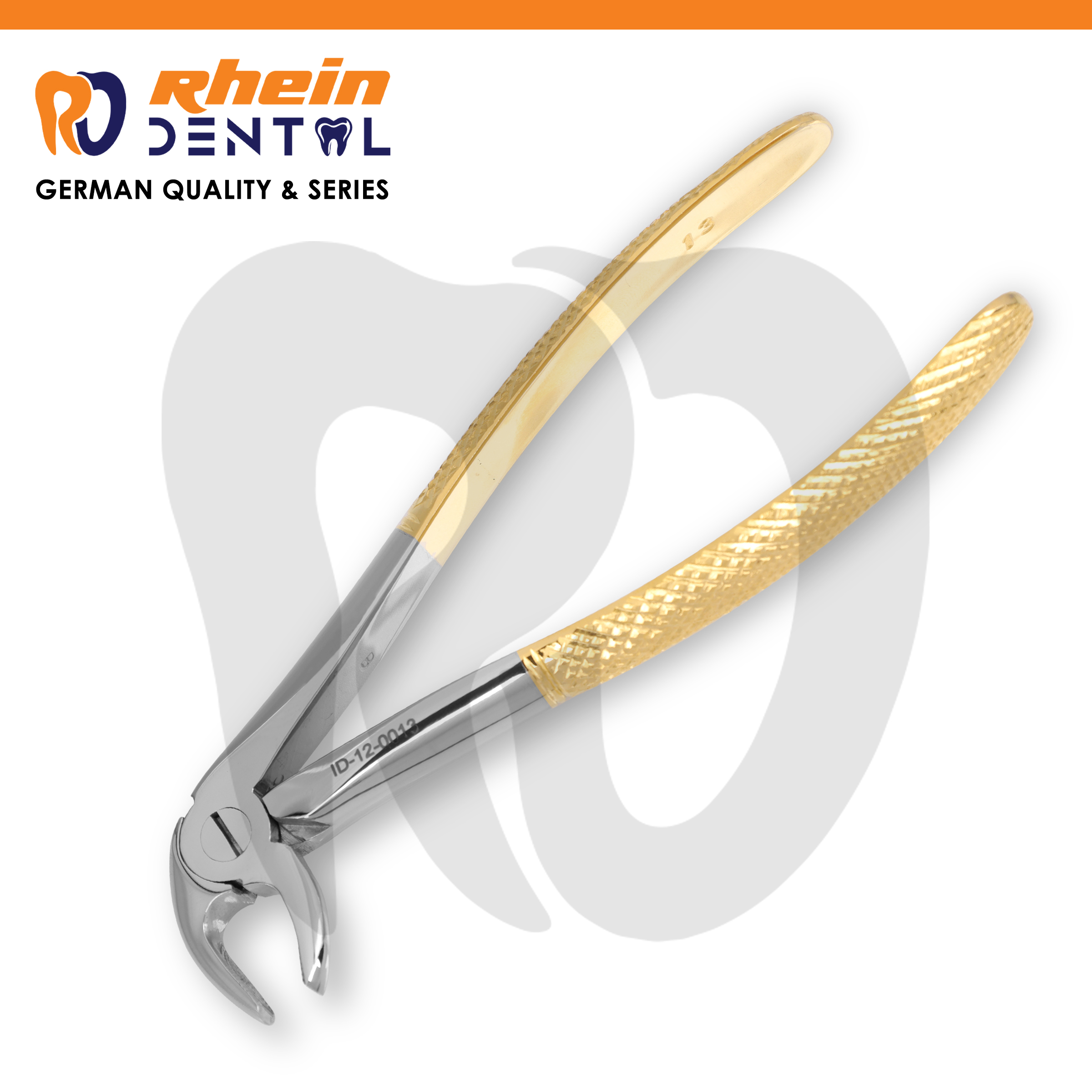
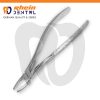
Mandibular Premolar Forceps Fig 13 Built for Lower-Arch Reach
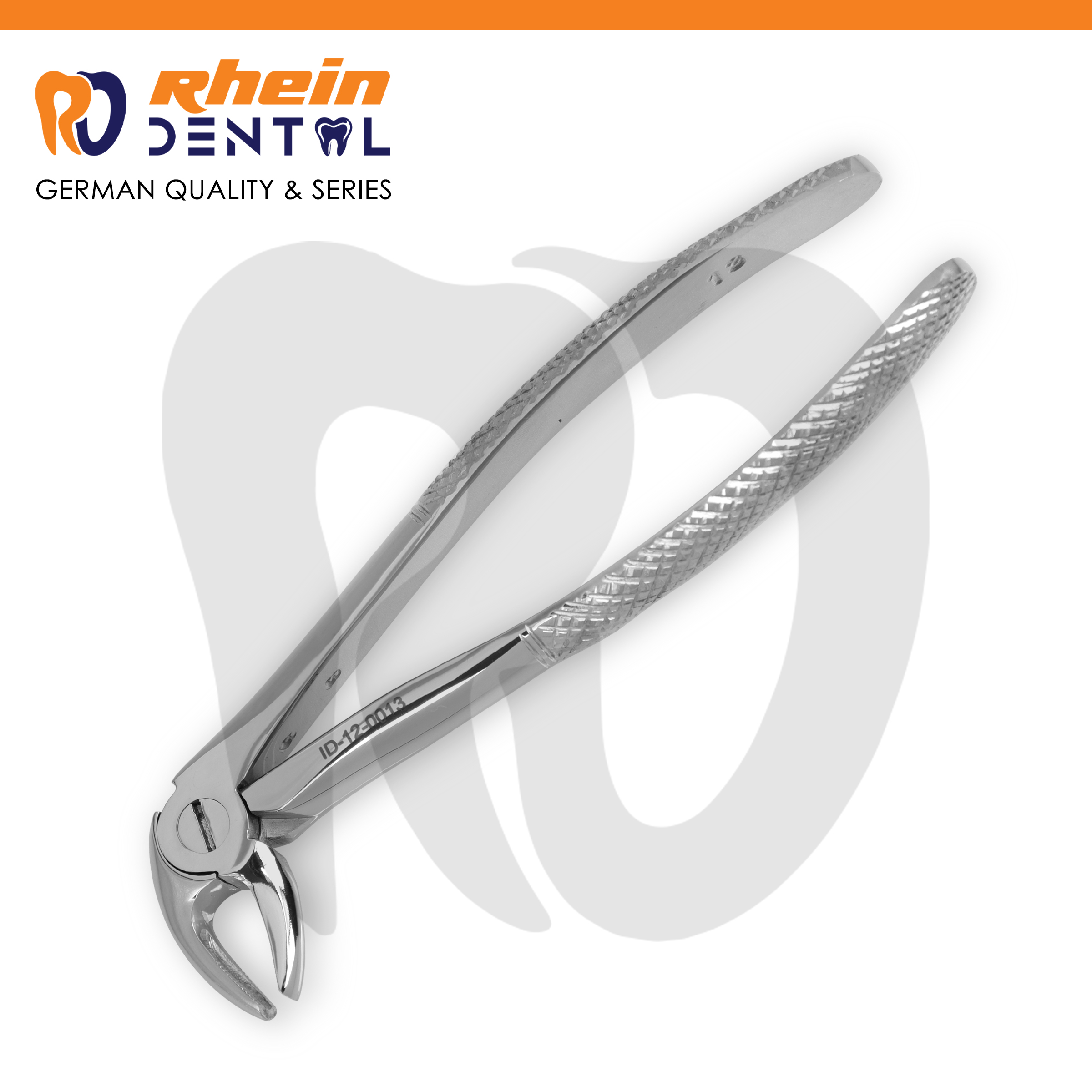
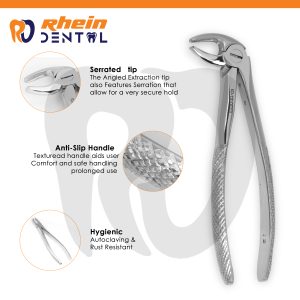
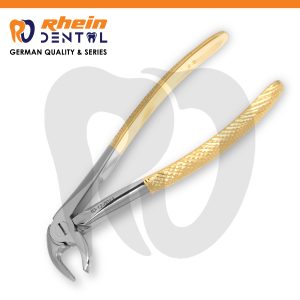
Mandibular premolar forceps fig 13 solve one simple problem: reaching the lower arch. The beaks meet the handle at a near 90-degree angle, so you approach the tooth from above and keep your wrist straight. The open, symmetrical beaks cradle a rounded premolar evenly. Because they have no pointed furcation horns, they suit single-rooted lower premolars.
The handles add to that control. Knurled bands cover both grips, and a small collar shows your fingers where to rest. A screw-slot joint holds the two halves together. We engrave ID-12-0013 on the shank, so your team spots the pair quickly on the tray. The German series mark also tells distributors which line they stock.
Specifications
Attribute | Detail |
|---|---|
| Product code | RD-ID-12-0013 (engraved on the shank) |
| Pattern number | 13, English pattern (stamped on the handle) |
| Designed for | Lower premolars (bicuspids) |
| Beak form | Symmetrical, slightly open, broad beaks |
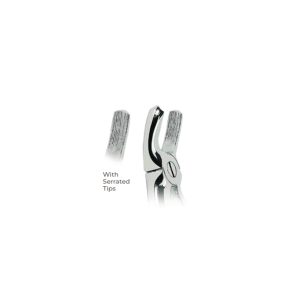
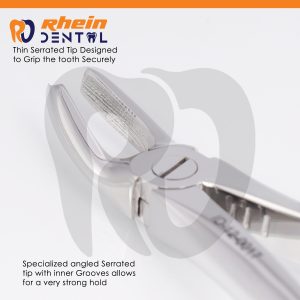
| Tip surface | Serrated, angled extraction tip |
| Head angle | Approximately 90° to the handles |
| Side use | Universal, for left and right lower jaw |
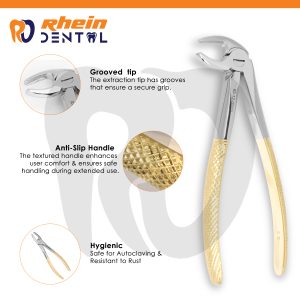
| Handle surface | Knurled anti-slip texture with collar |
| Joint | Screw-slot hinge |
| Material | Stainless steel, rust resistant |
| Sterilization | Autoclavable |
| Finish options | Polished silver, or gold-colored handles |
| Series | German Quality & Series |
Where Surgeons Use Mandibular Premolar Forceps
- Routine removal of lower first and second premolars
- Premolar extractions planned for orthodontic space
- Decayed or fractured premolars that an elevator has already loosened
- Small root remnants in the mandible
Key Features of Mandibular Premolar Forceps
Matched, Open Beaks with a Serrated Tip
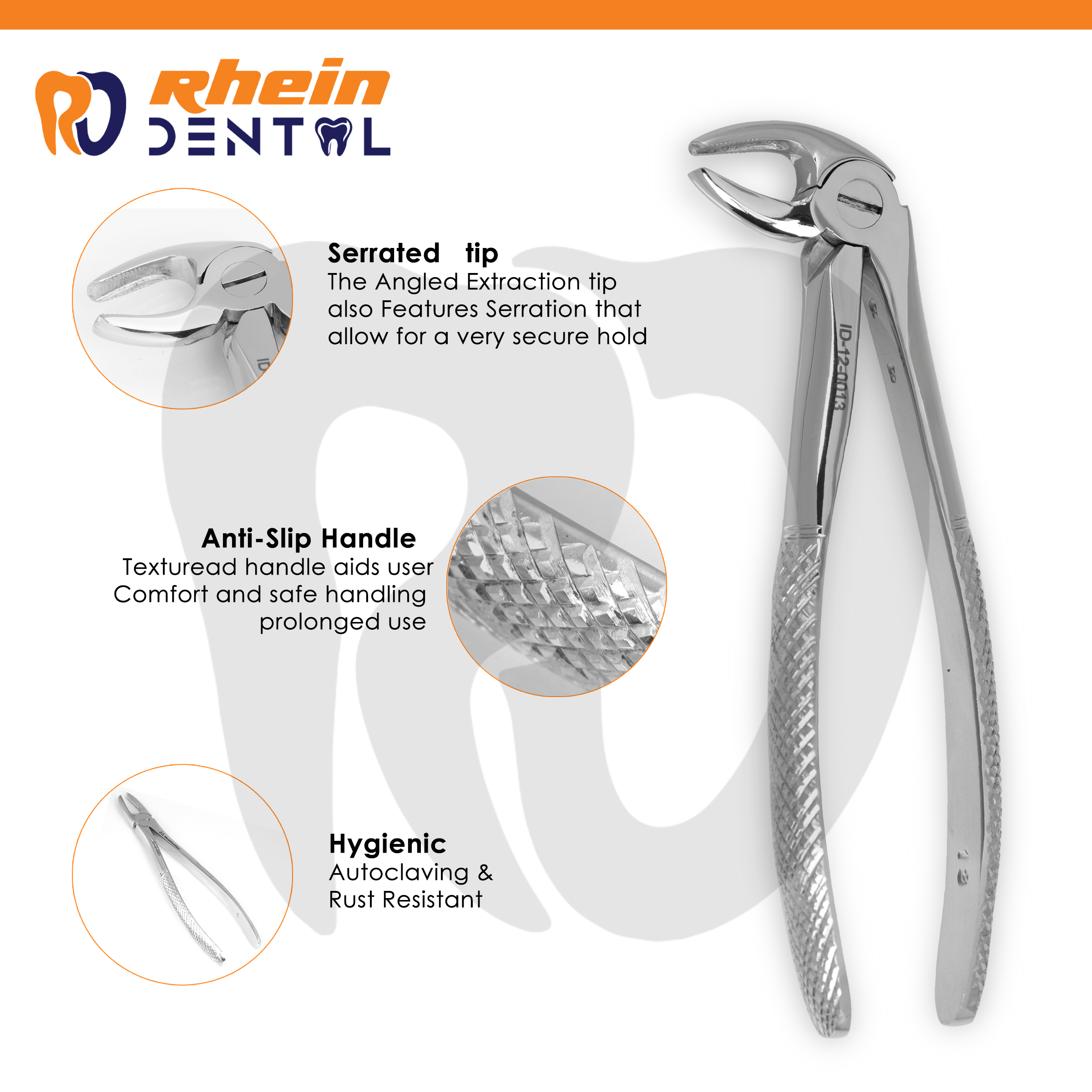
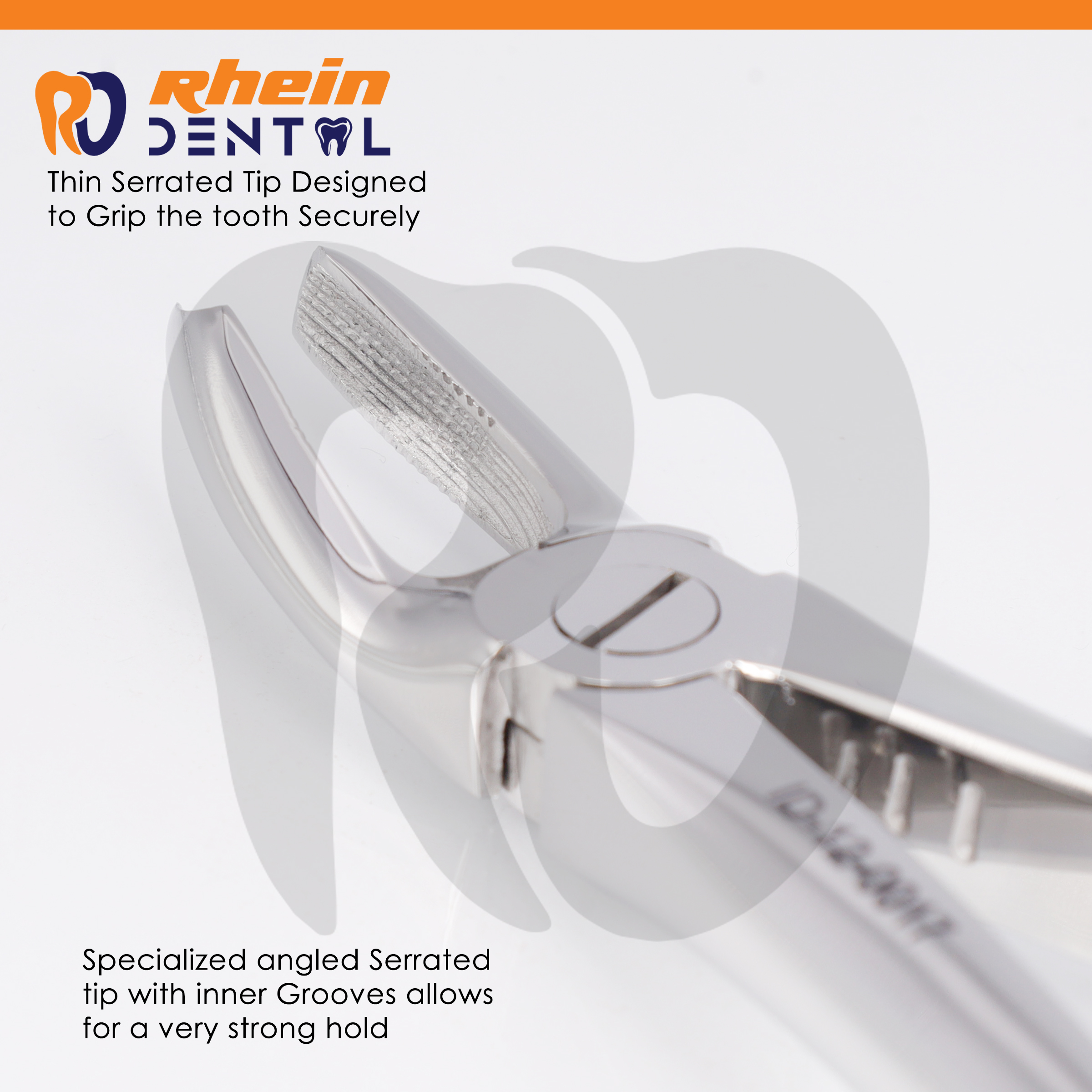
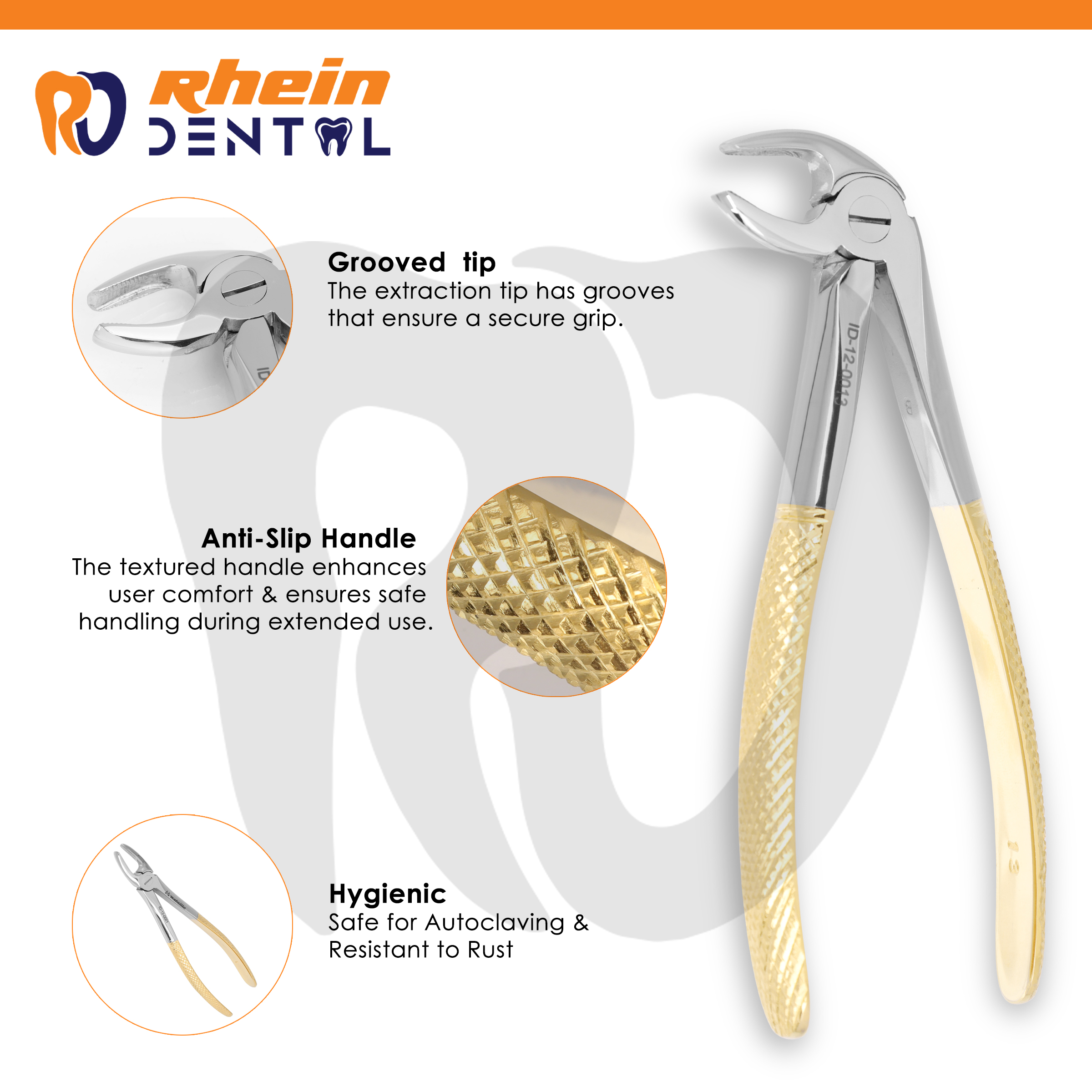
Both beaks mirror each other and sit slightly apart, so they cradle the rounded root of a lower premolar. Fine serrations on the angled tip bite into the tooth surface. Your hold stays steady while you luxate.
Near-Right-Angle Head
The beaks turn about 90 degrees away from the handles. You reach the lower arch from above, keep your wrist straight and avoid lifting your elbow.
Universal, Side-Neutral Design
The symmetrical form works on both the right and left lower jaw, so one pair covers every lower premolar.
Knurled, Collared Handles
A diamond texture and a ring-shaped collar give your fingers a fixed resting point. Your grip stays secure through long extractions.
Autoclavable, Rust-Resistant Build
The stainless steel body tolerates steam sterilization between patients. A screw-slot joint also lets you inspect the hinge, and the engraved code and German series mark help stockists match each pair to the right line.
How to Use Mandibular Premolar Forceps
Seat the beaks
Slide them down the root until they rest at the neck of the tooth, just below the gum margin.
Luxate gently
Apply light pressure toward the cheek and tongue, then add a slight twist along the tooth’s long axis.
Lift the tooth out
Once it moves freely, deliver it in one smooth motion. Compress the socket walls and confirm bleeding has stopped.
Frequently Asked Questions
Mandibular premolar forceps are the usual choice. Their symmetrical, slightly open beaks match the rounded root of a lower premolar, and the head sits at about 90 degrees to the handles. As a result, you reach the lower arch from above without bending your wrist. The serrated tip then keeps the grip steady during luxation.
Look at the head angle and beak shape first. Lower forceps bend sharply, close to 90 degrees, so the beaks point downward into the mandible. Upper forceps generally keep a gentler curve and often come in left and right versions. Also check the pattern number stamped on the handle.
No. This pattern is symmetrical, so one pair works on both sides of the lower jaw. Upper molar forceps differ, because they come in side-specific versions.
Pattern 13 refers to this lower premolar design in the English numbering system. Dentists and distributors use these numbers to order the right shape without describing it. The gold-handle version carries the same pattern and code, and only the handle color differs.
Usually not. Lower molars have two roots, so they need a pattern with beaks shaped to engage the furcation. These forceps have no pointed furcation horns, which suits single-rooted premolars. Choose a dedicated lower molar pattern instead.