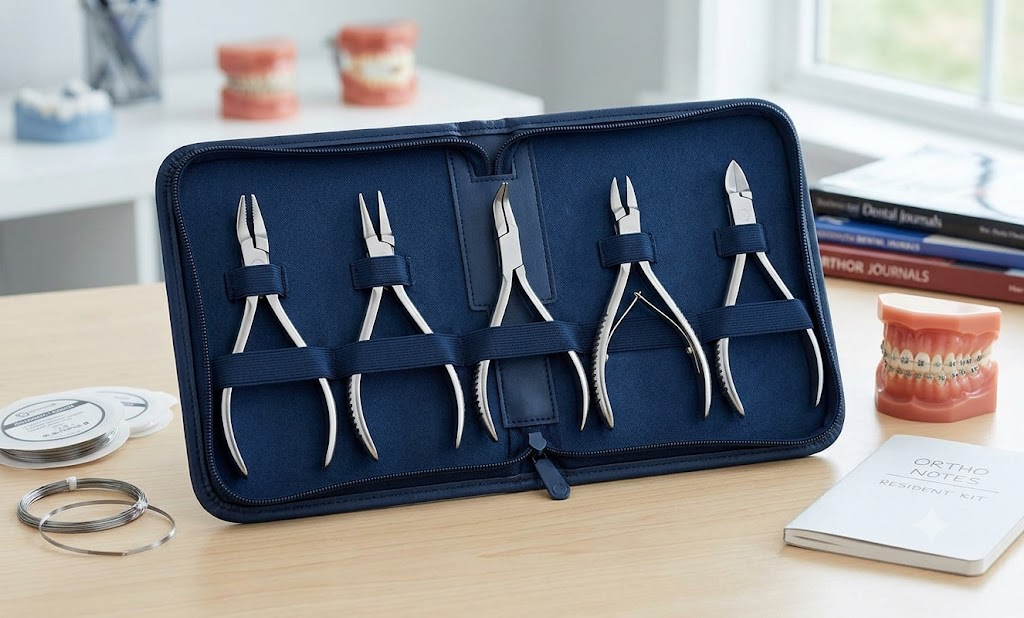
Starting an orthodontic residency marks the transition from learning theory to performing complex clinical procedures with confidence. While knowledge and technique are essential, having the right orthodontic tools for students is equally important. Among all orthodontic instruments, orthodontic pliers are the foundation of daily clinical practice. From bending wires and placing ligatures to removing brackets and trimming archwires, these precision instruments are used in nearly every patient appointment.
For new residents, choosing which pliers to buy can be confusing. The market offers dozens of specialized designs, but not every instrument is necessary in the beginning. Investing in the right essentials will improve clinical efficiency, reduce hand fatigue, and help develop proper orthodontic techniques throughout residency.
Explains their clinical applications, and provides expert advice on selecting high-quality instruments that will last throughout training and beyond.
Why Orthodontic Pliers Are Essential During Residency
Orthodontic treatment relies heavily on precise wire manipulation and appliance adjustments. Unlike general dental instruments, orthodontic pliers are specifically engineered for delicate tasks that require exceptional accuracy.
Owning your own orthodontic instrument kit offers several advantages:
- Consistent familiarity with instrument handling
- Improved clinical efficiency during patient appointments
- Better ergonomics and reduced hand fatigue
- Reliable instrument performance compared to shared clinic tools
- Long-term investment that continues into private practice
Many orthodontic residency programs encourage students to build their personal instrument collection gradually, beginning with the most frequently used pliers.
1. Howe Utility Pliers
The Most Versatile Orthodontic Pliers
If an orthodontic resident could own only one instrument, Howe Utility Pliers would likely be the first choice.
These pliers are designed for gripping, positioning, and manipulating orthodontic wires and small components. Their serrated tips provide excellent grip while minimizing slippage during procedures.
Common Uses
- Holding archwires
- Positioning brackets
- Handling elastics
- Carrying cotton rolls
- Grasping small orthodontic accessories
Why Students Need Them
Howe pliers are used in almost every orthodontic appointment, making them the true workhorse of any orthodontic practice.
2. Bird Beak Pliers
Essential for Wire Bending
Wire bending is one of the most important skills every orthodontic resident must master.
Bird Beak Pliers feature one conical beak and one flat beak, allowing clinicians to create smooth loops and precise bends in orthodontic wires.
Common Uses
- Forming omega loops
- Creating adjustment bends
- Fabricating removable appliance wires
- Laboratory wire exercises
- Customizing archwires
Benefits
Learning proper wire bending with Bird Beak pliers develops fine motor skills that remain valuable throughout an orthodontist’s career.
3. Weingart Pliers
Ideal for Archwire Placement
Weingart Pliers are specifically designed to insert and remove archwires, especially in difficult-to-reach posterior regions.
Their angled tips provide excellent visibility while maintaining a secure grip on both round and rectangular wires.
Clinical Applications
- Inserting archwires
- Removing wires
- Guiding wires through molar tubes
- Adjusting wire position
- Handling rectangular stainless steel wires
Residents quickly discover that Weingart pliers significantly improve efficiency during routine adjustments.
4. Mathieu Ligature Pliers
Fast and Efficient Ligature Placement
Mathieu Pliers feature a spring-loaded handle that automatically reopens after each squeeze, reducing hand fatigue during repetitive procedures.
Common Uses
- Placing ligature wires
- Holding elastomeric modules
- Seating power chains
- Positioning elastic ties
Advantages
The self-locking mechanism makes these pliers especially useful during busy clinic sessions where speed and accuracy are equally important.
5. Distal End Cutter
Safe Archwire Cutting
One of the most important safety instruments in orthodontics is the Distal End Cutter.
Unlike standard wire cutters, distal end cutters are designed to capture the cut wire segment, preventing it from entering the patient’s mouth.
Common Uses
- Cutting archwire ends
- Trimming stainless steel wires
- Removing excess wire distal to molars
Features to Look For
- Tungsten carbide cutting edges
- Wire-holding safety mechanism
- Smooth cutting action
- High-grade stainless steel
Safety-hold distal end cutters are highly recommended for both students and experienced orthodontists.
6. Light Wire Pliers
Precision Finishing Instrument
Light Wire Pliers are used primarily for making detailed adjustments to lighter orthodontic wires.
These instruments are ideal during finishing stages of treatment when precise tooth movement becomes critical.
Applications
- Fine detailing bends
- Wire adjustments
- Appliance modifications
- Finishing orthodontic cases
7. Bracket Removing Pliers
Safe Debonding
Once orthodontic treatment is complete, brackets must be removed without damaging enamel.
Bracket Removing Pliers apply controlled pressure that minimizes the risk of bracket fracture while protecting tooth structure.
Benefits
- Controlled debonding
- Reduced enamel stress
- Improved patient comfort
- Faster bracket removal
8. Band Removing Pliers
Comfortable Band Removal
Orthodontic bands require specialized instruments for safe removal.
Band Removing Pliers feature padded tips that protect the tooth while gently lifting orthodontic bands away from the enamel.
Common Uses
- Removing molar bands
- Debanding procedures
- Final treatment appointments
Optional Specialty Pliers
As residents gain experience, additional pliers become valuable for advanced procedures.
Examples include:
- Three-Prong Pliers
- Jarabak Pliers
- Adams Pliers
- Loop Forming Pliers
- Torque Forming Pliers
- Step Pliers
- Cinch Back Pliers
These instruments are generally purchased later in residency as clinical needs expand.
How to Choose High-Quality Orthodontic Pliers
Not all orthodontic instruments are manufactured to the same standard.
When purchasing orthodontic tools for students, consider the following factors.
Material
Medical-grade stainless steel provides excellent corrosion resistance and withstands repeated sterilization.
Cutting Edges
For wire-cutting pliers, tungsten carbide inserts remain sharper significantly longer than conventional stainless steel.
Ergonomics
Comfortable handles reduce hand fatigue during lengthy clinical sessions.
Precision
Properly aligned beaks ensure accurate wire bending and consistent clinical performance.
Sterilization Compatibility
Choose fully autoclavable instruments that maintain their finish after repeated sterilization cycles.
Certifications
Look for manufacturers that comply with recognized international quality standards such as ISO 13485 and CE regulations where applicable.
Building Your First Orthodontic Instrument Kit
Students often ask which instruments should be purchased first.
A practical starter kit includes:
- Howe Utility Pliers
- Bird Beak Pliers
- Weingart Pliers
- Mathieu Ligature Pliers
- Distal End Cutter
This combination allows residents to perform the majority of everyday orthodontic procedures without unnecessary expense.
Additional instruments such as Bracket Removing Pliers, Band Removing Pliers, and Light Wire Pliers can be added as clinical responsibilities increase.
Instrument Care and Maintenance
Proper maintenance extends instrument life and preserves precision.
Best practices include:
- Clean immediately after use.
- Remove debris before sterilization.
- Lubricate hinges regularly.
- Inspect cutting edges for wear.
- Store instruments in dedicated sterilization cassettes.
- Avoid using pliers for procedures they were not designed to perform.
Routine maintenance protects your investment and ensures reliable clinical performance.
Common Mistakes New Orthodontic Residents Make
Many students make avoidable purchasing mistakes.
Buying Every Instrument Immediately
Focus on essential pliers before investing in specialty instruments.
Choosing Low-Cost Instruments
Cheap instruments often lose alignment, dull quickly, and require early replacement.
Ignoring Ergonomics
Poorly designed handles increase hand fatigue and reduce clinical efficiency.
Using Incorrect Pliers
Using wire cutters for bending or gripping wires may permanently damage the instrument.
Poor Maintenance
Even premium orthodontic pliers require regular cleaning and lubrication.
Conclusion
Every orthodontic resident benefits from building a reliable collection of orthodontic tools for students that supports both learning and clinical excellence. Starting with essential pliers such as Howe Utility Pliers, Bird Beak Pliers, Weingart Pliers, Mathieu Ligature Pliers, and Distal End Cutters provides a strong foundation for mastering orthodontic procedures.
As your skills grow, expanding your instrument kit with specialized pliers will allow you to manage increasingly complex treatments with confidence. Investing in high-quality orthodontic instruments not only enhances clinical performance during residency but also prepares you for a successful career in orthodontic practice.
Frequently Asked Questions
Howe Utility Pliers, Bird Beak Pliers, Weingart Pliers, Mathieu Ligature Pliers, and a Distal End Cutter are considered the most essential instruments for beginners.
High-quality orthodontic instruments generally offer superior durability, better ergonomics, improved precision, and lower replacement costs over time.
Bird Beak Pliers are mainly used for creating loops and major wire bends, while Light Wire Pliers are designed for fine adjustments and finishing bends.
While many training clinics provide shared instruments, owning a personal set offers greater consistency, familiarity, and efficiency.