
Introduction
Advancements in dental and oral surgery have significantly improved the precision, safety, and predictability of bone-related procedures (Piezoelectric Surgery Instruments). Among the most important developments is the introduction of piezoelectric surgery technology, which has emerged as an alternative to conventional rotary burs for osteotomy, implant site preparation, sinus lifting, and bone grafting procedures (Piezoelectric Surgery Instruments).
While rotary burs have long been the standard instrument for cutting and shaping bone, piezoelectric surgery instruments offer unique advantages in terms of selective cutting, soft tissue preservation, and biological healing. Understanding the strengths and limitations of both technologies can help clinicians choose the most appropriate instrumentation strategy for specific surgical situations (Piezoelectric Surgery Instruments).
This article compares piezoelectric surgery instruments and rotary burs, focusing on cutting efficiency, osseointegration safety, and soft tissue protection.
Understanding Piezoelectric Surgery Instruments
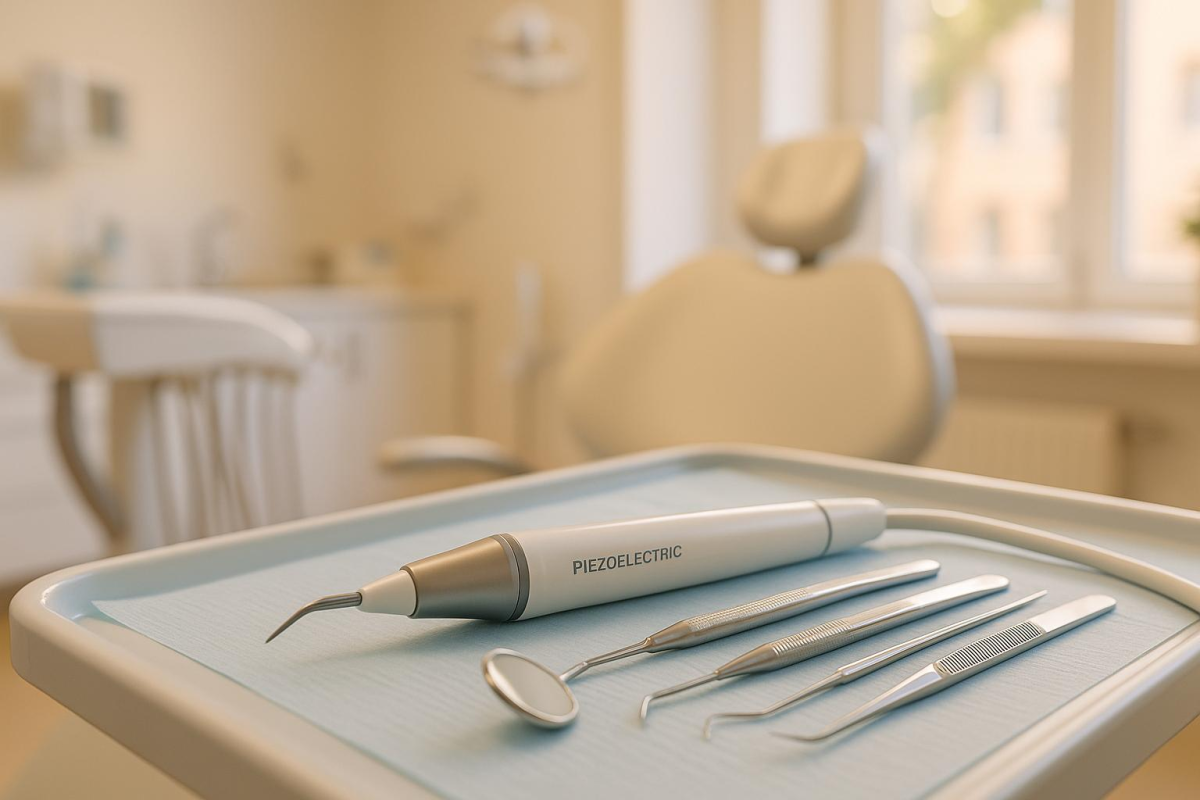
Piezoelectric surgery utilizes ultrasonic microvibrations to cut mineralized tissue while preserving soft tissues such as nerves, blood vessels, and membranes (Piezoelectric Surgery Instruments vs Rotary Burs).
The technology operates at ultrasonic frequencies, typically between 25 and 35 kHz, allowing highly controlled and selective bone cutting.
Common Applications
- Dental implant site preparation
- Ridge splitting procedures
- Sinus lift surgeries
- Bone graft harvesting
- Alveoloplasty
- Periodontal surgery
- Oral and maxillofacial procedures
Because soft tissues require higher frequencies to be cut, piezoelectric instruments selectively target bone while minimizing accidental soft tissue damage.
Understanding Rotary Burs
Rotary burs are high-speed cutting instruments commonly used with surgical handpieces. They remove bone through rotational motion and have been widely used in oral surgery for decades.
Common Applications
- Osteotomy preparation
- Bone contouring
- Tooth sectioning
- Surgical extractions
- Crown preparation
- Alveolar ridge modification
Rotary burs remain a cornerstone of dental surgery due to their speed, versatility, and familiarity among clinicians.
Cutting Efficiency Comparison
One of the most frequently discussed differences between piezoelectric surgery and rotary burs is cutting efficiency.
Rotary Burs: Faster Bone Removal
Rotary burs generally remove bone more quickly than piezoelectric instruments.
Advantages include:
- Rapid osteotomy preparation
- Reduced procedure time
- Effective cutting of dense cortical bone
- Familiar handling characteristics
For extensive bone reduction procedures, rotary burs often provide superior speed and efficiency.
Piezoelectric Surgery: Greater Precision
Although piezoelectric instruments typically cut more slowly, they offer exceptional control.
Advantages include:
- Micrometric cutting accuracy
- Reduced risk of over-preparation
- Improved visibility of the surgical field
- Enhanced control in delicate anatomical areas
This precision is particularly valuable when operating near critical structures.
Surgical Visibility During Procedures
Clear visualization is essential for safe and predictable surgery.
Piezoelectric Advantage
Piezoelectric units continuously irrigate the surgical site and generate a cavitation effect that helps clear blood from the operative field.
Benefits include:
- Improved visibility
- Better identification of anatomical landmarks
- Greater surgical accuracy
- Enhanced operator confidence
Rotary Bur Limitations
Rotary burs may create more bleeding and debris accumulation, which can reduce visibility during complex procedures.
Although irrigation systems help manage heat and debris, the surgical field is often less clear than with piezoelectric surgery.
Osseointegration Safety and Bone Healing
Successful dental implant treatment depends heavily on osseointegration—the direct biological connection between bone and implant surfaces.
The Importance of Bone Preservation
Excessive heat generation and surgical trauma can negatively affect bone vitality and healing.
Preserving healthy bone cells is essential for:
- Implant stability
- Bone regeneration
- Long-term treatment success
Piezoelectric Surgery and Osseointegration
Research suggests that piezoelectric surgery may offer biological advantages due to its minimally traumatic cutting mechanism.
Potential benefits include:
- Reduced thermal damage
- Preservation of osteocytes
- Improved bone cell viability
- Enhanced healing response
- Greater preservation of bone architecture
These characteristics make piezoelectric surgery particularly attractive for implant site preparation and regenerative procedures.
Rotary Burs and Osseointegration
Modern rotary burs can also support successful osseointegration when used correctly.
Critical factors include:
- Adequate irrigation
- Sharp cutting surfaces
- Controlled pressure
- Proper surgical technique
When heat generation is effectively managed, rotary burs continue to produce highly predictable implant outcomes.
Soft Tissue Protection
One of the most significant distinctions between the two technologies is their interaction with soft tissues.
Piezoelectric Surgery: Selective Cutting Technology
Piezoelectric devices are designed to cut mineralized tissues while largely preserving soft tissues.
This selective action helps protect:
- Nerves
- Blood vessels
- Sinus membranes
- Gingival tissues
- Soft tissue flaps
Clinical Benefits
Soft tissue protection can reduce the risk of:
- Membrane perforation during sinus lifts
- Nerve injuries
- Accidental lacerations
- Surgical complications
This makes piezoelectric surgery particularly valuable in anatomically sensitive regions.
Rotary Burs: Increased Soft Tissue Risk
Rotary burs cut both hard and soft tissues indiscriminately.
As a result, clinicians must exercise greater caution when working near:
- Inferior alveolar nerves
- Mental nerves
- Maxillary sinus membranes
- Blood vessels
While experienced surgeons can safely use rotary burs, the margin for error is generally smaller.
Applications in Implant Dentistry
When Piezoelectric Instruments Excel
Piezoelectric systems are especially beneficial for:
- Sinus augmentation procedures
- Ridge splitting techniques
- Bone graft harvesting
- Implant placement near anatomical structures
- Minimally invasive surgery
The enhanced precision and soft tissue safety contribute to predictable outcomes in complex implant cases.
When Rotary Burs Remain Preferred
Rotary burs often remain the instrument of choice for:
- Routine osteotomies
- Large-volume bone reduction
- Surgical extractions
- High-efficiency bone contouring
- Time-sensitive procedures
Their speed and cutting power continue to provide significant clinical advantages.
Cost and Equipment Considerations
Piezoelectric Systems
Advantages:
- Advanced technology
- Enhanced precision
- Improved tissue preservation
Considerations:
- Higher initial investment
- Additional maintenance requirements
- Learning curve for operators
Rotary Bur Systems
Advantages:
- Lower equipment costs
- Widely available
- Familiar workflow
- Faster procedures
Considerations:
- Greater dependence on operator skill
- Increased soft tissue injury risk
- Higher potential for thermal trauma if improperly used
Choosing the Right Instrument for the Procedure
The decision between piezoelectric surgery instruments and rotary burs should be based on:
Surgical Complexity
Complex procedures near delicate structures often benefit from piezoelectric technology.
Treatment Objectives
When maximum precision and tissue preservation are priorities, piezoelectric instruments may provide advantages.
Time Efficiency
For rapid bone removal and routine surgical applications, rotary burs often remain more efficient.
Clinical Experience
Operator familiarity and proficiency with the chosen system significantly influence outcomes.
Conclusion
Both piezoelectric surgery instruments and rotary burs play important roles in modern dental and oral surgery. Rotary burs continue to offer exceptional cutting speed and efficiency, making them ideal for routine bone reduction and osteotomy procedures. Piezoelectric surgery, however, provides unmatched precision, improved soft tissue protection, and potential biological advantages that support healing and osseointegration.
Rather than viewing one technology as a complete replacement for the other, many clinicians find that integrating both systems into their surgical workflow delivers the greatest flexibility and clinical success. Selecting the appropriate instrument for each procedure ultimately leads to safer surgeries, better patient experiences, and more predictable treatment outcomes.