
Introduction
Surgical forceps play an essential role in tissue handling, wound closure, and surgical precision. Although many tissue-holding instruments appear similar, each type serves a unique purpose in the operating room. Among the most commonly used options are Adson forceps, Bonney forceps, and Allis forceps. At first glance, these instruments may seem alike; however, their designs, gripping mechanisms, and intended applications differ significantly (Adson vs Bonney vs Allis Forceps).
For surgeons and healthcare professionals, understanding these distinctions is crucial. Not only does proper instrument selection improve surgical efficiency, but it also helps minimize tissue trauma. As a result, patients often benefit from better healing outcomes and fewer complications (Adson vs Bonney vs Allis Forceps).
What Are Adson Forceps?
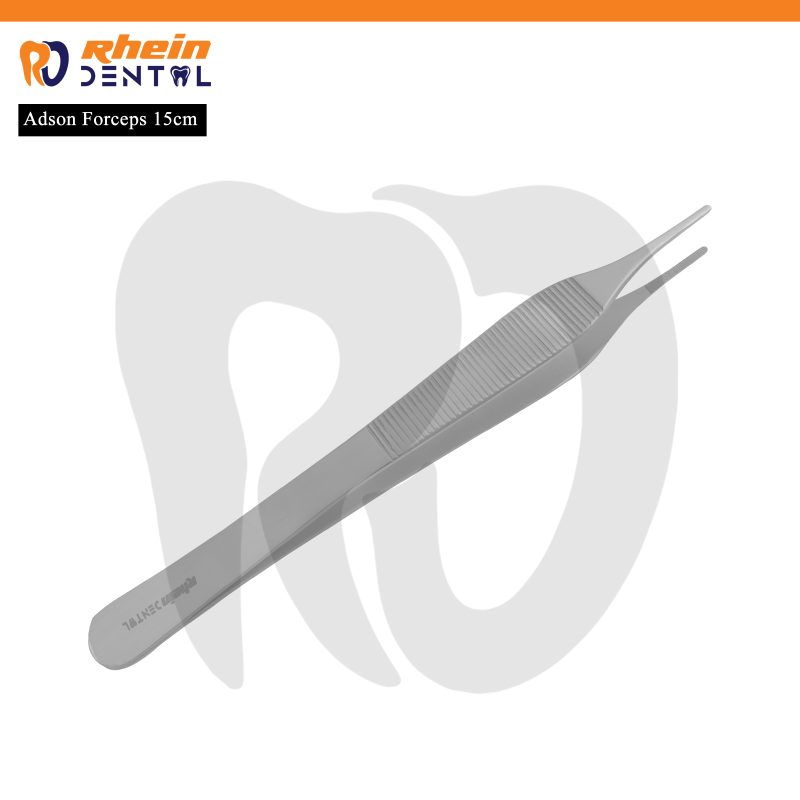
Known for their precision, Adson forceps are thumb-operated instruments specifically designed for delicate tissue handling. Their short, narrow jaws feature either smooth tips or small interlocking teeth that allow surgeons to grasp tissue accurately without causing unnecessary damage. In addition, the lightweight design improves control during intricate procedures.
Because delicate tissues require careful manipulation, many surgeons rely on Adson forceps during wound closure and tissue approximation. Plastic surgery, dermatology, and microsurgical procedures frequently involve these instruments. Moreover, their fine tips enable practitioners to work effectively in confined surgical areas where precision matters most.
Key Features of Adson Forceps
- Fine jaws for delicate tissue handling
- Available with smooth or toothed tips
- Lightweight and easy to control
- Suitable for precision-based procedures
- Manufactured from surgical-grade stainless steel
Common Surgical Applications
- Plastic and reconstructive surgery
- Dermatological procedures
- Microsurgery
- Wound closure
- Tissue approximation during suturing
What Are Bonney Forceps?
Unlike Adson forceps, Bonney forceps focus on strength rather than delicacy. These heavy-duty tissue forceps feature large jaws equipped with multiple interlocking teeth that provide exceptional gripping power. Consequently, surgeons can maintain firm traction on dense tissues without experiencing slippage.
In procedures involving fascia and connective tissue, Bonney forceps often become the preferred choice. For example, surgeons frequently use them during abdominal and orthopedic surgeries where strong tissue control remains essential. Furthermore, their aggressive grip supports efficient tissue handling throughout demanding surgical procedures.
Despite these advantages, Bonney forceps are not ideal for fragile tissues. Since their teeth create a powerful hold, they can increase the risk of tissue trauma when used on delicate structures. Therefore, surgeons generally reserve them for tougher anatomical tissues.
Key Features of Bonney Forceps
- Strong and durable construction
- Multiple interlocking teeth
- Excellent tissue traction
- Reduced risk of slippage
- Designed for dense tissue handling
Common Surgical Applications
- Abdominal surgery
- Orthopedic procedures
- General surgery
- Fascial closure
- Deep tissue dissection
What Are Allis Forceps?
While Adson and Bonney forceps operate as thumb forceps, Allis forceps feature finger rings and a ratchet locking mechanism. Thanks to this design, the instrument can maintain a secure grip without requiring continuous hand pressure. Consequently, surgeons gain greater flexibility during procedures that demand prolonged tissue stabilization.
Another distinguishing feature involves the inward-curving jaws and interlocking teeth. Together, these components provide reliable tissue retention throughout surgery. Because of this secure grip, Allis forceps are commonly used for tissue retraction, stabilization, and excision procedures.
Nevertheless, healthcare professionals must use these forceps carefully. Although the instrument delivers excellent control, its teeth can damage delicate tissues. Therefore, surgeons often apply Allis forceps to tissues intended for removal or to structures where minor trauma does not compromise the surgical outcome.
Key Features of Allis Forceps
- Finger-ring handle design
- Ratchet locking mechanism
- Self-retaining functionality
- Inward-curving jaws
- Secure interlocking teeth
Common Surgical Applications
- General surgery
- Gynecological procedures
- Gastrointestinal surgery
- Tissue retraction
- Soft tissue excision
Adson vs. Bonney vs. Allis Forceps: Key Differences
Although all three instruments assist with tissue handling, each one addresses a different surgical need. Adson forceps prioritize precision and tissue preservation. In contrast, Bonney forceps emphasize strength and traction. Meanwhile, Allis forceps specialize in tissue stabilization through a locking mechanism.
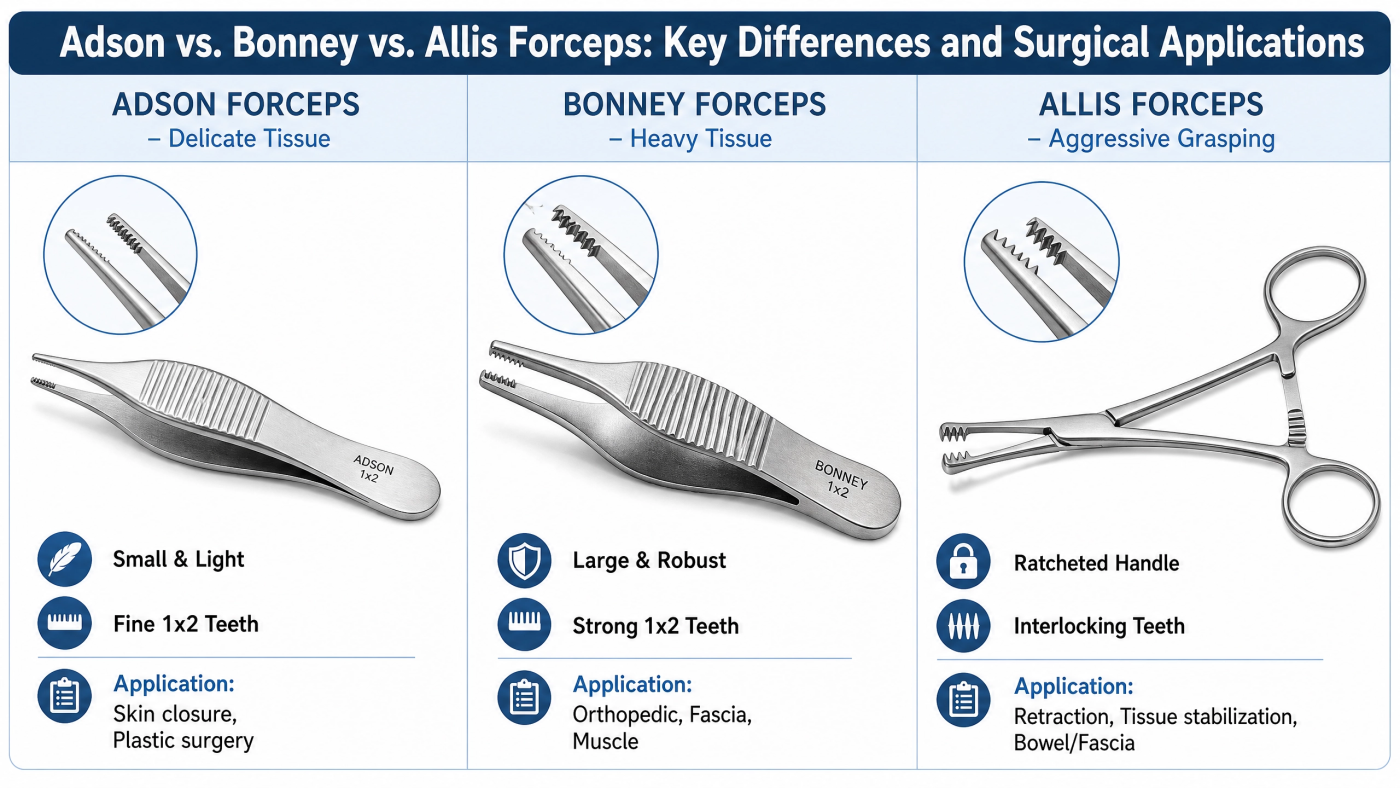
| Feature | Adson Forceps | Bonney Forceps | Allis Forceps |
|---|---|---|---|
| Instrument Type | Thumb Forceps | Thumb Forceps | Ring-Handled Forceps |
| Grip Strength | Light to Moderate | Very Strong | Strong |
| Locking Mechanism | No | No | Yes |
| Tissue Type | Delicate Tissues | Dense Tissues | Tissue Stabilization |
| Tissue Trauma Risk | Low | Moderate to High | Moderate |
| Common Use | Suturing and Plastic Surgery | Fascial Closure | Retraction and Excision |
How to Choose the Right Forceps
Selecting the appropriate instrument depends largely on the procedure and tissue type involved. When delicate tissue handling is the primary objective, Adson forceps typically offer the best solution. On the other hand, surgeons often prefer Bonney forceps when maximum gripping strength becomes necessary. Similarly, Allis forceps prove valuable when tissue stabilization and hands-free retention are required.
Choose Adson Forceps When:
- Performing cosmetic procedures
- Handling delicate tissues
- Prioritizing precision
- Minimizing tissue trauma
Choose Bonney Forceps When:
- Working with fascia
- Requiring strong traction
- Handling dense connective tissue
- Performing orthopedic procedures
Choose Allis Forceps When:
- Stabilizing tissue for extended periods
- Performing tissue excisions
- Requiring a locking mechanism
- Retracting tissue during surgery
Maintenance and Sterilization Considerations
Beyond selecting the correct instrument, proper maintenance remains equally important. Regular cleaning helps prevent contamination, while routine inspections ensure optimal performance. In addition, lubrication preserves moving components and extends instrument lifespan.
Likewise, healthcare facilities should evaluate teeth alignment and locking mechanisms before each use. By following approved sterilization protocols, surgical teams can maintain instrument reliability and patient safety. Ultimately, consistent maintenance contributes to better surgical outcomes and reduced equipment replacement costs.
Best Maintenance Practices
- Clean instruments immediately after use
- Inspect jaws and teeth regularly
- Lubricate moving parts when necessary
- Follow approved sterilization procedures
- Store instruments in protective trays
Conclusion
Ultimately, Adson, Bonney, and Allis forceps each fulfill a distinct role in modern surgery. Whereas Adson forceps provide exceptional precision for delicate tissues, Bonney forceps deliver the gripping strength required for dense anatomical structures. At the same time, Allis forceps offer secure tissue retention through their self-locking design.
By understanding the unique strengths of each instrument, surgeons can make informed decisions that improve efficiency, enhance tissue handling, and support successful surgical outcomes. Consequently, selecting the right forceps remains an essential step in achieving safe and effective patient care. informed decisions that enhance procedural accuracy, improve workflow, and support better surgical outcomes.