
Successful orthodontic treatment begins long before wires are adjusted or aligners are fitted. One of the most critical stages is bracket bonding, where precision directly influences treatment efficiency, patient comfort, and clinical outcomes.
Using high-quality orthodontic bonding instruments enables clinicians to place brackets accurately, handle adhesive efficiently, and reduce chairside time. Whether treating simple alignment cases or complex orthodontic corrections, selecting the right bonding instruments can significantly improve workflow and long-term treatment success.
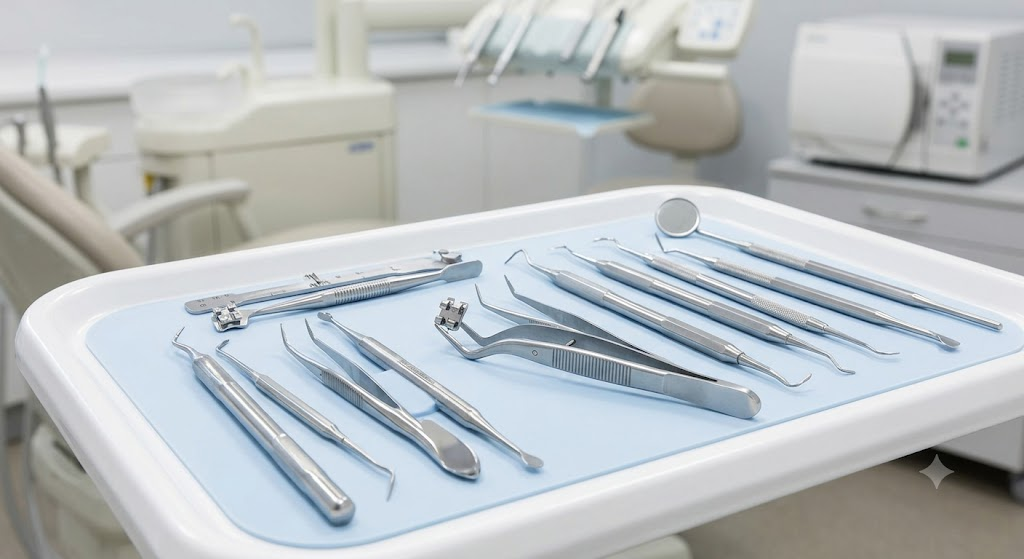
In this guide, we’ll explore the best orthodontic bonding instruments, their functions, selection criteria, maintenance tips, and why investing in premium stainless steel instruments benefits every orthodontic practice.
What Are Orthodontic Bonding Instruments?
They are specialised dental tools designed for placing, positioning, adjusting, and securing orthodontic brackets onto tooth surfaces during fixed appliance treatment.
These instruments allow clinicians to:
- Position brackets precisely
- Apply bonding adhesive accurately
- Remove excess composite
- Hold brackets securely
- Improve visibility during bonding
- Reduce bracket repositioning
- Enhance treatment accuracy
Because even minor positioning errors can affect tooth movement, high-quality orthodontic bonding instruments are considered essential in modern orthodontics.
Why High-Quality Bonding Instruments Matter
Orthodontic bonding requires exceptional precision.
Premium instruments provide:
- Improved bracket placement accuracy
- Better clinician control
- Enhanced grip
- Reduced adhesive waste
- Faster procedures
- Greater patient comfort
- Long-lasting durability
- Consistent clinical performance
Well-manufactured instruments also reduce hand fatigue during lengthy bonding procedures.
Essential Orthodontic Bonding Instruments
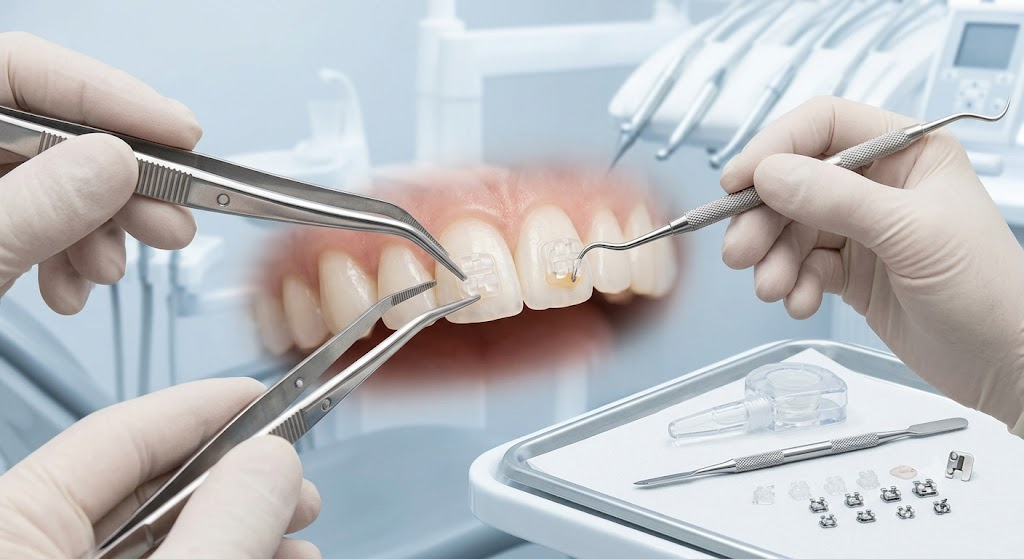
1. Bracket Holding Tweezers
Bracket holding tweezers are among the most frequently used orthodontic bonding instruments.
Primary Functions
- Hold orthodontic brackets securely
- Transfer brackets to teeth
- Prevent accidental dropping
- Improve placement accuracy
Features
- Fine precision tips
- Serrated gripping surfaces
- Lightweight design
- Corrosion-resistant stainless steel
These tweezers help clinicians maintain complete control during bracket transfer.
2. Bracket Positioning Instruments
Bracket positioning instruments allow orthodontists to adjust bracket placement before the adhesive cures.
Uses
- Vertical positioning
- Horizontal adjustment
- Fine rotational correction
- Final bracket alignment
Accurate positioning reduces future repositioning appointments and improves treatment efficiency.
3. Composite Placement Instruments
Composite placement instruments are used to carry and distribute bonding adhesive.
Benefits include:
- Controlled adhesive application
- Even composite distribution
- Reduced air bubbles
- Cleaner working field
These instruments improve bonding strength while reducing adhesive waste.
4. Adhesive Removal Instruments
After brackets are positioned, excess composite must be removed carefully.
These instruments help:
- Remove flash
- Improve aesthetics
- Prevent plaque accumulation
- Maintain patient comfort
Proper adhesive removal also simplifies oral hygiene throughout treatment.
5. Orthodontic Explorers
Orthodontic explorers assist in checking bracket adaptation and adhesive coverage.
Common applications include:
- Detecting excess composite
- Verifying bracket seating
- Inspecting marginal adaptation
They provide greater confidence before light curing.
6. Bonding Spatulas
Bonding spatulas assist in handling orthodontic composites and bonding materials.
Advantages include:
- Smooth adhesive handling
- Accurate placement
- Minimal material waste
- Better procedural control
7. Micro Applicators
Although disposable, micro applicators are an essential part of the bonding procedure.
They are commonly used for:
- Primer application
- Etchant placement
- Moisture control
- Surface conditioning
Proper application improves bond strength.
Characteristics of Premium Orthodontic Bonding Instruments
When purchasing orthodontic bonding instruments, look for:
Medical-Grade Stainless Steel
High-quality stainless steel provides:
- Rust resistance
- Long service life
- Excellent strength
- Easy sterilisation
Ergonomic Design
Comfortable handles reduce operator fatigue during lengthy bonding procedures.
Look for:
- Lightweight construction
- Balanced weight
- Anti-slip grip
- Comfortable finger rests
Precision Manufacturing
Well-engineered tips provide:
- Greater accuracy
- Consistent performance
- Better bracket control
- Reduced treatment errors
Autoclavable Construction
Reliable bonding instruments should withstand repeated sterilisation without corrosion or distortion.
Premium instruments maintain:
- Surface finish
- Tip alignment
- Joint integrity
- Functional accuracy
Benefits of Using Professional Orthodontic Bonding Instruments
Investing in premium orthodontic instruments provides several clinical advantages.
Improved Bracket Placement
Precise instruments reduce positioning errors that can prolong orthodontic treatment.
Reduced Chair Time
Efficient instrument handling shortens bonding procedures, benefiting both clinicians and patients.
Better Bond Strength
Accurate adhesive placement contributes to stronger bracket adhesion and fewer bond failures.
Enhanced Patient Experience
Faster procedures and accurate bracket placement improve patient comfort.
Greater Clinical Confidence
Reliable instruments provide consistent performance across every bonding procedure.
Choosing the Right Orthodontic Bonding Instruments
When selecting instruments, consider the following factors.
Clinical Precision
Choose instruments manufactured with tight tolerances and precision-machined tips.
Material Quality
Medical-grade stainless steel remains the preferred material due to its durability and corrosion resistance.
Handle Design
Ergonomic handles improve comfort and reduce repetitive strain.
Sterilisation Compatibility
Ensure instruments tolerate repeated autoclave cycles.
Manufacturer Reputation
Purchase instruments from trusted manufacturers known for consistent quality and regulatory compliance.
Instrument Care and Maintenance
Proper maintenance extends instrument lifespan and maintains clinical performance.
Best practices include:
- Clean immediately after use
- Remove adhesive residue promptly
- Ultrasonically clean instruments
- Inspect working tips regularly
- Lubricate hinged instruments when required
- Sterilise according to manufacturer recommendations
- Store instruments in protective trays or cassettes
Routine inspection helps identify worn or damaged instruments before they affect patient care.
Common Mistakes During Orthodontic Bonding
Even experienced clinicians can encounter bonding issues.
Common mistakes include:
- Incorrect bracket positioning
- Excess adhesive application
- Inadequate moisture control
- Using worn instruments
- Poor visibility
- Inconsistent adhesive removal
- Insufficient curing time
Using high-quality orthodontic bonding instruments helps minimise these errors.
Who Uses Orthodontic Bonding Instruments?
These instruments are widely used by:
- Orthodontists
- General dentists offering orthodontics
- Dental hospitals
- Orthodontic specialists
- Dental teaching institutions
- University clinics
- Private dental practices
Why Stainless Steel Remains the Preferred Choice
Stainless steel orthodontic bonding instruments continue to dominate clinical practice because they offer:
- Superior corrosion resistance
- Exceptional longevity
- Excellent tactile feedback
- Easy sterilisation
- High mechanical strength
- Cost-effective long-term value
Their durability makes them ideal for busy orthodontic clinics performing multiple bonding procedures daily.
Final Thoughts
Successful orthodontic treatment depends on accuracy at every stage, and bracket bonding is no exception. Investing in premium orthodontic bonding instruments enables clinicians to work with greater precision, improve workflow efficiency, and achieve more predictable treatment outcomes.
From bracket holding tweezers and positioning instruments to composite placement tools and adhesive removers, every instrument contributes to safer, faster, and more reliable orthodontic procedures. Choosing well-crafted, medical-grade stainless steel instruments ensures long-term durability, optimal performance, and consistent patient satisfaction.
For orthodontic practices seeking dependable, precision-engineered solutions, high-quality bonding instruments remain an essential investment in clinical excellence.
Frequently Asked Questions
What are orthodontic bonding instruments used for?
They are used to place, position, adjust, and secure orthodontic brackets during fixed appliance treatment while ensuring accurate adhesive application.
Which instrument holds orthodontic brackets?
Bracket holding tweezers are specifically designed to securely grasp and position orthodontic brackets during bonding.
Why is precise bracket positioning important?
Accurate bracket placement improves tooth movement, reduces treatment time, minimises bracket repositioning, and enhances overall treatment outcomes.
Can orthodontic bonding instruments be sterilised?
Yes. Premium stainless steel orthodontic bonding instruments are fully autoclavable and designed for repeated sterilisation cycles.
How long do orthodontic bonding instruments last?
With proper cleaning, maintenance, and sterilisation, high-quality stainless steel bonding instruments can provide reliable clinical performance for many years.