
Selecting the right orthodontic pliers directly impacts treatment precision, clinician comfort, and long-term clinical outcomes. Every bend, adjustment, and wire placement depends on instruments that deliver consistent performance under demanding conditions. While many manufacturers offer orthodontic pliers, not every instrument provides the same level of accuracy, durability, or ergonomic control (Orthodontic Pliers Comparison).
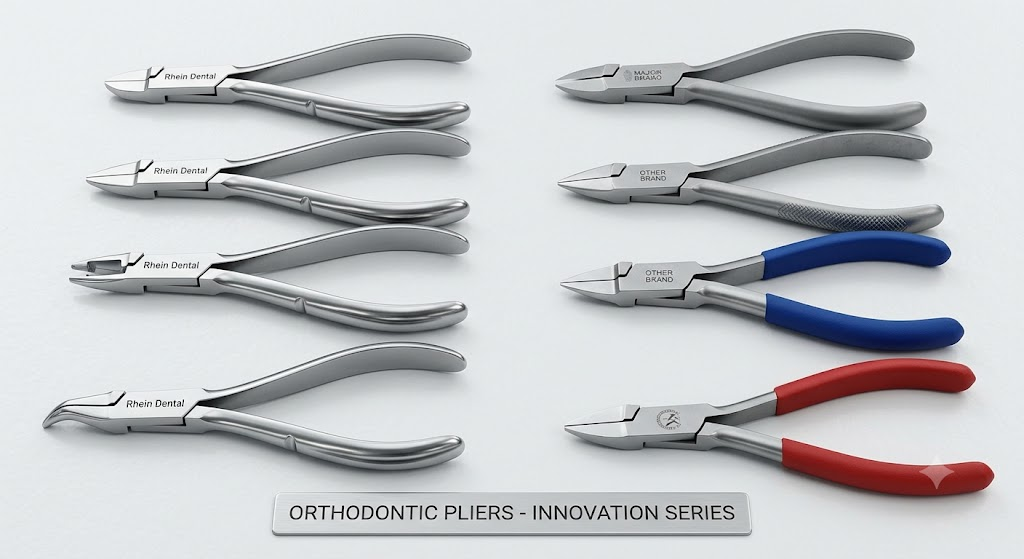
At Rhein Dental, we manufacture precision-engineered orthodontic pliers that meet international quality standards and support orthodontists throughout every stage of treatment. This guide compares our orthodontic pliers with industry-leading alternatives to help dental professionals understand the key factors that define a high-quality instrument and make informed purchasing decisions(Orthodontic Pliers Comparison).
Why Orthodontic Pliers Matter
Orthodontic pliers are essential hand instruments used to manipulate wires, position brackets, contour archwires, place ligatures, and perform finishing adjustments. Even small differences in jaw alignment or grip quality can affect treatment efficiency and clinical precision(Orthodontic Pliers Comparison).
High-quality orthodontic pliers provide:
- Superior control during wire bending
- Consistent cutting performance
- Reduced hand fatigue
- Enhanced patient comfort
- Long-term reliability
- Precise instrument alignment
Investing in premium orthodontic instruments helps clinicians maintain accuracy while improving workflow and reducing replacement costs.
What Defines a High-Quality Orthodontic Pliers?
Before comparing manufacturers, it’s important to understand the characteristics that distinguish professional orthodontic pliers (Orthodontic Pliers Comparison).
Precision Manufacturing
Precision machining ensures accurate jaw alignment and consistent instrument performance. Even slight misalignment can reduce efficiency and damage orthodontic wires.
Premium Stainless Steel
Medical-grade stainless steel offers excellent corrosion resistance, durability, and compatibility with repeated steam sterilization.
Ergonomic Design
Balanced handles and comfortable grips reduce muscle strain during prolonged clinical procedures.
Superior Joint Construction
A precisely manufactured box joint maintains smooth movement and minimizes wear over years of daily use.
Reliable Cutting Performance
Cutting pliers should deliver clean, consistent cuts without deforming orthodontic wires.
Orthodontic Pliers Comparison: Rhein Dental vs Industry Leaders
When evaluating orthodontic pliers, clinicians should compare performance rather than focusing solely on brand recognition.
| Feature | Rhein Dental Orthodontic Pliers | Typical Industry Leaders |
|---|---|---|
| Precision Jaw Alignment | Excellent | Excellent |
| Medical-Grade Stainless Steel | ✓ | ✓ |
| Corrosion Resistance | High | High |
| Ergonomic Handle Design | Advanced | Advanced |
| Consistent Manufacturing Quality | Excellent | Excellent |
| Steam Autoclave Compatibility | ✓ | ✓ |
| Cutting Accuracy | High | High |
| Long-Term Durability | Excellent | Excellent |
| Clinical Performance | Professional Grade | Professional Grade |
| Cost Efficiency | Excellent Value | Often Premium Pricing |
This comparison focuses on key performance characteristics rather than making unsupported claims about specific competitors. Individual product performance varies by manufacturer and model.
Precision That Supports Clinical Excellence
Orthodontic treatment requires exceptional accuracy. Our orthodontic pliers undergo strict quality inspections to ensure:
- Accurate jaw alignment
- Smooth joint movement
- Consistent gripping force
- Reliable cutting performance
- Comfortable handling
These features help orthodontists perform precise adjustments while maintaining complete control throughout treatment.
Premium Materials for Long-Term Performance
The quality of raw materials significantly influences an instrument’s lifespan.
Rhein Dental manufactures orthodontic pliers using premium medical-grade stainless steel that offers:
- Outstanding corrosion resistance
- Excellent tensile strength
- Long-lasting edge retention
- Smooth surface finish
- Excellent sterilization compatibility
These properties allow the instruments to maintain their performance after hundreds of autoclave cycles.
Ergonomic Design Improves Clinical Efficiency
Orthodontists perform thousands of repetitive hand movements every year.
Ergonomically designed pliers help reduce:
- Wrist strain
- Finger fatigue
- Grip pressure
- Muscle discomfort
Balanced weight distribution and comfortable handle geometry improve control during lengthy procedures.
Precision Jaw Alignment Matters
Poor jaw alignment can cause:
- Wire slippage
- Uneven bending
- Reduced cutting accuracy
- Premature instrument wear
Each Rhein Dental orthodontic plier undergoes precision alignment checks to ensure consistent performance.
Reliable Performance Across Orthodontic Procedures
Our orthodontic pliers support a wide range of clinical applications, including:
Wire Bending
Accurate bends improve treatment efficiency and reduce unnecessary wire adjustments.
Bracket Placement
Precision gripping supports controlled bracket positioning.
Ligature Placement
Fine tips allow clinicians to manipulate ligatures safely and efficiently.
Wire Cutting
High-quality cutting edges produce clean cuts with minimal effort.
Finishing Procedures
Consistent instrument performance improves final detailing and treatment outcomes.
Types of Orthodontic Pliers Available
Orthodontists rely on different pliers throughout treatment.
Common instrument types include:
- Bird Beak Pliers
- Weingart Pliers
- Distal End Cutters
- Ligature Cutters
- Hard Wire Cutters
- Mathieu Pliers
- Utility Pliers
- Three-Prong Pliers
- Jarabak Pliers
- Band Removing Pliers
Each instrument performs a specific clinical function while contributing to treatment accuracy.
Quality Control Makes the Difference
Manufacturing consistency separates premium instruments from lower-quality alternatives.
Every Rhein Dental orthodontic plier undergoes comprehensive quality inspections that verify:
- Surface finish
- Jaw alignment
- Joint movement
- Cutting efficiency
- Functional performance
- Material integrity
This quality-focused approach supports dependable clinical performance.
Sterilization and Maintenance
Proper maintenance preserves instrument longevity.
Recommended practices include:
- Clean immediately after use.
- Remove all biological residue.
- Inspect joints and cutting edges.
- Lubricate moving parts with approved instrument lubricant.
- Sterilize according to validated autoclave protocols.
- Store instruments in protective cassettes.
Routine maintenance helps maintain precision and extends service life.
How to Choose the Best Orthodontic Pliers
When comparing orthodontic pliers, consider the following factors:
Material Quality
Choose medical-grade stainless steel for maximum durability.
Clinical Application
Select pliers designed specifically for your intended procedure.
Ergonomics
Comfortable handles reduce fatigue during extended treatments.
Precision
Accurate jaw alignment improves treatment quality.
Manufacturer Reputation
Work with manufacturers that follow internationally recognized quality standards and maintain rigorous quality control processes.
Long-Term Value
Evaluate durability, reliability, and overall lifecycle cost rather than focusing only on the initial purchase price.
Why Dental Professionals Choose Rhein Dental
Dental professionals worldwide trust Rhein Dental because we combine precision engineering with strict manufacturing standards.
Our orthodontic instruments offer:
- Precision-engineered construction
- Premium medical-grade stainless steel
- Ergonomic instrument design
- Excellent corrosion resistance
- Reliable clinical performance
- Consistent manufacturing quality
- Long service life
- Cost-effective value
These qualities help clinicians achieve predictable results while maximizing instrument longevity.
Conclusion
Choosing the right orthodontic pliers is essential for achieving consistent clinical outcomes and improving workflow efficiency. While many manufacturers produce high-quality instruments, clinicians should evaluate precision, material quality, ergonomic design, manufacturing consistency, and long-term value rather than relying solely on brand recognition.
Rhein Dental combines advanced engineering, premium materials, and rigorous quality control to manufacture orthodontic pliers that meet the demands of modern orthodontic practice. Whether performing wire bending, bracket placement, ligature management, or finishing procedures, our instruments deliver the precision, durability, and reliability that dental professionals expect.ds like Hu-Friedy, Ormco, and American Orthodontics use surgical-grade stainless steel or tungsten carbide inserts for cutting tips. These materials are chosen for durability, corrosion resistance, and performance under repeated sterilization. Consequently, they’ve earned reputations for reliability.
Frequently Asked Questions
What are orthodontic pliers used for?
Orthodontic pliers assist with wire bending, bracket positioning, ligature placement, archwire adjustments, and finishing procedures during orthodontic treatment.
What material is best for orthodontic pliers?
Medical-grade stainless steel offers excellent durability, corrosion resistance, and compatibility with repeated autoclave sterilization.
How often should orthodontic pliers be replaced?
Replacement depends on usage and maintenance. High-quality orthodontic pliers can provide years of reliable performance with proper care and routine inspection.
What features should I consider when buying orthodontic pliers?
Look for precision jaw alignment, ergonomic handles, premium stainless steel construction, reliable joint movement, and consistent manufacturing quality.
Are Rhein Dental orthodontic pliers suitable for daily clinical use?
Yes. Rhein Dental designs and manufactures orthodontic pliers for routine clinical applications while emphasizing precision, durability, and ergonomic performance.