
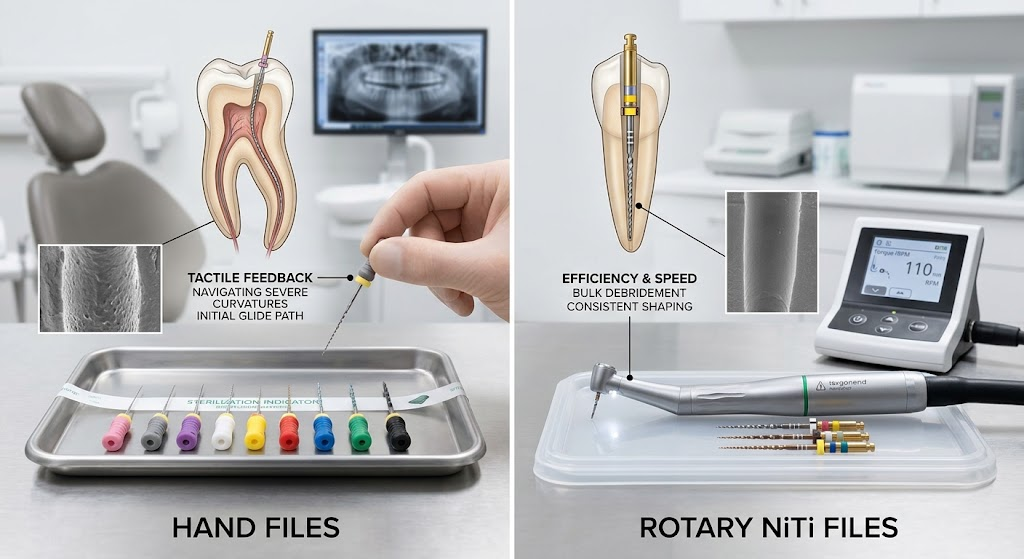
Root canal treatment has evolved significantly with the introduction of advanced endodontic instruments. Among the most important decisions clinicians make during canal preparation is choosing between traditional hand files and rotary nickel-titanium (NiTi) systems. While rotary instrumentation has improved speed and efficiency, manual hand files continue to play an essential role in achieving precise canal […]
Dental Instruments Blog
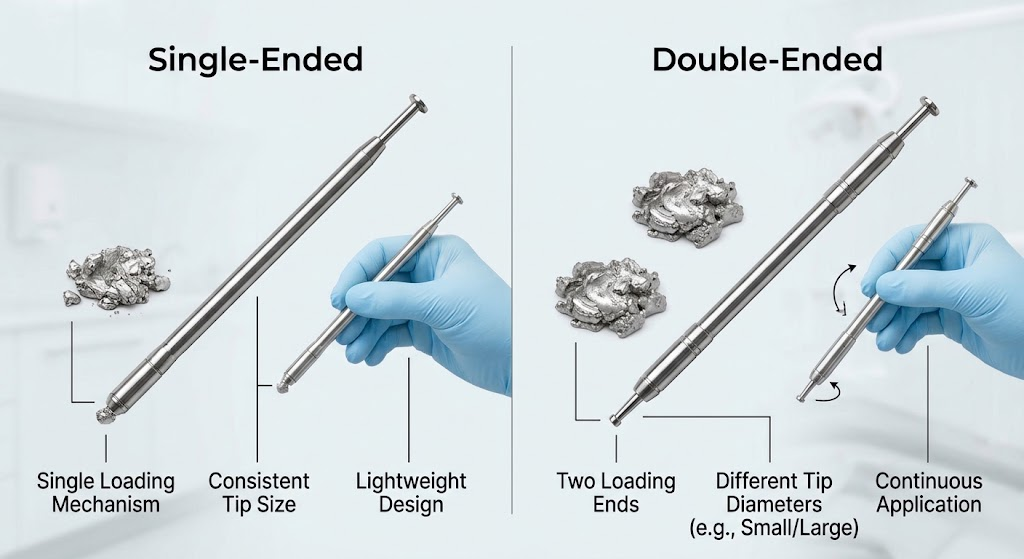
Amalgam Carriers: Single vs. Double-Ended Loading Mechanisms for Efficient Cavity Filling.
11
Jun
Jun
Introduction Precision and efficiency are essential in restorative dentistry. When placing amalgam restorative material into prepared cavities, clinicians rely on specialized instruments that ensure controlled delivery and accurate placement. Among these instruments, amalgam carriers play a vital role in transporting and dispensing amalgam from the mixing well directly into the cavity preparation (Amalgam Carriers Single […]
Surgical Instruments Blog
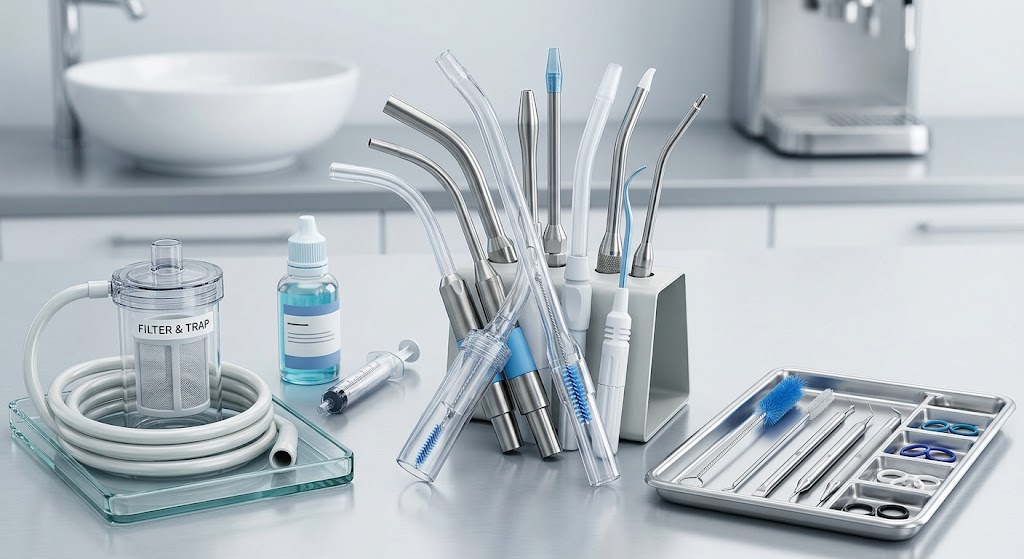
Suction Tip Maintenance: Preventing Blockages and Ensuring Optimal Vacuum Performance
10
Jun
Jun
Introduction Suction tips are essential instruments in dental, surgical, and medical procedures, providing clear visibility and maintaining a clean working field by efficiently removing fluids, debris, and aerosols. Despite their simple appearance, suction tips require regular maintenance to ensure consistent vacuum performance and prevent costly interruptions during procedures (Suction Tip Maintenance). Poorly maintained suction systems […]
Dental Instruments Blog
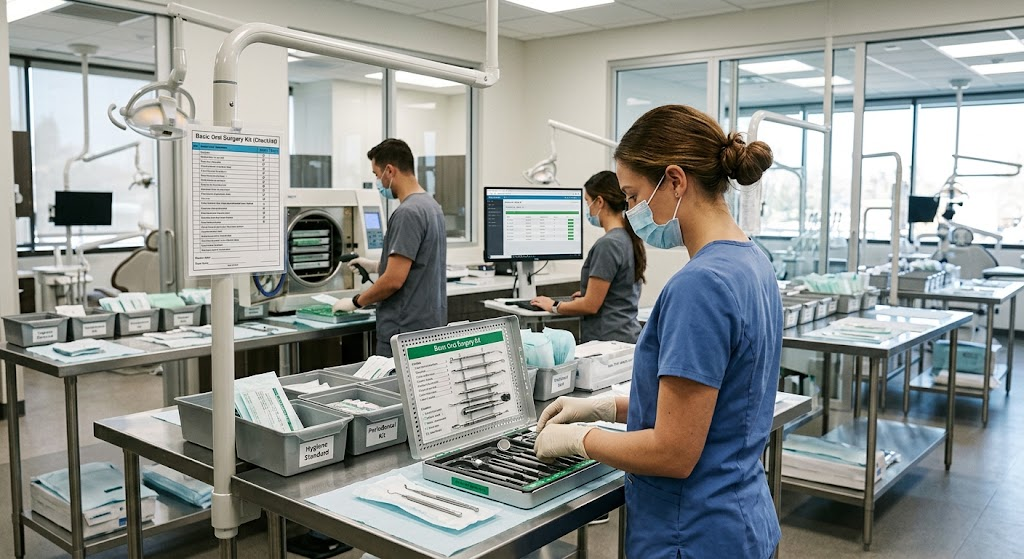
Instrument Set Standardization Across Multi-Chair Clinics: Protocols for Uniform Setup, Tracking, and Replacement
06
Jun
Jun
Introduction As dental practices expand into multi-chair clinics and multi-location networks, maintaining consistency in clinical workflows becomes increasingly challenging. One often-overlooked aspect of operational efficiency is instrument set standardization (Instrument Set Standardization). When treatment rooms are equipped with different instrument combinations, staff members may experience workflow disruptions, increased setup times, inventory confusion, and inconsistent patient […]
Dental Instruments Blog
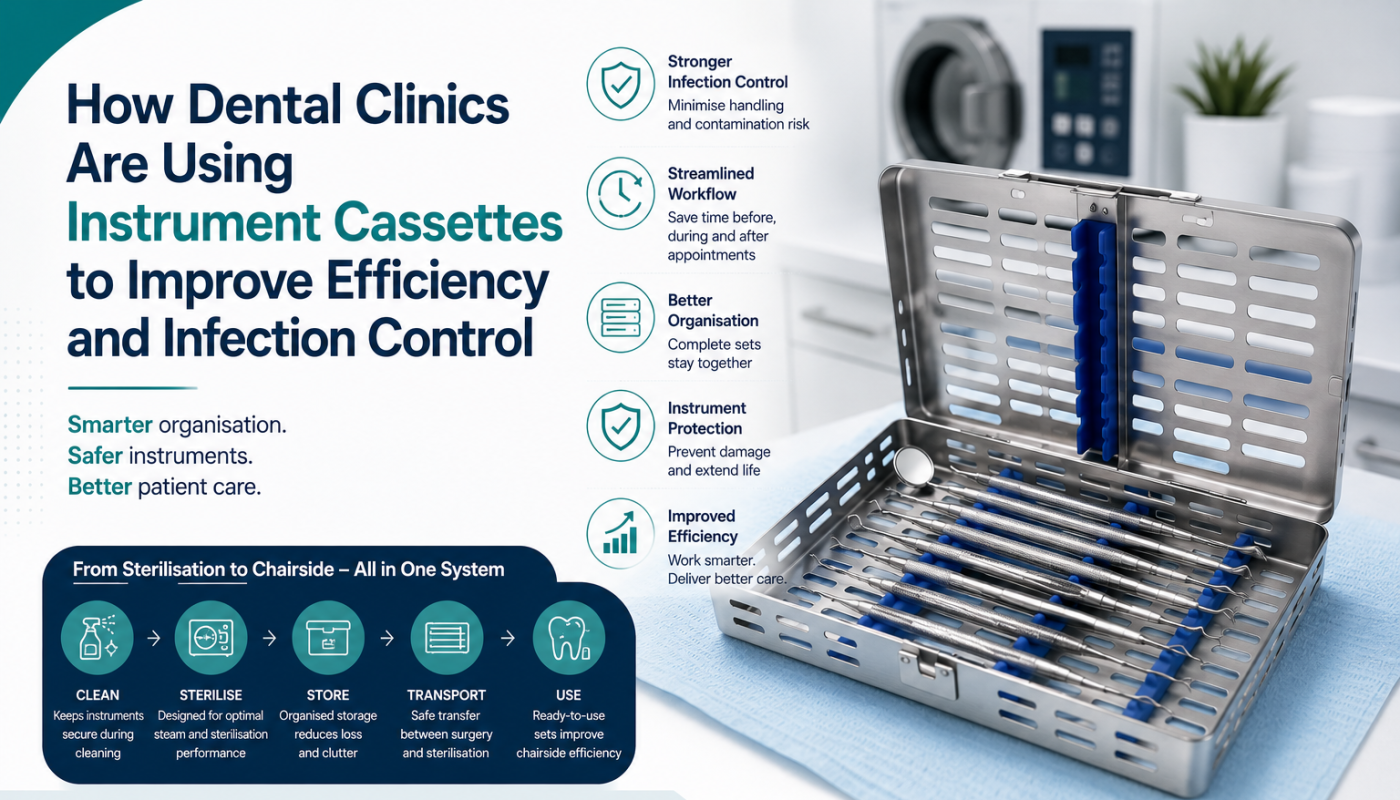
Instrument Cassette Systems and Color-Coded Tray Organization: Streamlining Sterilization Workflows in High-Volume Practices
05
Jun
Jun
Introduction Efficient instrument reprocessing is one of the most critical aspects of modern dental and surgical practice management. In high-volume clinics, where dozens of procedures are performed daily, maintaining instrument organization while ensuring compliance with infection control protocols can be challenging. Delays in instrument preparation, sterilization errors, and misplaced tools can negatively impact productivity, patient […]
Dental Instruments Blog
ISO 13485 and CE Marking in Dental Instrument Manufacturing: What These Certifications Mean for Clinical Safety

05
Jun
Jun
Introduction In modern dentistry, patient safety and clinical precision depend heavily on the quality and reliability of the instruments used during treatment. Whether performing routine examinations, surgical procedures, or complex implant placements, dental professionals rely on instruments that meet strict international quality standards. Two of the most important certifications that demonstrate a manufacturer’s commitment to […]
Dental Instruments Blog
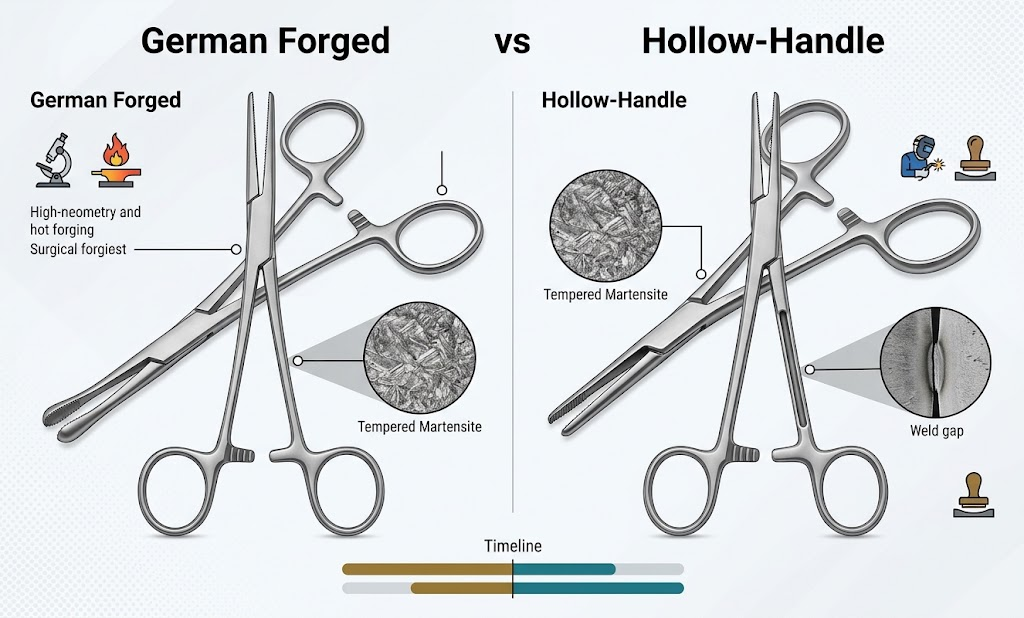
German Forged vs. Hollow-Handle Stainless Steel Instruments: Metallurgical Differences That Define Instrument Longevity
04
Jun
Jun
Introduction Dental and surgical instruments are significant investments for any practice. Their performance, durability, and lifespan directly impact clinical efficiency, treatment outcomes, and long-term operational costs. While many clinicians focus on instrument design and ergonomics, the metallurgy behind instrument manufacturing often receives less attention (German Forged vs Hollow-Handle). Among the most commonly compared instrument categories […]
Surgical Instruments Blog
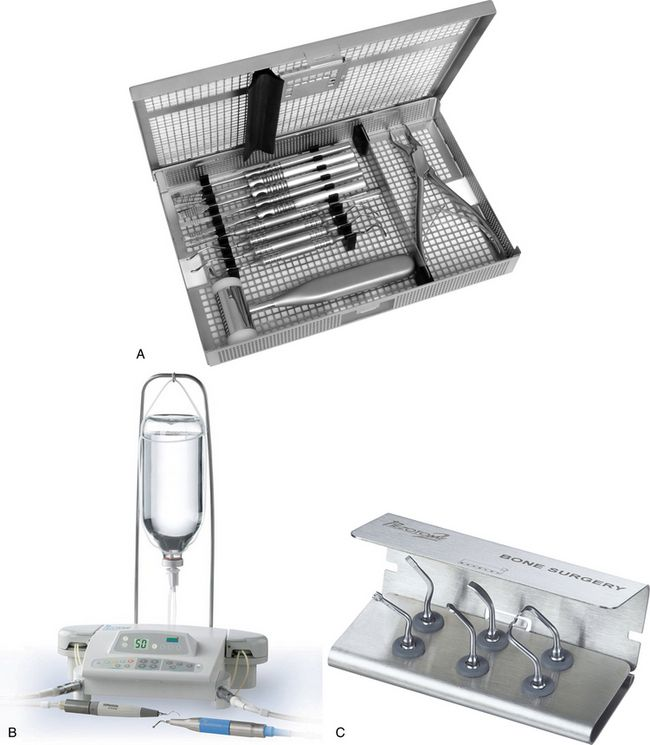
Bone Spreaders and Ridge Expanders: Sequential Technique for Narrow Ridge Expansion Without Membrane Perforation
03
Jun
Jun
Introduction Insufficient alveolar ridge width is a common challenge in dental implantology. When the ridge is too narrow to accommodate an implant, clinicians often turn to ridge expansion techniques to increase bone width while preserving existing bone volume. Bone spreaders and ridge expanders are valuable instruments that allow controlled expansion of narrow ridges without extensive […]
Surgical Instruments Blog
Piezoelectric Surgery Instruments vs. Rotary Burs: Cutting Efficiency, Osseointegration Safety, and Soft Tissue Protection

03
Jun
Jun
Introduction Advancements in dental and oral surgery have significantly improved the precision, safety, and predictability of bone-related procedures (Piezoelectric Surgery Instruments). Among the most important developments is the introduction of piezoelectric surgery technology, which has emerged as an alternative to conventional rotary burs for osteotomy, implant site preparation, sinus lifting, and bone grafting procedures (Piezoelectric […]
Surgical Instruments Blog
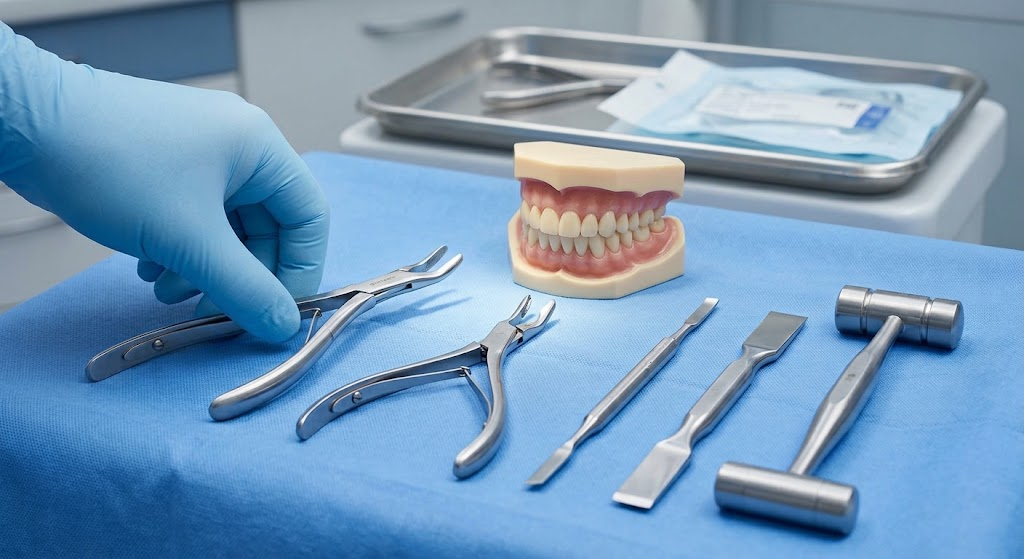
Bone Rongeurs and Chisels: Instrumentation Strategies for Alveoloplasty and Torus Removal Procedures
01
Jun
Jun
Introduction Oral and maxillofacial surgical procedures often require precise bone contouring and removal to create optimal anatomical conditions for healing, prosthetic rehabilitation, or implant placement. Among the most essential instruments used in these procedures are bone rongeurs and surgical chisels. Their proper selection and application significantly influence surgical efficiency, precision, and patient outcomes. Alveoloplasty and […]